Tony Nominee Christopher Abbott Found the Real Heart of Death of a Salesman Offstage
The Broadway star opens up about backstage hangs with Nathan Lane, Joe Mantello’s fresh take on Arthur Miller and the love at the center of Biff Loman’s story

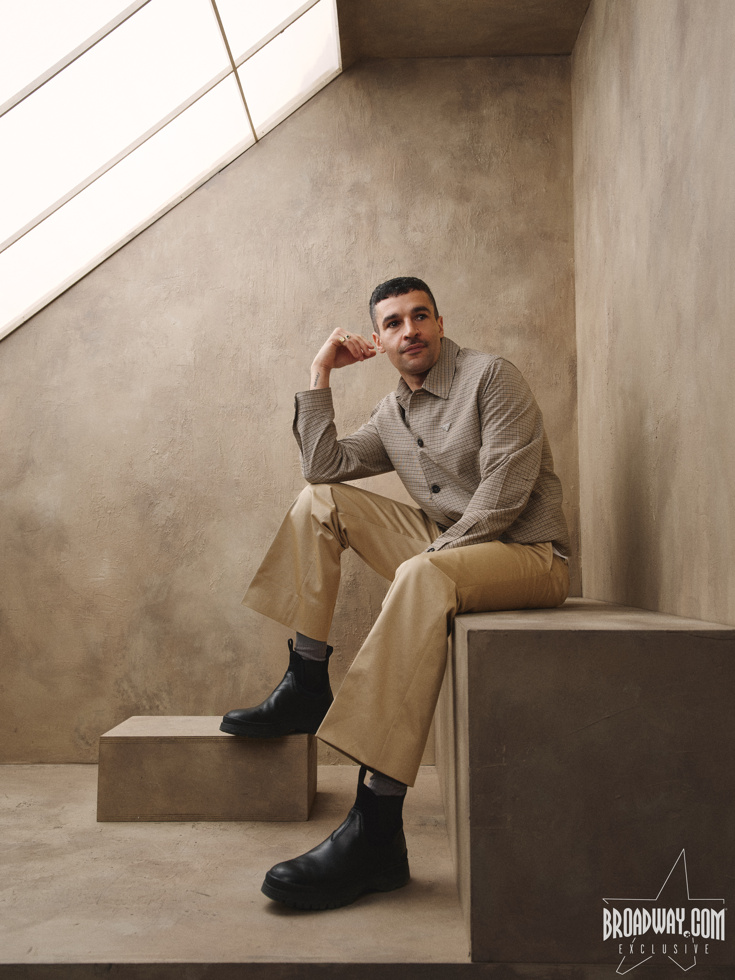
(Photo by Emilio Madrid for Broadway.com)
What to Know
- Christopher Abbott discusses earning his first Tony Award nomination for playing Biff Loman opposite Nathan Lane and Laurie Metcalf in Joe Mantello’s Broadway revival of Arthur Miller’s Death of a Salesman
- Abbott reveals he intentionally avoided seeing Death of a Salesman before joining the production, embracing Mantello’s vision of approaching the classic “like a new play” to bring fresh energy
- The actor opens up about the offstage friendships and backstage rituals that shaped the production, impending fatherhood and nearly 20 years in theater
Christopher Abbott has a deep veneration for the classics, but he purposely avoided seeing a stage production of Death of a Salesman. This "just in case" tactic, also employed by Salesman's current Linda, Laurie Metcalf, proved a valuable asset for Abbott when he was cast as Biff Loman in Joe Mantello's 2026 Broadway revival of Arthur Miller's play. The director encouraged his actors to adopt a novel mindset, viewing the work through a fresh lens in order to bring new energy to the much-revisited story.
Abbott triumphantly rose to the challenge, earning a Best Featured Actor Tony nomination for his second-ever Broadway role. Far from a novice, this recognition comes after nearly two decades of theater work, from his 2011 Broadway debut in The House of Blue Leaves to the 2023 off-Broadway revival of Danny and the Deep Blue Sea opposite Aubrey Plaza. He's also made a splash on screen, rising to fame as Charlie on HBO's Girls and starring in the imaginative period films Poor Things and The Testament of Ann Lee.
The accomplished performer opened up to Broadway.com about the significance of his Tony nomination, hanging out in Nathan Lane's dressing room before curtain and the one thing this father-son story has instilled in him as a soon-to-be first-time dad.
Congratulations on your Tony nomination! What does this recognition mean to you?
I think every actor would say that you don't do it for awards or nominations. But the fact that it's a Tony and it's theater… I started out in theater and my first few jobs were plays. There's something special about this because my heart's been in it for so long; almost 20 years now I've been doing plays. I do hold a certain reverence for this one.
Was this a role you envisioned for yourself before joining the production?
Kind of. It's funny—Laurie, for the same reason, sometimes she doesn't see plays that she might do. There's a few plays out there that I haven't seen, just in case. And then eventually you'll age out. [Laughs] Then you'll go see a production. This was one—I hadn't seen it before, and I'm glad that I didn't, to have a real fresh approach—which was apropos for what Joe Mantello wanted to do with it.
You make audiences sympathize with Biff, and feel the love he has for his father. Can you talk about your take on the character and his place in this family?
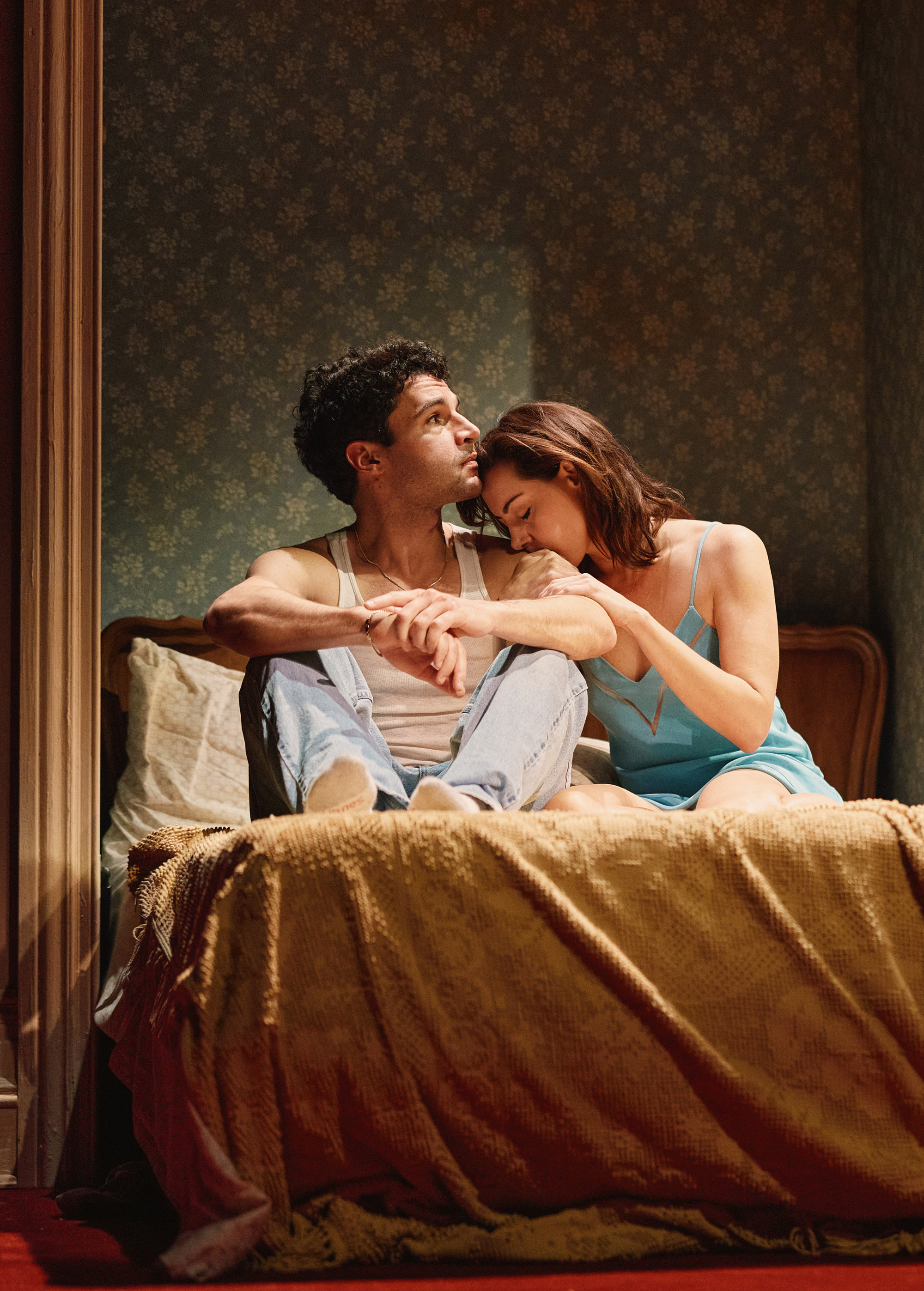
The big thing for my character—but also for everyone, and something that we talked about a lot early on—was that even though these characters, especially me and Willy [played by Lane], are at odds throughout a lot of the play, it all has to come out of love first and foremost. We can't ever lose that throughline. It can't just be fighting on stage. It can't just be being angry at each other. It really needs to be out of love. For me, the part is not without traps. The one thing I was conscious of early on was not to get too introspective. For it to be active and to not feel bad for yourself was really the trick. And then everything else has to fall into place once you're rehearsing with the other actors. You can think character all you want, but it all comes together once you're doing it with the people that you're doing it with, and then the character grows more from there.
Joe Mantello had a very specific vision for his revival. What is it like working with him as a director?
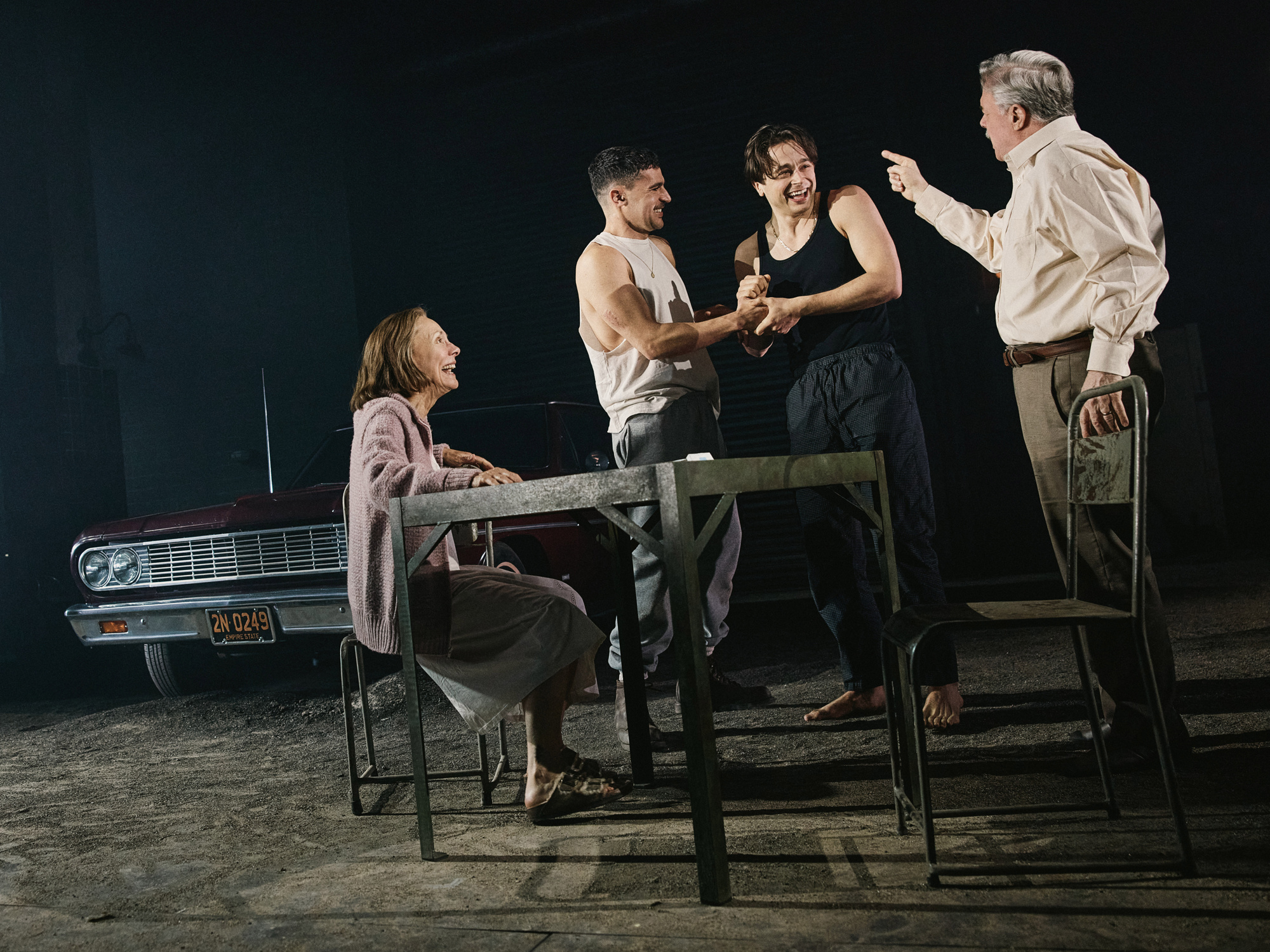
I'd done readings with Joe before, but this is my first time properly working with him on a production. Just based off of our first conversation that we had a long time ago about it, I probably couldn't have said yes quicker. It's a play that's been done many times, and he really wanted to approach it like a new play, and I love that. That doesn't mean you don't hold the play to a regard. There's still an honor there. But just trying to imagine what it would be like if we got handed this script and it was a new play and Arthur Miller was a young playwright. What does that mean, and what does that do? It's a certain mindset and an energy and I love that about it. And then with Joe, it goes on to the abstractness of the set and it all ties together.
What are some of the challenges and opportunities presented by the spare set?
The challenges are, you don't have many anchors on stage as an actor—and we love those. That first bedroom scene, it's just me and [Ben Ahlers, who plays Happy] on two benches. We have a football, but there's not much to distract yourself with. So you have to find a thing that grounds you. And I think with this approach, the thing that grounds you is your scene partner. It really forces you to listen on stage. But I think what's great is it forces the audience to really hear the play.
How have you and Ben worked to form that brotherly bond?
We're both Knicks fans, so we went to Knicks games together even before we started rehearsing the play. It's that thing that just happens naturally. There's a lot of laughing backstage. I've done enough plays now where when I think back, I never remember a "good" show. I only remember backstage and the time spent, and when things sometimes go wrong on stage and you have to save it. I have enough experience where I know that at least. All that extra stuff is really what I take to heart, because I know that those are the things that I'll remember.
"The moments to remember are the time spent with these people, and that's what's special."
—Christopher Abbott
Those behind-the-scenes moments probably help with the intensity happening on stage as well.
Exactly. I've done other intense plays before—I don't remember when I had an amazing show. It's meaningful and it makes me be even more present, knowing it's only happening here and now and you do every show once. You're only doing this one once and you're only doing the next one once. There's no carryover. The moments to remember are the time spent with these people, and that's what's special.
What have you taken away from spending time with Nathan and Laurie?
Before every show, we gather—usually in Nathan's dressing room—45, 50 minutes before and we just hang out and bullshit. I already know that's what I'll remember. It's not a forced ritual; it's not like, "Okay, let's get ready and do Death of a Salesman." We just want to hang around and talk mostly. We probably want to do that more than the play. [Laughs] Nathan is just chock-full of stories and he's done so much theater work. I love the theater and I love old theater stories. I'm a sucker for that nostalgia.
Joaquin Consuelos plays young Biff, another unique choice for the production. Did the two of you work together to find a rhythm or develop similar mannerisms?
What's nice about how we're doing it is we don't need to mimic each other. He doesn't need to mimic me. Because the nice thing about having the younger versions in the play is they're all in, let's call them flashbacks, but it's all in Willy's head. It's always like, is the younger version of me how I really was, or is it the idealized version in Willy's head of how I was? Did he used to be the golden boy or did Willy just think he was the golden boy? I find that really interesting. In early rehearsal, all the younger versions and me and Ben would get together and do theater games. But everyone is doing their own performance—in a good way, in a way that, to me, makes a lot of sense.

This is a father-son story, and you’re going to be a father. Has that enhanced your performance or affected your perspective beyond the theater?
Of course it's in the back of my head, you know what I mean? But that's something separate and it's something I'm very excited about. If it's teaching me anything, it's that I will try my best to not be a Willy Loman.
You decided to study acting at the HB Studio at age 20. Did you dream about seeing your name on a Broadway marquee back then?
I mean, of course I thought about it. I went to school, I studied theater. I studied with people like Austin Pendleton; Anne Jackson was another one of my teachers. In scene study classes, you would often work on classics. You would work on Arthur Miller, Eugene O'Neill, Tennessee Williams, Odets and Strindberg. I'm in it right now and I'm doing it, but I know it does feel special. It's going to be one of those things in retrospect I will look back on. I realize how lucky I am now, but that feeling will solidify down the road.
As far as the classics go, why do you think Death of a Salesman endures?
The play is a classic for a reason, and I think that the big overarching themes of it will always be relevant. It's just good writing. Getting to see different actors do it—this play will be done again after us at some point, and the beauty of a good play is that the themes can still ring true—seeing other people do it just brings new colors to it every time. I'm just happy to be a part of one of the iterations of it.
What other roles are on your theater bucket list?
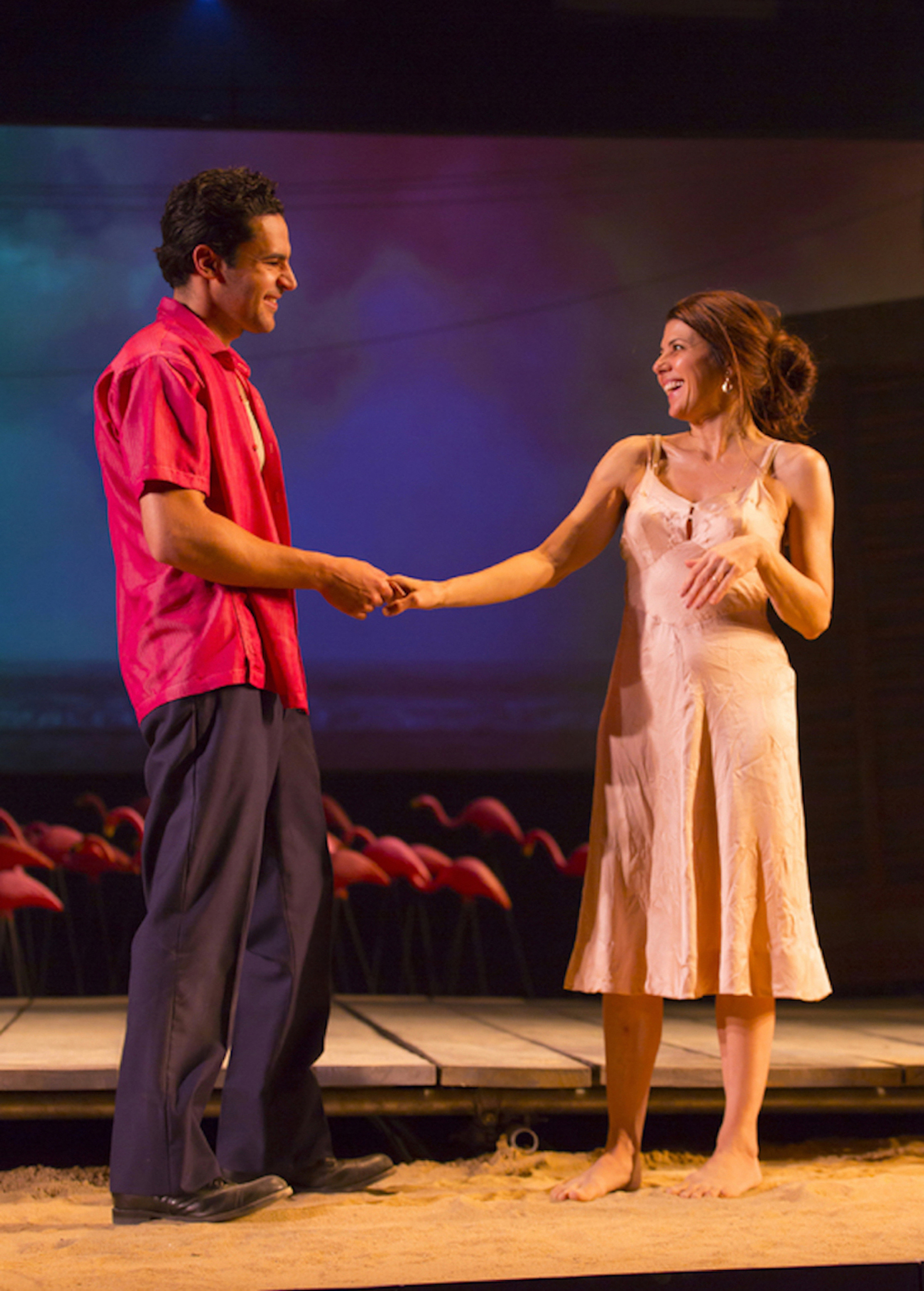
I think every man has [A] Streetcar [Named Desire] on their list, right? I've worked on The Rose Tattoo before [in 2016 at Williamstown Theatre Festival]. That was great. American Buffalo is another one. There's a lot of plays that I want to do. I don't know if I have the time, and I've aged out of some of them already, so there goes that. But I have my list and I'll try to check them off as best as I can.
You also have a busy screen career. Can you share anything about your role in Zoe Kazan’s upcoming Netflix adaptation of East of Eden?
I can say that I'm excited for people to see it. It's definitely an epic, and it was hard work. But it worked out nicely. I shot that, took some time off and then the next project I started working on was this play. To have these classics to be working on, that all harks back to that nostalgic feeling. I have a reverence for the old-school. Movies of the '50s and plays of that time; it feels good to do those kinds of things in 2026.
What are you most looking forward to post-Tonys? I'd say taking a break, but you'll still be performing!
That's the funny thing. Obviously it's my first Tony nomination, but in all the plays that I've done, I don't think the awards were happening while I was still doing the play. I'm still very much doing the show. We're not even halfway through the run. I'm very happy that it's getting recognized and people are coming to see it. All that stuff is great for the show. There's an excitement. I've done a lot of plays and I've done plays to half audiences sometimes. There's that joke where there's more people on stage than in the theater. The audience is always going to be the other character. The nominations, not to coincidentally quote the play, but it makes people pay attention. The way the audiences have been with us, I'm not saying it's because of the Tony nominations, but whatever it is, it's nice. It's those palpable silences or the laughs at the right time. It makes doing a very hard play like this worth it.
For more Tonys talk with Abbott, check out the video below.
Get tickets to Death of a Salesman!