
He Never Planned to Write a Play—Now Mark Rosenblatt's Giant Is on Broadway
The award-winning writer and director explains how an unexpected push led to a critically acclaimed debut starring John Lithgow

What to Know
- Mark Rosenblatt makes his Broadway debut as a playwright with Giant, starring John Lithgow at the Music Box Theatre, after previously working as an award-winning director in the U.K. and off-Broadway
- Giant is inspired by Roald Dahl’s controversial 1983 book review and explores antisemitism, Middle East politics and moral complexity, challenging audiences to grapple with difficult, real-world issues
- Rosenblatt transitioned from director to writer for the first time, using his rehearsal room experience to craft a real-time, character-driven drama that has already earned Olivier and Critics Circle Awards
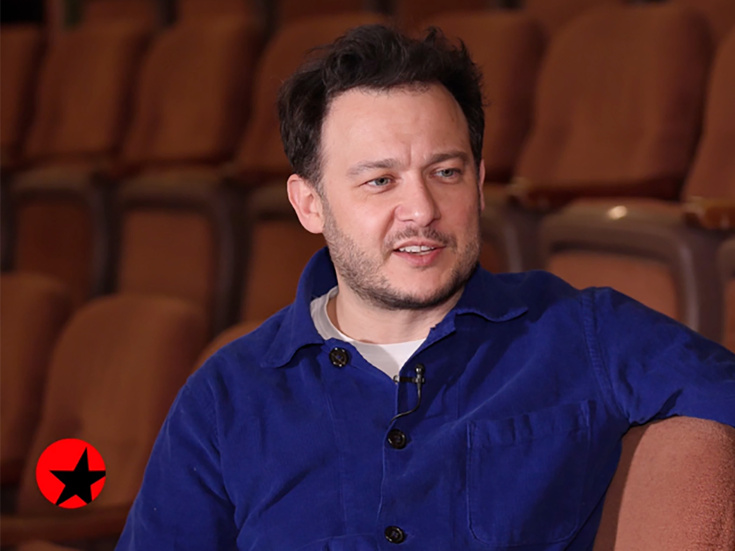
Giant marks a major arrival for Mark Rosenblatt, whose Olivier Award-winning play is now on Broadway with John Lithgow leading the charge. Long known as a theater director in the U.K. and beyond, Rosenblatt steps onto Broadway as a writer with the work he first premiered in London. He sat down with Broadway.com Managing Editor Beth Stevens at the Music Box Theatre to talk about taking on the complicated legacy of children's author Roald Dahl and bringing Giant to Broadway audiences.
The play revolves around Dahl, famous for works including Charlie and the Chocolate Factory, Matilda and The BFG. But the idea didn't start there. As Rosenblatt explains, he was struck by the political discourse about the Middle East in the U.K. in 2018. "I was noticing a lot of really meaningful debate, and then a lot of quite prejudiced stereotyping, particularly at that time a fair amount of antisemitic stereotyping. I was interested in somehow prizing apart the difference between them as a Jewish person in the U.K." In searching for the story, he recalled that Dahl—who he'd loved as a kid—had been accused of antisemitism. He looked it up, and found that Dahl had written a review in 1983 of a book about Israel's invasion of Lebanon in 1982.
"It was a perfect mirror of that blurring of some meaningful thoughts and then some quite explicit antisemitism," Rosenblatt adds. He imagined a meeting staged by Dahl's publishers ahead of the release of The Witches, asking him to apologize for the sentiments expressed in the review. "I just thought, well, that's a really great setup for a play." Still, he didn't plan to pen the story, but rather to direct. "I'd never aspired to write a play. I really had never sat in rehearsal rooms directing other people's plays and thought, 'Oh, let me at it,'" shares Rosenblatt. He approached another director, Nicholas Hytner (who would end up directing Giant) with the pitch, looking for his advice on finding a writer. "And he said to me, 'Why don't you write it?'" Rosenblatt recalls. So, he did.
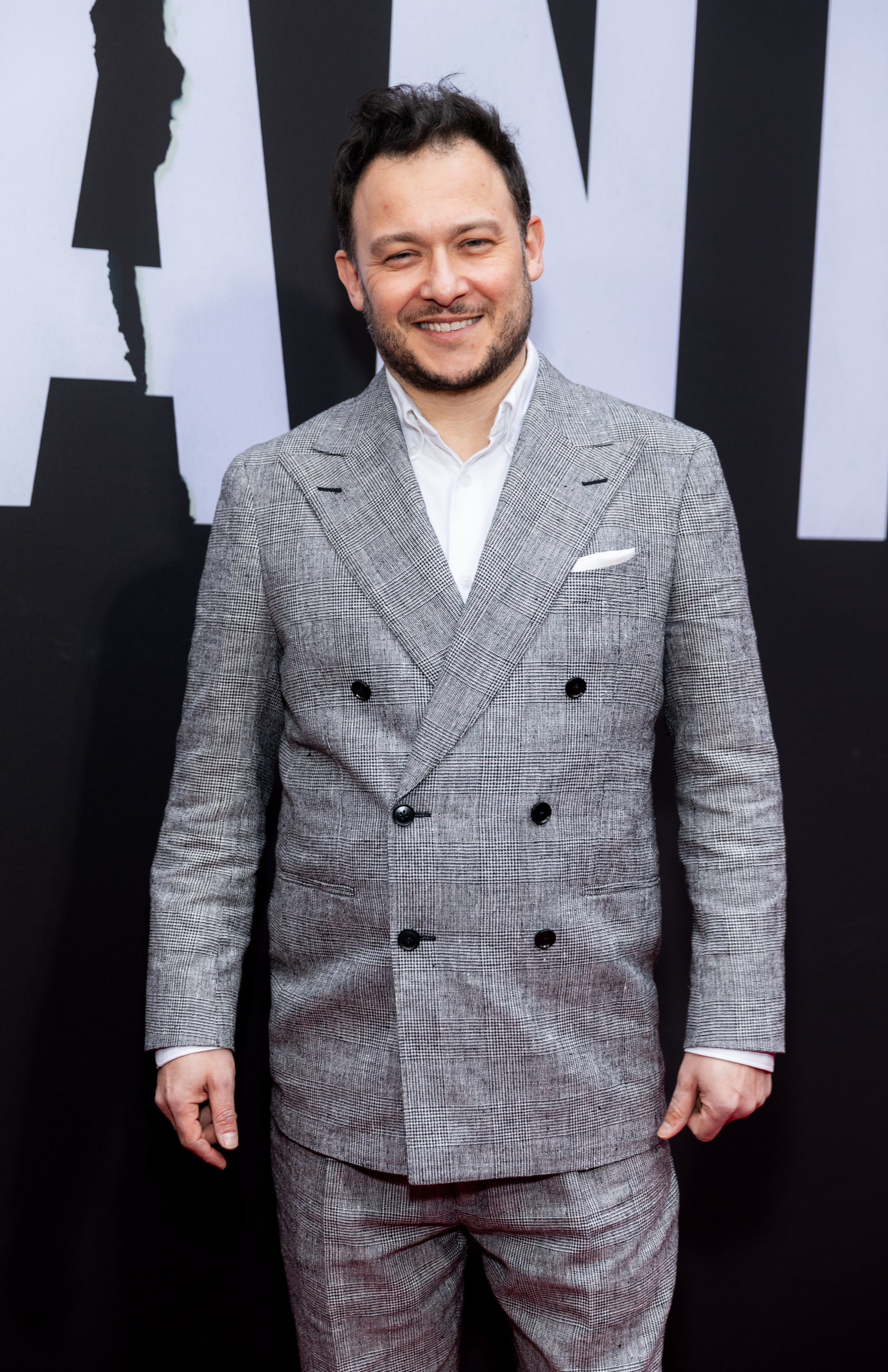
His work as a director proved instrumental in the process of drafting the play. "I have been in enough rehearsal rooms with brilliant writers, where on the first day of rehearsals with a new play, actors ask difficult questions," he says. "The kinds of questions that you wish you'd already answered, like, 'Why is my backstory not quite connecting to the story on stage? What does my character really want?'" While these questions can be addressed, it slows the process down. To avoid this, Rosenblatt knew to "make sure that the characters' backstories and what they want are crystal clear and they connect." Putting that pressure on himself helped in the long run. "I think the actors really responded to their clarity of the voice of each character, and it made it possibly easier to cast those roles. And we got amazing actors to play them."
In addition to two-time Tony winner Lithgow, whose towering physical presence and impressive list of credentials live up to the play's name, Giant stars Elliot Levey, reprising his Olivier-winning role as publisher Tom Maschler, Aya Cash and Rachael Stirling, with Stella Everett and David Manis rounding out the cast. Four of the six are on stage for the majority of the play, which takes place in real-time over the course of one afternoon. While early drafts set the second half of the play a few days later with new characters, Rosenblatt says that the core characters "had too much to say. They became too real in my mind and their job wasn't done."
Still, he gave himself "incredibly tight parameters to work inside of," acknowledging that it took immense concentration and precision to write in real time and maintain the tension in the narrative. For Rosenblatt, the process came down to "zoning in on all the points of view of the characters, holding them all in your head and trying to write with absolute integrity their next move, their next move, until slowly this thing started to stitch together." He adds, "It was really challenging and really exciting, because you're improvising in your own head in a room that you're making up, which has objects in it and statements that have been made, ideas and insults that have been thrown, undercurrents of subtexts that have been initiated." He managed to connect the threads and develop the story for audiences in London, a West End transfer and now on Broadway.
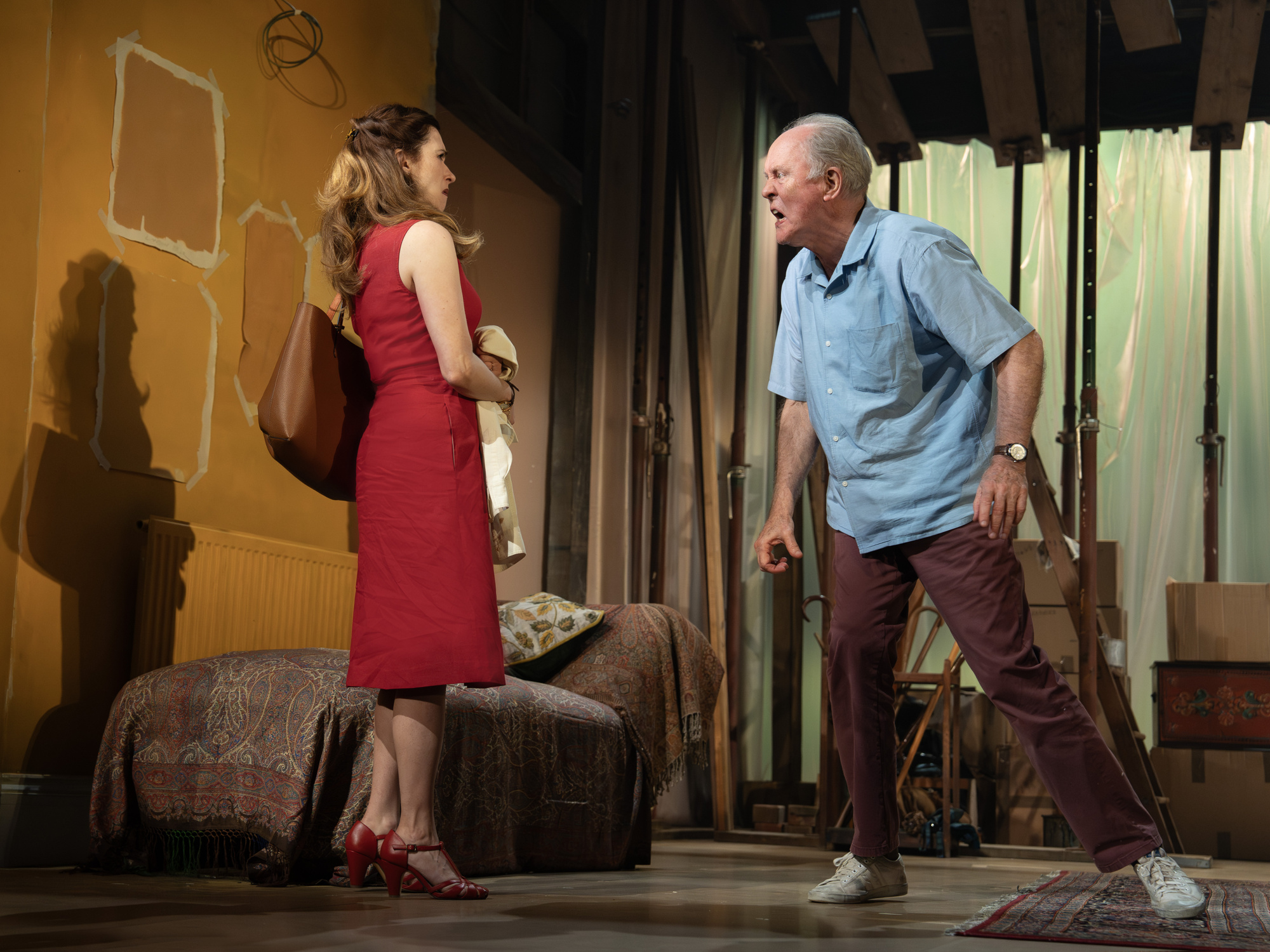
The story is no longer just Rosenblatt's, reaching new individuals and drawing fresh reactions with each performance. "There are hot button issues that are very difficult for people to talk about that this play engages with, and I hope that audiences will be stimulated by that," Rosenblatt says of the eerily timely subject matter. "I can't really speak to what is in individual people's minds about the situation in the world. It's changing, it's evolving, and yet really the players are asking the same questions."
The playwright reflects on what drew him to tangle with such loaded subject matter, and why it was crucial that his play illustrate the dualities—especially the empathy and the cruelty—held by an individual like Dahl. "It felt incredibly important to me that the play itself didn't deal in binaries," Rosenblatt emphasizes, "even with someone like Dahl, who is incredibly problematic at times in the play and will make an audience feel very, very uncomfortable. I wanted to make it impossible for as long as possible to just draw him as the villain of the piece. I think villains and heroes are the problem with a lot of public debate at the moment. And I didn't want the play to be guilty of drawing any of the characters in that way."
Rosenblatt isn't attempting to provide answers to these questions, though he notes, "I think it's right that people have a complicated relationship with people like Dahl, problematic artists. It's important that we hold multiple complex truths, sometimes oppositional truths in our heads about these people. We may love their work and we may find them objectionable. And in a way, it can be our job to sit with both those things." A father to two sons, he loves reading Dahl's books to his six-year-old. "I would hate to lose that pleasure that I had as a kid and the opportunity of seeing his face when he looks at the gruesome illustrations and hears all the mischievous and naughty things that go on in his stories," Rosenblatt adds. "But I'm aware that Dahl himself may not have liked someone like me, and I just have to hold those two things in my mind."
Watch the full interview below:
Get tickets to Giant!

