
Ruben Santiago-Hudson Is Home Again in Joe Turner’s Come and Gone on Broadway
The Tony winner returns to August Wilson’s world alongside Taraji P. Henson and Cedric the Entertainer in the Broadway revival

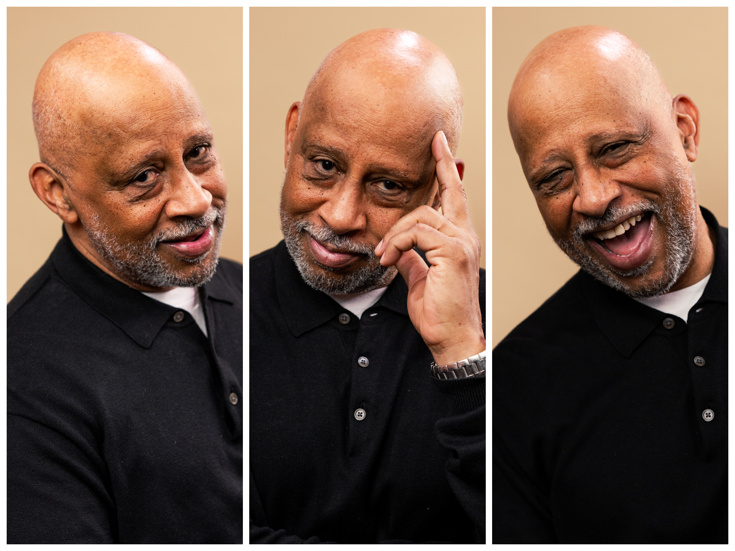
(Photos by Sergio Villarini for Broadway.com)
What to Know
- Tony winner Ruben Santiago-Hudson returns to Broadway in August Wilson’s Joe Turner’s Come and Gone at the Barrymore Theatre, directed by Debbie Allen and co-starring Taraji P. Henson, Cedric the Entertainer and Joshua Boone
- A longtime August Wilson collaborator (Seven Guitars, Jitney, Ma Rainey’s Black Bottom), Santiago-Hudson says the play is his “wheelhouse” and emphasizes its ensemble-driven storytelling and rich language
- Set during the Great Migration, the revival highlights Black life and legacy in America, with Santiago-Hudson calling on personal history and ancestry to shape his performance as Bynum Walker
Ruben Santiago-Hudson has spent a large part of his career inside August Wilson’s world. He won a Tony Award for his performance in Seven Guitars, directed the Tony-winning revival of Jitney and wrote the screenplay for the film adaptation of Ma Rainey’s Black Bottom. Now he’s back onstage, playing Bynum Walker, the spiritual center of Joe Turner’s Come and Gone, at Broadway’s Ethel Barrymore Theatre. Directed by Debbie Allen, the revival also stars Taraji P. Henson, Cedric the Entertainer and Joshua Boone.
“I’m totally at home,” he told Broadway.com Managing Editor Beth Stevens about returning to Wilson’s work. “It’s my wheelhouse, right? It’s where I’m most comfortable.”
His connection to Wilson began before the two men met. He sneaked into the second half of the original production of Ma Rainey’s Black Bottom at the Cort Theatre and found himself deeply moved. “It was where I was raised in Lackawanna, my rooming house with Nanny,” he says of being transported into Wilson’s play and his own past. He felt something on his cheek. “I said, ‘I’m crying.’ Because I didn’t know that these human beings who were the salt of the earth, hardworking, yet illiterate, yet some hobo, some from criminal backgrounds and mental asylums—who had always given me a lot of love and attention—the people who spoke like them and had similar stories to theirs could actually be a Broadway play.”
That world is also why Wilson’s language comes naturally to him. Joe Turner’s Come and Gone is set in 1911, at the height of the Great Migration, and Santiago-Hudson grew up around those voices. The migrants who settled in Lackawanna and Buffalo came up from the South. They became northerners, he said, but little else changed. “The way they cooked, the way they courted, the way they danced, the way they sang. What was important to them didn’t change.” He later channeled those same people into Lackawanna Blues, his solo play about his upstate New York childhood. Now he tries to pass that inheritance on to the younger cast members. “I say, the couplets, the triplets even, not the periods, the thoughts. What are the thoughts? And then once you find the thoughts, what’s romantic about them and what’s dangerous about them?” he says of Wilson’s language. “Find those things and they’ll give you colors.”
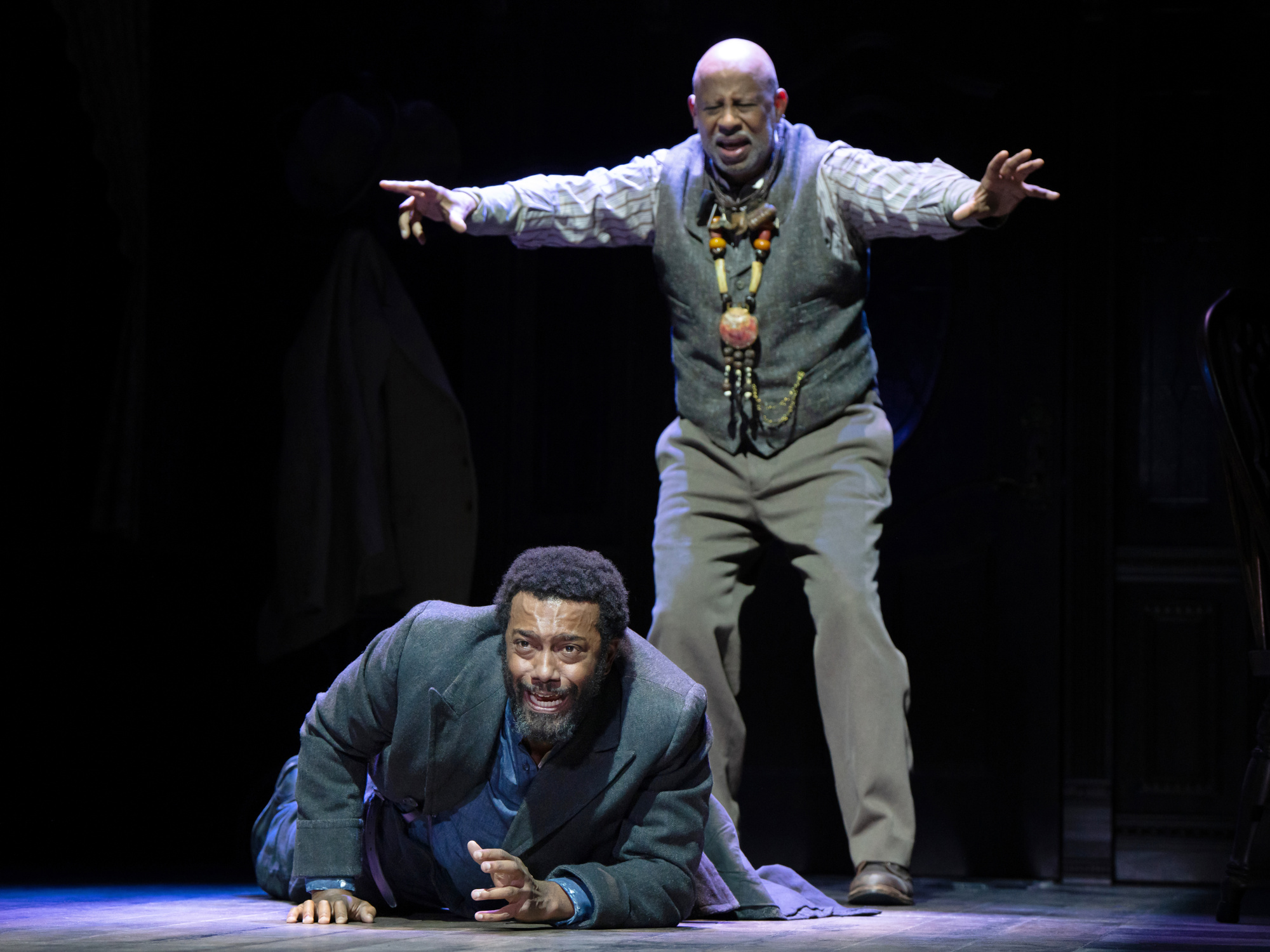
For the past several years, Santiago-Hudson has worked almost exclusively as a director. This production marks a rare return to acting. “All I gotta take care is one butt,” he laughs, noting that as a director, he is responsible for the whole production. “All I gotta make sure is I do my job.”
The production’s marquee names may be the draw, but Santiago-Hudson is clear about what audiences will find. “Make no mistake, it is not a star vehicle,” he says. “It is truly an ensemble play... When the lights come on, the playing field is even.” He speaks about the younger cast with admiration. “I need all of them. This play needs all of them and the audience needs all of them to get the full impact.”
Before each performance, Santiago-Hudson sits alone backstage and calls on his ancestors. Wilson is among them. During one performance, a woman in the front row recognized him from Lackawanna Blues and broke his concentration mid-scene. He kept his mouth moving. Afterward he asked director Allen if he’d lost the thread, thinking he’d missed his lines. “She said, you said everything word for word.” He said he felt the late Wilson’s presence. “All of a sudden, August said, ‘Boy, go ahead.' Slapped me in the back of the head, go ahead. And I just said, open your mouth, Rub. And it happened.”
Wilson used to sign his cards “the struggle continues.” He eventually stopped. Santiago-Hudson thinks he knows why. “He looked at the work almost like we were going into a battlefield, trying to knock down misconceptions and stereotypes of who we are. Trying to celebrate…that every day is an opportunity to celebrate.” He has lived long enough inside that world to feel the arc of it personally. “I was the young buck when I started out as Canewell [in Seven Guitars],” he says. “Now I’m the old sage. You can grow old with August.”
That is what he wants audiences to take with them. “The glory and beauty of just being Black in America,” he says. “That’s what I want the audience to see. I’m just like you. I want what you want… I don’t want no more and no less."
Get tickets to Joe Turner’s Come and Gone!

