Designing Broadway’s The Rocky Horror Show Revival, From Trash Bags to Tinsel
See how the design team uses found materials, hidden details and theatrical flair to reinvent the cult favorite at Studio 54

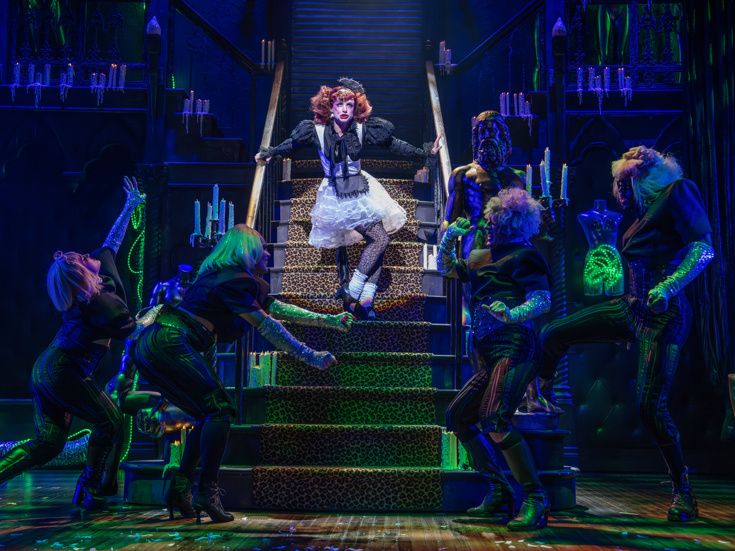
(Photo: Joan Marcus)
What to Know
- Costume designer David I. Reynoso and dots designer Andrew Moerdyk discuss how the Broadway revival of The Rocky Horror Show balances the musical’s DIY punk spirit with the scale of Studio 54
- In the interview, the designers explain how the production uses low-cost materials like tinsel, string lights, mannequins, trash bags and metallic curtains to create a deliberately raw visual world
- They also share how the revival incorporates references to earlier Rocky Horror productions and the 1975 film through hidden Easter eggs, color cues and detailed costume touches throughout the theater
Richard O’Brien’s cult musical The Rocky Horror Show has returned to Broadway, with Tony winner Sam Pinkleton directing a new spin on the beloved alien sex romp. Broadway.com Managing Editor Beth Stevens sat down with costume designer David I. Reynoso and set designer Andrew Moerdyk, one-third of the design collective dots, to talk about how they found the balance between punk rock scrappiness and spectacle for the hotly-anticipated revival.
For both designers, it was important to bring a distinctive vision while still honoring the show’s legacy. “I think for us, it was acknowledging that The Rocky Horror Show's been around for 53 years and is known and loved. We really want to lean into that. I don't think we were trying to reinvent the wheel,” says Moerdyk.
“When you think of Rocky Horror, you think of the characters and you think of what they wear, and they're so iconic. Denying that or trying to do an interjection for the sake of avoiding what's already in our minds felt like a disservice to this production,” echoes Reynoso. “There are things that certainly feel referential to previous productions of Rocky Horror or even the film, but [with] this idea of [taking] these elements that we know and sort of throwing them all in a blender, and they arrive in different spaces.”
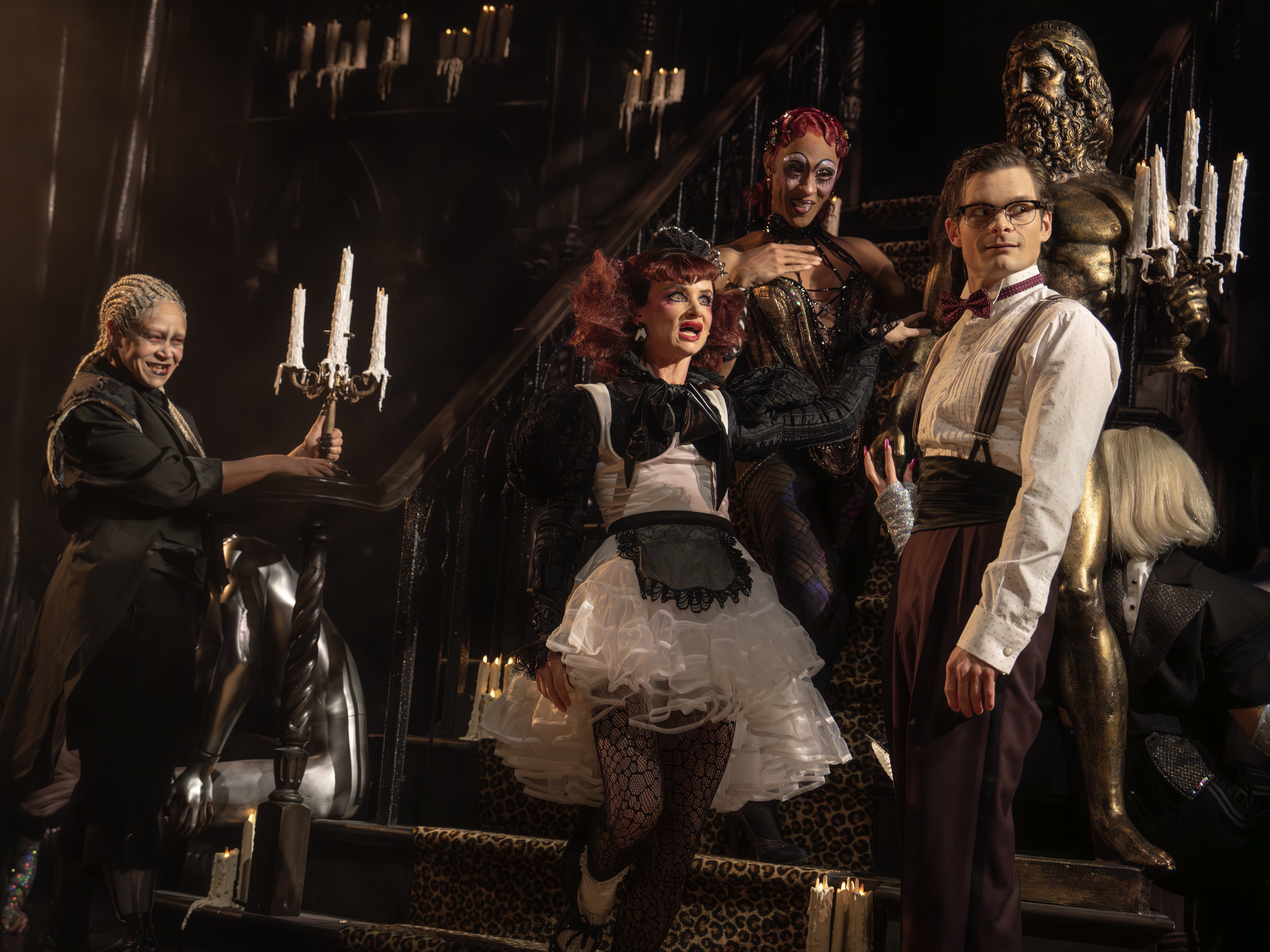
In adherence to tradition, the creative team strived to maintain the low-budget buoyancy that is associated with Rocky Horror. Says Moerdyk, “Sam was pretty adamant about it not feeling too slick and too produced. We really wanted to keep the rawness of the piece alive.” Pinkleton’s mandate has resulted in the use of unconventionally sourced material, including a winding HVAC tube, tinsel, string lights and mannequins. "We really wanted to tap into the energy of Studio 54," Moerdyk explains. "The ductwork that you'll see all over the theater—extending all the way from the back of the house—was a really important piece of storytelling for us; that this building is giving life to the show."
The production's curtain is similarly offbeat, furnished out of a tarp-like material that has proved itself to be quite effective. “The show is very self-consciously theater that is theater and not pretending to be something else. So there's a lot of curtainography in the show and we really love the fabric that we found for the curtains because it is the cheapest fabric that the supplier had,” shares Moerdyk. “It's this black metallic velour that I don't think has an application outside of The Rocky Horror Show. The way [lighting designer Jane Cox] has been using it with light, it just changes color and it becomes shiny and it becomes plasticky.”
This iteration of Rocky Horror is staged at Studio 54, a legendary venue that was once the home of New York’s hottest discotheque in the '70s and '80s. Moerdyk and his dots collaborators, Santiago Orjuela-Laverde and Kimie Nishikawa, have decked the space out from head to toe, creating a wholly immersive experience for audience members. “I don't think there's a space that we haven't touched,” notes Moerdyk. Eagle-eyed fans will notice a number of Easter eggs in the theater. “[In] the film, Frank N. Furter famously wears fun pink rubber gloves. So there's a bunch of custom pink rubber gloves with nails glued on, hidden around,” reveals Moerdyk. “Obviously the red lips is such an iconic [part of] Rocky Horror that we didn't want to replicate exactly. So we've hidden those in the bathrooms in a fun way. There's some Scott toilet paper for Dr. Scott.”
Other notable features include dolled-up skeletons, tin foil-adorned seats and green lightbulbs casting an eerie glow from a fleet of chandeliers. Even the vestibule between the doorway and the lobby is furnished for the occasion. “We found photographs of Studio 54 when it was the nightclub that had these crazy potted plants. We really wanted to bring the spirit of the original place back to life, but everything’s spray painted silver, nothing's expensive. The pedestals are trash cans turned upside down that are spray-painted.”
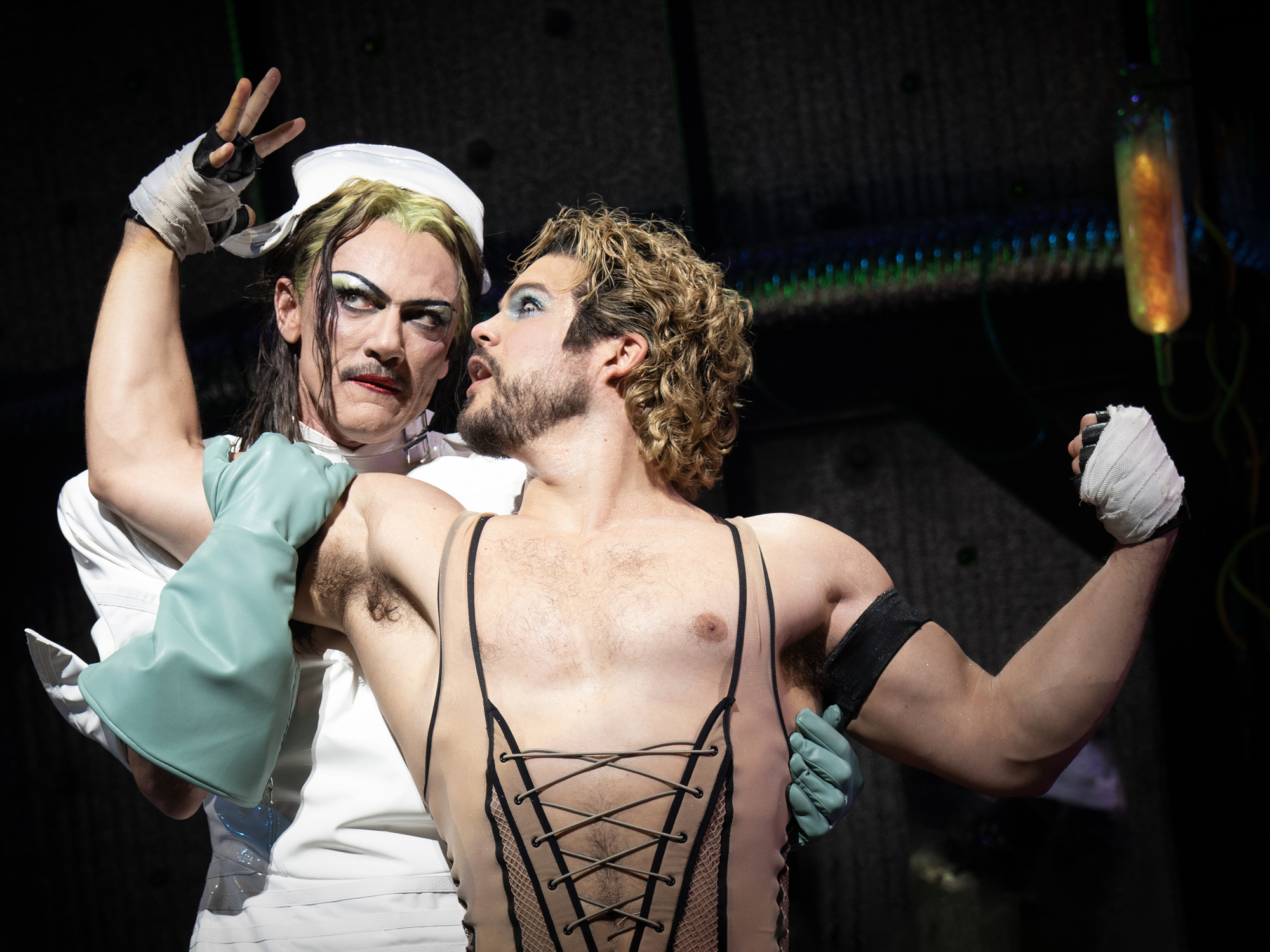
Reynoso’s costumes are similarly irreverent. “It's a work that invites a sense of DIY," he says. "I want to participate in it in a way that feels like I have brought something of myself. And I think audiences tend to do that. We wanted to have that spirit in the production that it felt like it was made out of materials that you recognize.” One such creation is a dress sported by Luke Evans as Dr. Frank N. Furter, which resembles a trash bag. As it happens, this association is not entirely off the mark. Referring to some stitching that lines the garment, Reynoso says, “These ribbons here are fully taken from trash bags.”
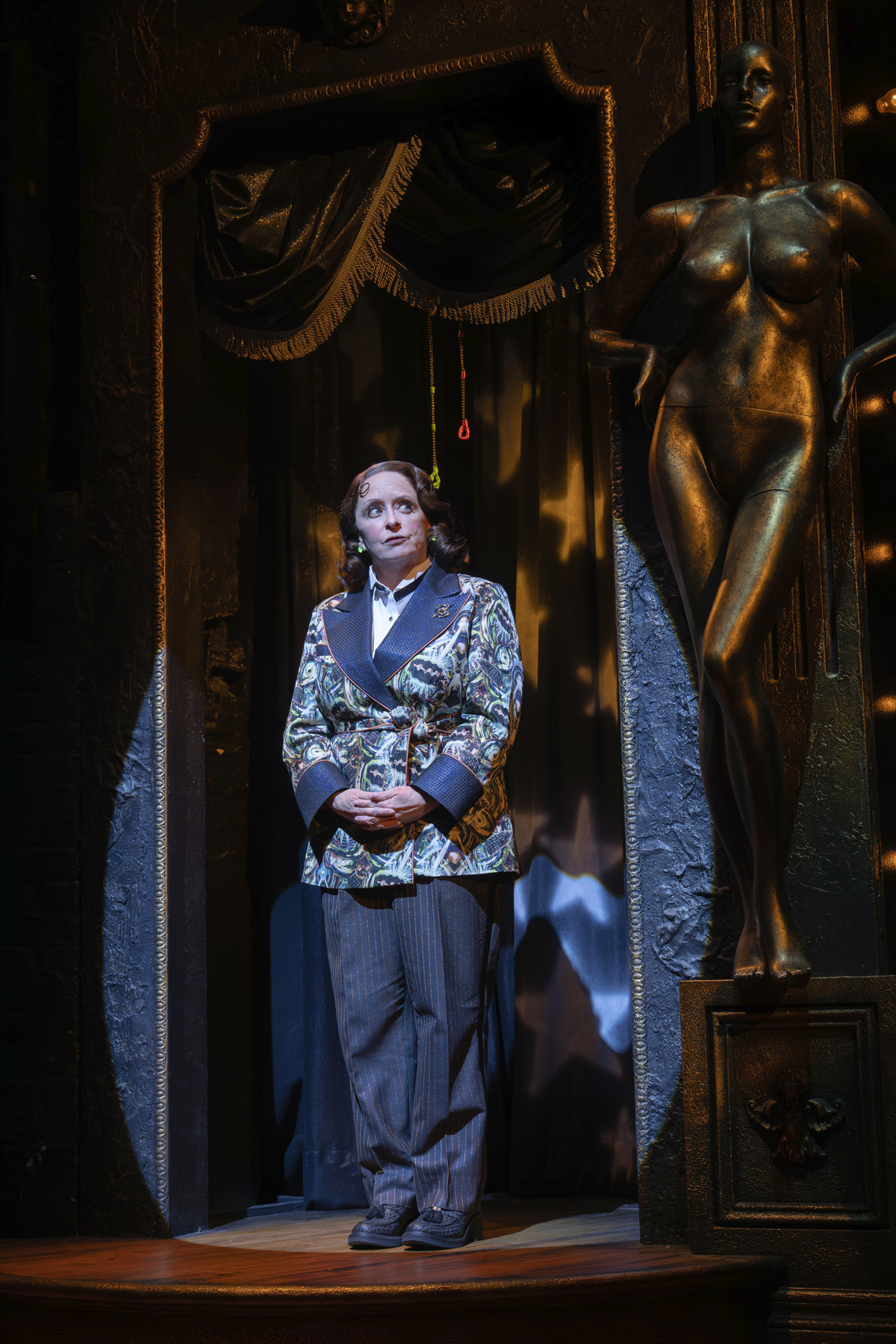
Various costumes have a green hue to them, from an usherette uniform to Janet’s demure wedding guest frock (sported by Juliette Lewis and Stephanie Hsu, respectively). This turns out to be a sly reference to the green lab coat that Tim Curry wears in the 1975 screen adaptation, The Rocky Horror Picture Show. Reynoso calls it “an interesting nod to the film without being entirely a replica.” The Narrator’s blazer worn by Rachel Dratch—designed in collaboration with the illustrator Sonya Calderon—is also referential, featuring imagery from the various B movies that live in Rocky Horror’s DNA. “There's King Kong, there's the Bride of Frankenstein. There's some tentacles, even the robot from The Day the Earth Stood Still. And then of course a castle and some aliens.”
There is a great deal of intricacy in the costumes that might be missed upon first glance, including the jacket Harvey Guillén sports as the misbegotten delivery boy Eddie. “There's a graphic back here that maybe feels strictly decorative, but has a lot of meaning. Both Harvey and I have Mexican heritage and so it felt interesting to then have something that references the Lotería card of El Diablo with a mermaid that's sort of La Catrina.” The jacket also boasts Meat Loaf’s date of birth and death, a nod toward the performer who played Eddie in Rocky Horror’s first stateside stagings as well as the film.
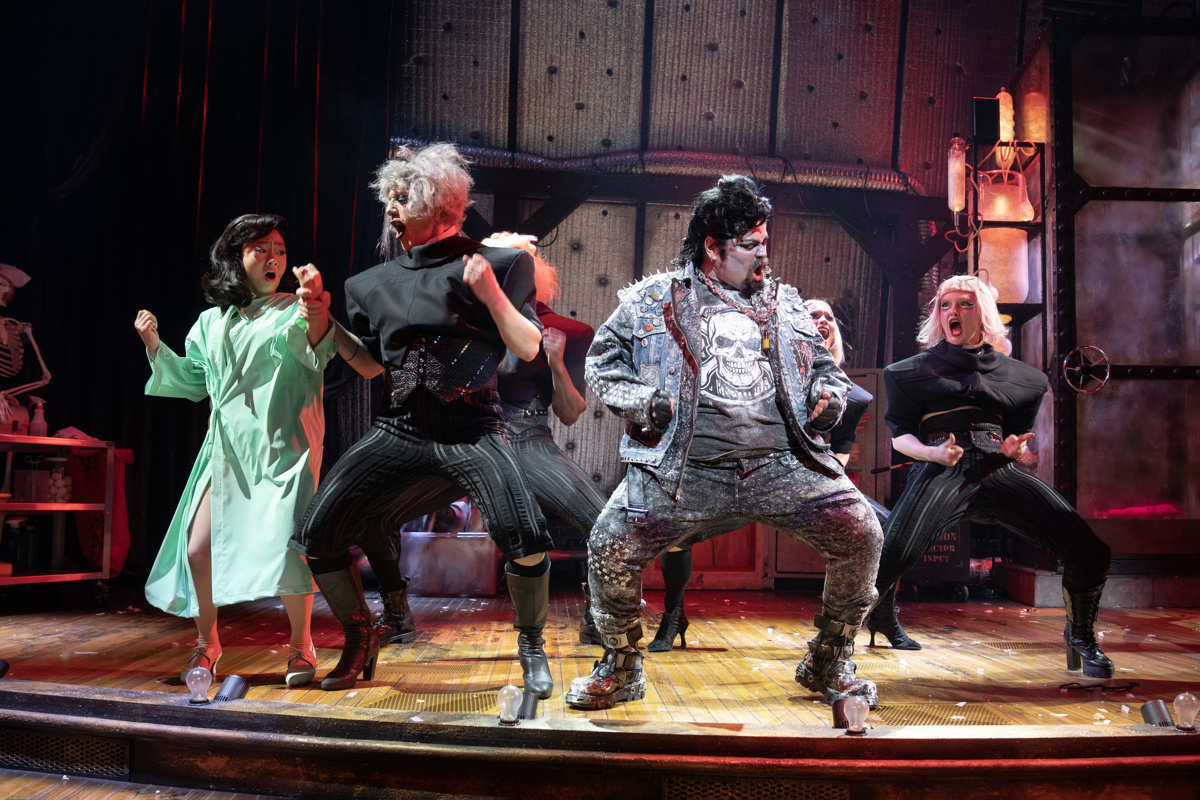
These personal touches speak to Reynoso’s mindful approach to costume design. “One thing that feels really important to me is to think about the humans who are wearing these costumes. I think about how when I go to put something on, that’s a very personal experience in terms of how it makes me feel.” To this point, Reynsoso says, “Sometimes we can feel very glamorous in things that feel truly assembled from trash.”
Moerdyk shares this sentiment, saying, “Things should be accessible and be quote unquote cheap, but look and feel beautiful to the characters and to us. That was really important. I think it honors the punk rock, anti-establishment spirit of the show. It's that, 'Don't dream it, be it.'"
Watch the full video below.
Get tickets to The Rocky Horror Show!