Written in the Stars: How Galileo Composers Zoe Sarnak and Michael Weiner Created the Rock Score for Raúl Esparza
The songwriting duo on tailoring the Broadway musical’s epic sound to its stars and bringing the revolutionary astronomer’s story to life

What to Know
- Galileo, starring Raúl Esparza, Joy Woods and Jeremy Kushnier, comes to Broadway’s Shubert Theatre this fall
- Composers Zoe Sarnak and Michael Weiner discuss creating the musical’s epic rock score
- The songwriting duo reveal how they tailored songs to the cast and brought Galileo Galilei’s revolutionary story to life

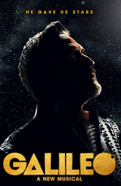
We’ve got stars in our eyes. Galileo, an original musical dramatizing the life of Italian astronomer Galileo Galilei, comes to the Shubert Theatre this fall. Joining Raúl Esparza in his highly anticipated Broadway return are Joy Woods, Jeremy Kushnier, Bradley Dean, Jordon Lee Garcia and Javier Muñoz. Danny Strong penned the book, with music and lyrics by Zoe Sarnak and Michael Weiner. Once paired up, the composers of Galileo’s epic rock score worked to tailor the material to the unique voices of the cast.
"Zoe and I met on this project through the producers of the show. We had a great meeting and discovered that we had a mutual love of musicals, rock music, science and the story of Galileo," says Weiner of his initial introduction to Sarnak. "We got together and decided to try to write a song. We figured the moment to try would be the moment that Galileo looks through that telescope and sees for the first time that there are more stars in the sky than the human eye has ever seen. We thought if we could do that, then maybe that would mean we could collaborate together.”
“I don't remember it feeling stressful or like a test,” adds Sarnak. “Because we have the ability to play multiple instruments and jam together as two musicians, we can kind of sit down and just start playing. There's something almost unspoken about being musicians in a room and jamming. We wrote the first draft of the song that day.”
Science may seem like an unlikely subject for a musical, but Sarnak makes the argument that it's actually a natural fit. “I really love showing that scientists are artists—how we pore over our music or lyrics or design or any of those things—it moves your body how much you care,” she says. “My father's a mathematician. I studied science and music both in undergrad. It felt like a really special thing to get to represent the emotion and the passion and the complexity of a person who studies this material.”

"With Galileo, we wanted him to sound like a rock star who exploded out of that theater, because we viewed Galileo as a character who was kind of like a rock star of his age—challenging authority, questioning authority, all the things that we associate with that kind of person," explains Weiner. "Raúl's voice fits so perfectly with that kind of music. At the same time, he has this incredible ability to sing these beautiful, soulful, very intimate ballads."
Woods plays Galileo's daughter Virginia Galilei, who is a genius in her own right. “Joy has an incredible gift with the way that she can use the dexterity of her voice to share emotion," Sarnak says of Woods’ performance. "She can sing anything, but she uses dynamics and where she places things and pulling through a note like taffy—the way that she uses that instrument felt like we wanted to write things that were lush and beautiful and then explosive and powerful and really let her use the full dynamic of her voice.”
Galileo explores how the scientist's findings questioned the authority of the Catholic Church in 17th-century Italy. At the heart of this conflict is Galileo’s complicated relationship with Bishop Maffeo Barberini, played by Kushnier, who went on to become Pope Urban VIII. “Jeremy is one of the most incredible vocalists on the planet. It gives the ability for the church to have a new sound, something that [helps the audience] understand why this was so important to everyone and actually almost modern,” says Sarnak.

“We didn't want them to come off as villains,” adds Weiner of the show’s depiction of the church. “This is what they believed. This was their worldview.” Expanding on this perspective, Sarnak says, “This is not a piece that we ever wanted to feel black and white. It has to feel as complex as it was. When there were popes that were good, they were providing stability, solace, guidance. We can really build a complex story that shows many sides.”
“I think audiences should come see Galileo because it's an energetic, powerful night of theater that asks very real questions about who we are, about what we do in the face of authority and power, and our need as human beings to push society forward,” concludes Weiner of Galileo. There's no question that Galileo will get people talking.
Galileo begins performances November 10 at the Shubert Theatre. Get tickets!