
Shaina Taub Makes History Sing in Broadway’s Ragtime and Keeps Suffs on the March


(Photo by Emilio Madrid for Broadway.com)
Theater people—creators and fans alike—love Ragtime, with its gorgeous score, sweeping book and complex characters. The distinctly American musical is being revived on Broadway’s biggest stage, the Vivian Beaumont, directed by Lincoln Center Theater’s new artistic director, Lear deBessonet. In casting the show, deBessonet didn’t have to look far to find the ideal Emma Goldman: Shaina Taub, two-time Tony winner for the book and score of her own historical musical, Suffs, had already portrayed the fiery anarchist in a 2016 concert on Ellis Island. That same year, Taub composed and starred in deBessonet’s musical production of Twelfth Night in Central Park.
Fast forward a decade, and Taub is one of the country’s busiest theater pros. While in rehearsal for Ragtime, she launched the first national tour of Suffs, after overseeing youth and junior versions that will eventually take the story of the women’s suffrage movement to schools nationwide. Her lyrics for The Devil Wears Prada are currently being sung by Vanessa Williams in London, and she’s at work on two as-yet-unannounced new shows. This dynamic multi-hyphenate recently chatted about her career inspirations with Broadway.com.
How exciting is it to be juggling Ragtime and your own show’s national tour?
It’s such a thrill. I’m in Yakima, Washington [the first stop on the Suffs tour], right now, and I’m aware of how fortunate I am to see these projects come to fruition.
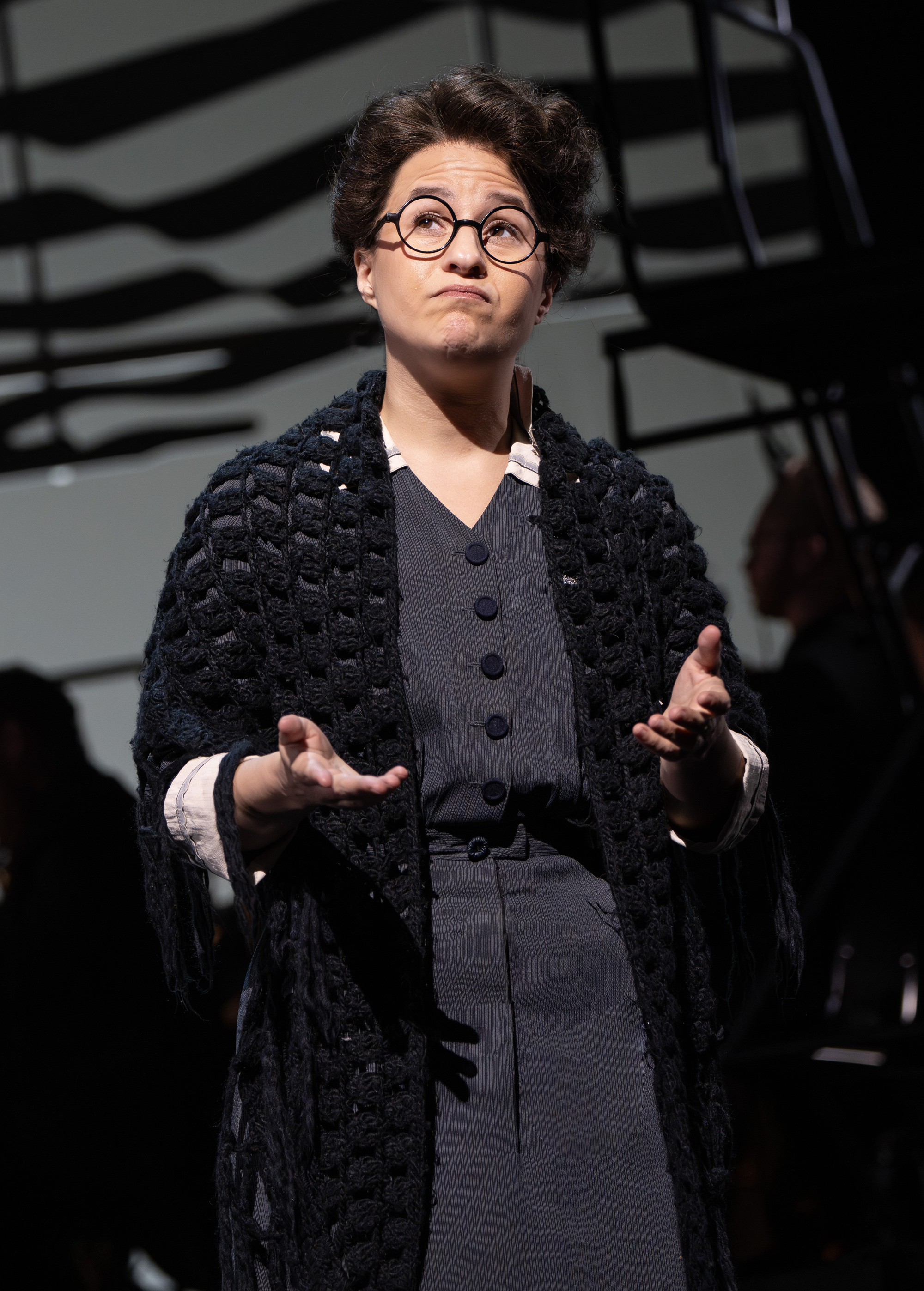
At this point, it must be interesting to act in a musical you didn’t write.
That’s what I did at the beginning of my career. Early on, it was great to be in the off-Broadway casts of Natasha, Pierre and Hadestown and to work with amazing composers like Dave Malloy and Anaïs Mitchell. That whetted my appetite to be on the creative side. Now, after having written a big show, I love being an actor again, especially in Ragtime.
You were 10 years old when Ragtime went head-to-head with The Lion King at the 1998 Tonys. When did you become aware of it, and what makes it a great musical?
I saw the Ragtime performance on the Tony Awards that year, and my mom got me the cast album. I just became obsessed and memorized every word. One thing that makes Ragtime uniquely brilliant is that there are three distinct, richly developed protagonists, and two of them—Tateh and Coalhouse [Walker, Jr.]—never cross paths. I can’t think of another musical that pulls that off. There are even two 11 o’clock numbers, “Back to Before” and “Make Them Hear You.” The show should collapse under its own weight, but it feels completely airborne because of the soaring nature of the music. I like to say that it defies the laws of musical theater science.
You posted a photo on Instagram of yourself as a kid playing Emma Goldman in the musical Tintypes. Talk about full circle!
I feel like Emma and I have been following each other around my whole life. I did Tintypes when I was 11, in 1999, right after I had become obsessed with the Ragtime cast album. She also shows up in Assassins, so she’s found her way into three American musicals. As a character, she doggedly pursues what she is passionate about. I’m not saying that I agree [with her tactics], but her version of anarchy had a fundamental sense of hope.
I laughed at Wikipedia saying she was not a supporter of women’s suffrage.
I know, I love that! She was highly skeptical of the suffrage movement not looking out for working women. I really wonder what a conversation between Emma and Alice Paul [the character Taub played in Suffs] would be like.
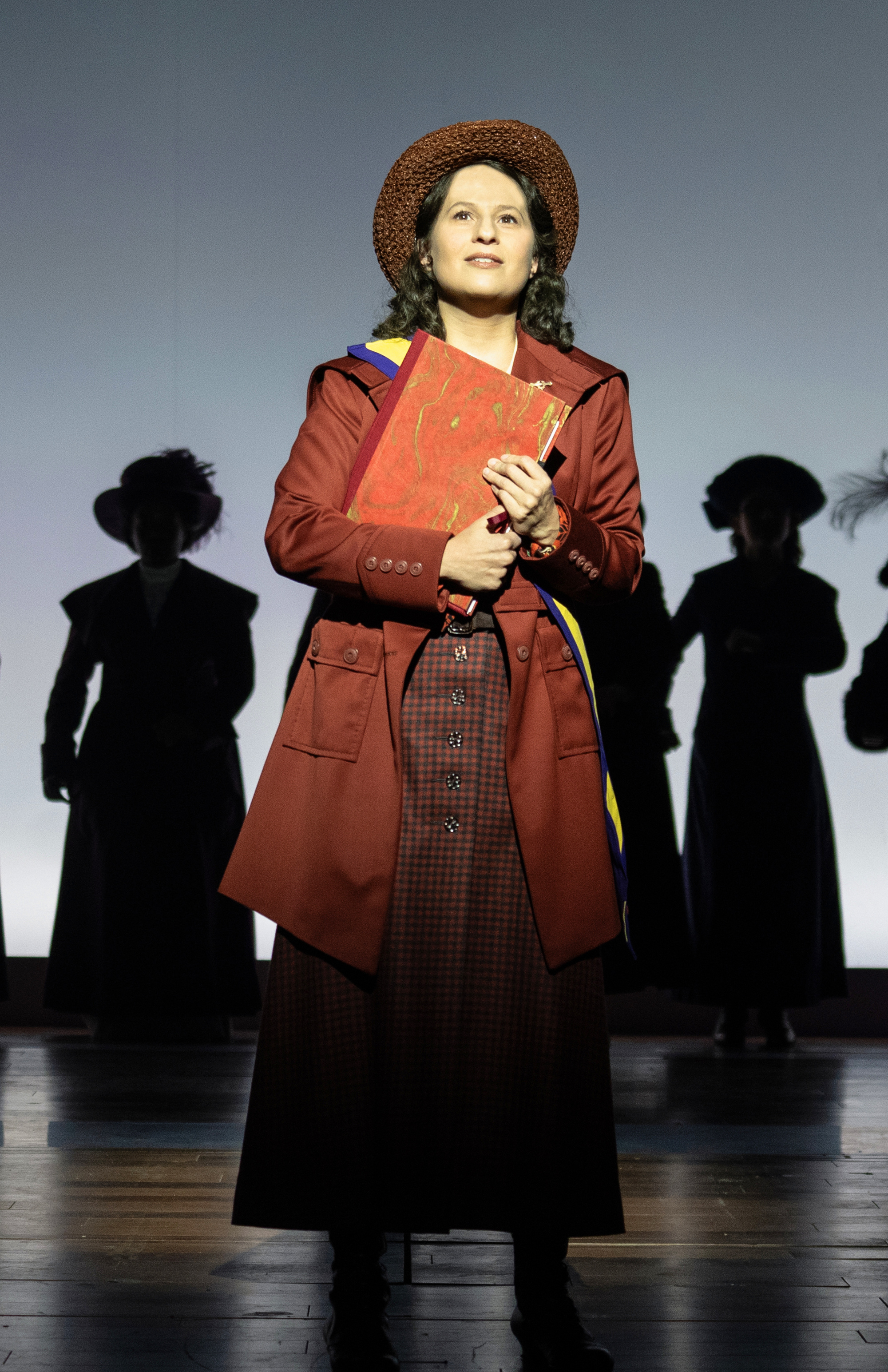
You mentioned your NYU professor, the late Elizabeth Swados, Jeanine Tesori and Ragtime lyricist Lynn Ahrens in one of your Tony acceptance speeches. What do you admire about Ahrens’ lyrics?
The economy of them. You look at her lyrics on the page, and there’s a tautness and a simplicity, in the service of clarity. Also, she writes like people talk. These phrases—"We can never go back to before,” “You are your Daddy’s son,” “Make them hear you”—feel like they’re organically coming from the character. I don’t think, “Oh, how clever.” I don’t hear the hand of the author. That is her superpower.
What’s the key to writing musicals that feature real people and events without turning into a diorama?
That was my biggest challenge with Suffs: how to foreground the humanity and background the history. People can go to books and museums to learn facts, but we come to the theater to emotionally connect with characters, so my job was to make you fall in love with these people and then go home and learn more.
"People can go to books and museums to learn facts, but we come to the theater to emotionally connect with characters." —Shaina Taub
Suffs benefited from debuting off-Broadway. You added two show-stopping numbers, including “Great American Bitch,” for the Broadway production. How were you able to step back and do that work?
Being in the show was actually really helpful because I got to experience it every night, so I had this immediate data pool of “here are the laughs” and “here is when the audience is getting restless.” I started rewriting even before the [Public Theater] run ended. And the thing is, we had to work on it without a promise of a future. It took two years before we came to Broadway.
Were you surprised to win 2024 Tony Awards for both Best Book and Best Score?
Are you kidding? I’ll never get over it! I watched the Tony Awards with my mom every year as a kid in Vermont, so just to be invited to the party and have our show perform would have been enough. I was over the moon already, and to receive that recognition in such an incredible season? I’ll spend the rest of my life trying to process that.
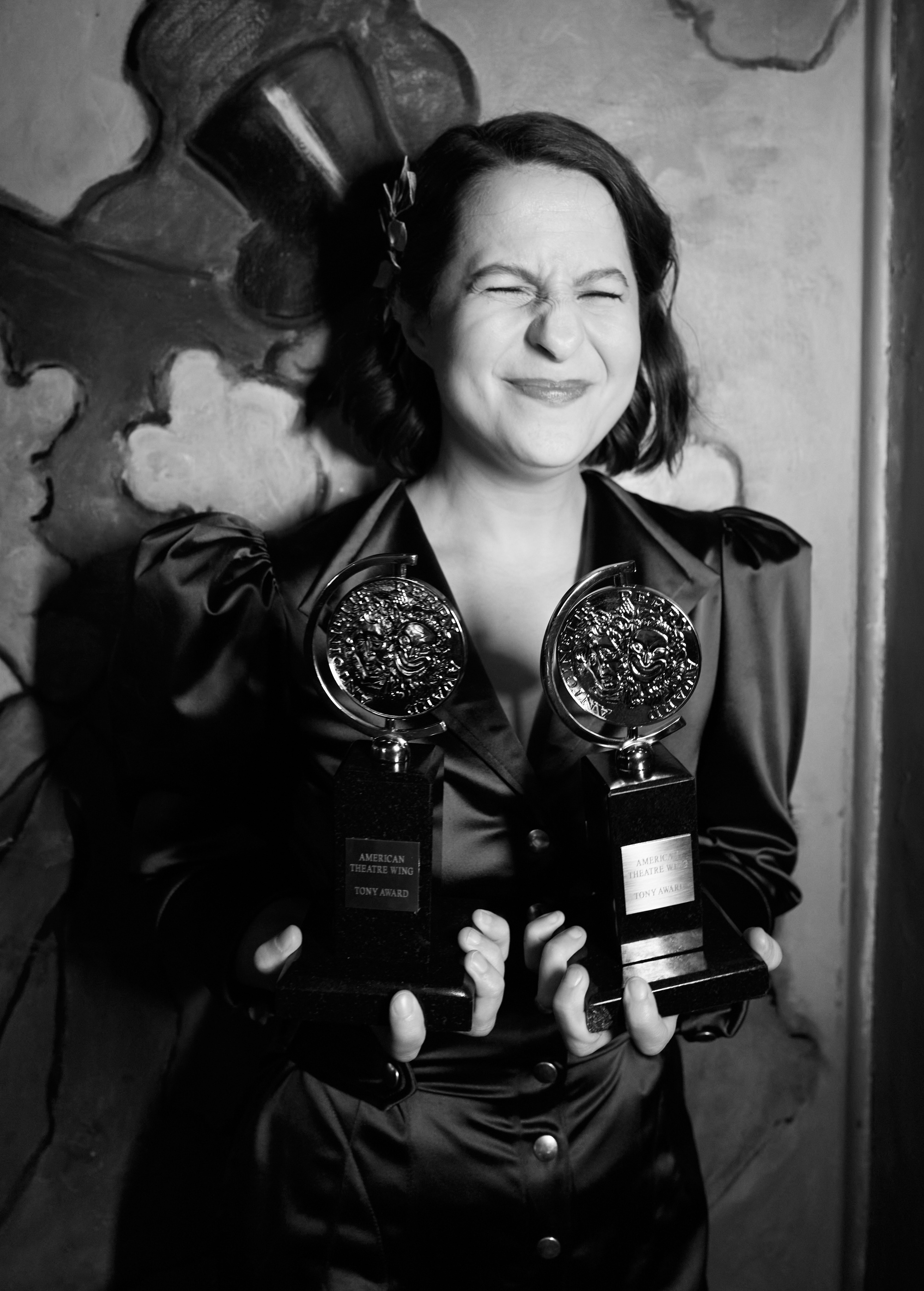
Give us a preview of the Suffs tour, in which 22 talented actresses are hitting the road.
The cast is spectacular. The spirit of the original [production] is alive, and they’re putting their own spins on it. That’s my favorite part about theater, the fact that we pass these projects down and new people fill them up. I’m just thrilled that we’re getting to bring a story like Suffs around the country, especially in this current moment.
Tell us about working with Elton John on The Devil Wears Prada, which has been a hit in London for almost a year.
I was 29 in those first sessions in the recording studio [in 2018], and I was so nervous, as you can imagine. Elton John has been a hero of mine for my entire life; any songwriter idolizes him. I walked in, and he immediately embraced me and treated me like an equal partner. It was amazing to me that after all these years, he still has a sense of play in making new work. Those were some of the most magical creative days I’ve ever had, and I’ll always cherish them.
What drew you to that material?
This may surprise you, but I saw it as similar to Suffs. The central conflict in The Devil Wears Prada is between a mentor and her protegee. The Carrie [Chapman Catt] and Alice [Paul characters] in The Devil Wears Prada are Miranda and Andy. I was in the early days writing Suffs at the time and doing a contemporary version of that relationship felt appealing. How do two generations of women pursue their ambitions while holding on to their integrity?
Any news about when the show might come to New York?
I have no idea. I’m just delighted it’s done well in London. Vanessa Williams is so great [as Miranda], and the cast album is coming out this month.
What’s next for you?
I’m working on two new shows. I can’t say what they are yet, but I’m really excited about both projects. I’m working collaboratively with dear friends who are some of my favorite musical theater writers in the world. Hopefully I’ll get to say something soon, but I’m enjoying playing with others and not being alone in the sandbox.
For now, you get to help introduce Ragtime to a new generation.
I’m so proud of this production, and I hope that Lynn and [composer] Stephen [Flaherty] and the late great [book writer] Terrence McNally get celebrated all over again for their masterpiece. Every night, when I watch Joshua Henry and Nichelle Lewis sing “Wheels of a Dream,” I know that I am witnessing a legendary Broadway performance. I feel lucky to be part of that.

