
Joshua Boone Meets the Moment in Joe Turner’s Come and Gone
The Broadway actor on landing Herald Loomis, working with Debbie Allen and stepping into a dream role


(Photo: Julieta Cervantes)
What to Know
- Joshua Boone stars as Herald Loomis in the Broadway revival of August Wilson’s Joe Turner’s Come and Gone, directed by Debbie Allen at the Barrymore Theatre, alongside Taraji P. Henson and Cedric the Entertainer
- Boone landed the role without auditioning after working with Debbie Allen and calls the opportunity “aligned and ordained,” marking a major career moment following his Tony-nominated run in The Outsiders
- The actor describes the role as a deeply spiritual and emotional journey, emphasizing the play’s timeless themes of identity, family and self-discovery that continue to resonate with audiences in 2026
Back when Joshua Boone was a drama student at Virginia Commonwealth University, he took a class called Intro to Drama. “We read 15 plays in all and there was no acting,” he explains. That’s when he first discovered legendary Pulitzer Prize-winning playwright August Wilson. The powerful works changed him—or, in his words, “planted the seeds” for more. “I just started fantasizing about doing those kinds of plays,” he says. “And I always told people, ‘If I were to do a revival, I want it to be either Shakespeare or August Wilson.'”
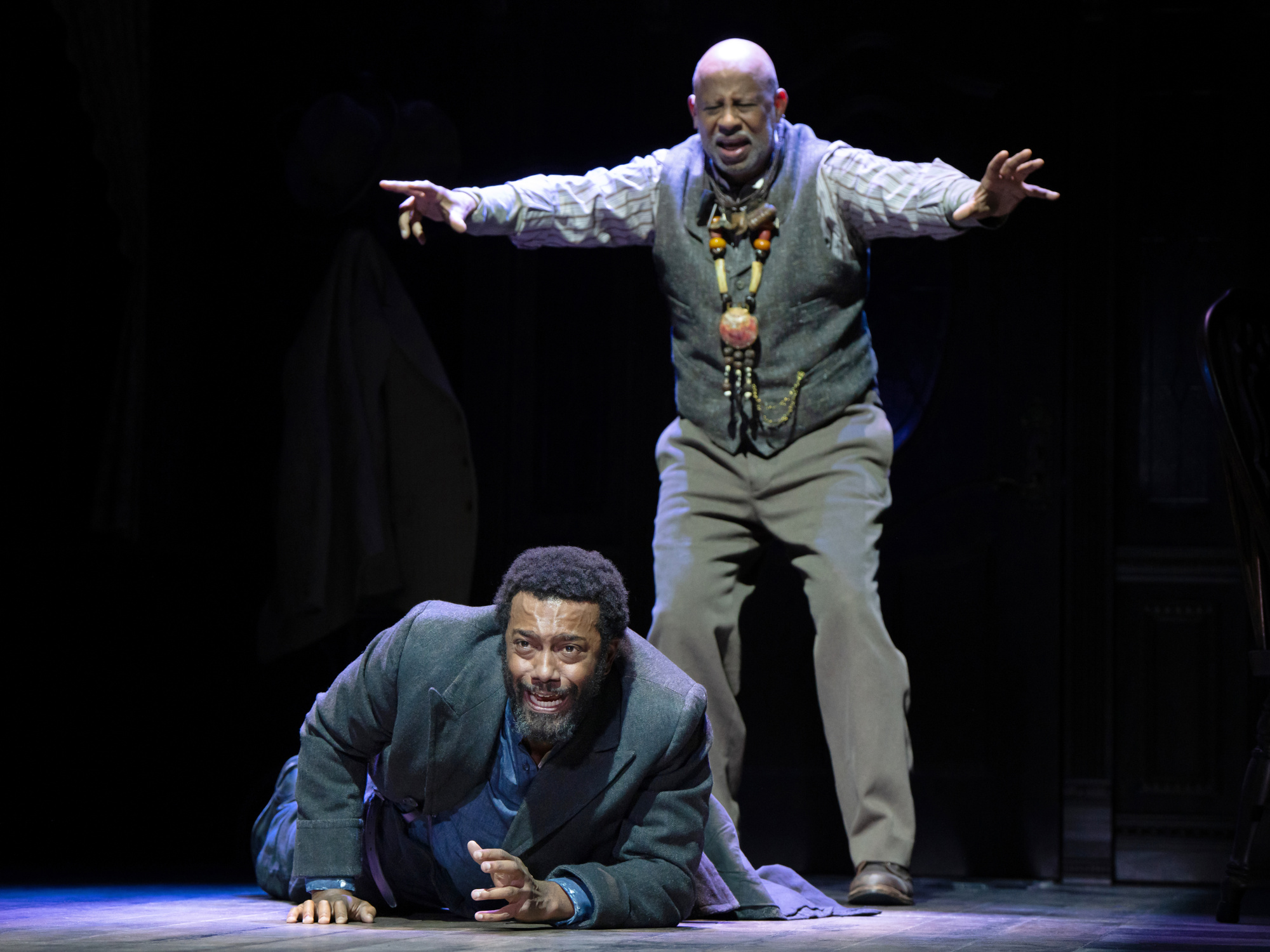
More than a decade later, he finally gets his chance in the Debbie Allen-directed revival of Joe Turner’s Come and Gone. Inside the Barrymore Theatre, Boone moves audiences to tears playing Herald Loomis, a deacon who turns up at a boardinghouse in Pittsburgh circa 1911. With his young daughter in tow, he tells the managers (Taraji P. Henson and Cedric the Entertainer) that he’s looking for his estranged wife. He ultimately becomes physically and spiritually unmoored at the memory of being illegally enslaved by bounty hunter Joe Turner for seven years. “He’s lost his essence and is trying to re-discover that,” says Boone, who finished his run as Dallas in the Tony-winning The Outsiders in early 2025.
The afternoon before a Thursday preview performance, an introspective Boone talked to Broadway.com.
This is such a demanding role. How do you decompress in between performances?
I’m still figuring it out. There’s almost a decompression in the play’s final moment. But once I’m in the dressing room, it’s not that hard to let go, which I’m grateful for. It’s a matter of taking care of my body and mind and spirit when I’m not in the space. I pray, that’s number one. I ask God to help me. I do physical therapy. I spend time with my friends and my family.
How did you get involved in the show?
In May of last year, I got a call from Miss Allen, who I worked with in a film called A Jazzman’s Blues. She choreographed the dance numbers in it, and she saw The Outsiders. She had been championing me and just telling me how much she loved my work. And she gave me words I prayed for: She said that she was doing Joe Turner’s Come and Gone and asked if I would be her Herald Loomis. I said to her, “I feel like I have to say yes.” It just all felt aligned and ordained. When you get a call from somebody with the history, the longevity and legacy that Miss Allen has…I felt empowered. There was no doubt I could step into this. It just set me ablaze, if you will.
So you didn’t even have to audition?
No. She called, and that was it. I know how many people want this role. And when you see the show, you expect to see a big name. I’m sure she had to tell people, “I don’t care what you think—I want him.” For her to believe in me and trust in me, how can I not give her everything?

What makes the Herald Loomis character so special?
His spiritual journey. I’m not talking about religion— I'm just talking about spirit. He’s a man with a spirit who, in certain years of his life, was involved with the church, got snatched up by a white man and comes out seven years later. At times, he’s a man possessed. What does that mean? You can be possessed by anything: food, clothes, attention. But he’s possessed by a force that may not be good. And therein is the challenge: How do you bring that out and get audiences to see and understand that for and within themselves?
Talk about working with Taraji and Cedric. What’s your relationship like with them?
It's been great. I have to treat them as humans, not as the people who have made my eyes light up every time I watch their work. So I honor their humanity and pay them my respects as somebody influenced and inspired by them. And we are having a great time. They're so cool and so right for these parts. It feels good just to share space with them and be on the journey with them.
Given Cedric’s comedic background, does he keep the mood light offstage?
You know what? I need to ask Cedric what his last name is. Is Cedric even his first name? Because behind the scenes, he's one of the coolest, smoothest people you could be around. There are times where he keeps it light and fun, but there are times when he’s so serious about his work. He’s not taking his responsibility in this role lightly. And it's so inspiring to see him at work because I know I have to bring it. This is not, in my opinion, Cedric the Entertainer doing August Wilson. This is a human artist who is labeled Cedric the Entertainer. If that moniker did not apply in this show, I don't think he would mind at all.
"I have a duty and an obligation to every human who sits in that seat. I just want to give this story to them."
—Joshua Boone
What kind of notes does Debbie Allen give you?
It’s like this steady hand that is not on your back but just around your space. She has given me so much freedom to explore and try things within this role, and her notes for me have been hyper-specific towards maintaining my intentions. I will say that she’s old-school. She shoots straight. She talks straight. Even to the little kids in the show, she’ll say, “I need you to do this. This is what is happening here.” You have to be willing and able to step up to that and rise to that.
For you, what’s the biggest difference between performing in a musical and a play, other than singing?
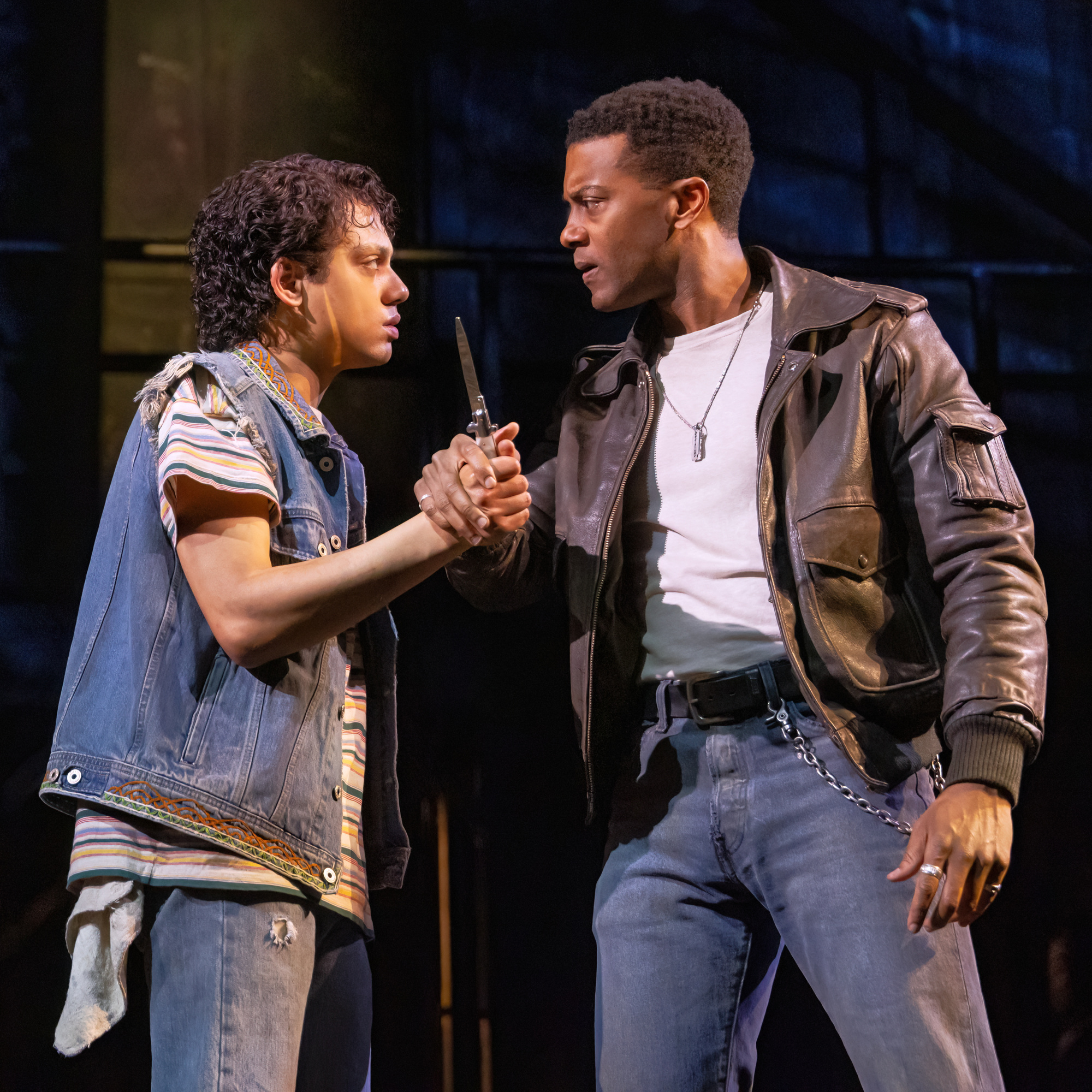
Other than the singing? The work is the same; it's not a style switch. I believe in truth and groundedness in every medium, whether it's music or painting or writing. Even when I'm singing in a show, the goal is to feel it as true and real. And it's not about, "Do you enjoy my voice?" It’s, "Does this moment move you?" I'm committing to whatever the circumstances are at that moment. And I hope that by existing in that way, the audience is drawn into the story. I know some people want to go see a musical just to hear people sing and dance, but that’s not my intention.
This play was written in the 1980s and set in 1911. Why does it still hold up in 2026?
Anytime somebody revives anything, the question is “Why now? What has changed?” And in my experience, all that’s changed are the clothes. Each person in this boardinghouse has a completely different set of experiences that they're living and going through, all of which people today can connect with and connect to. But beyond all of this, it goes back to God for me. We talk about family, love, being split up, finding what's lost. What does it mean to talk about the essence of all humanity? And what does it mean to find and discover that part of yourself? That existence in itself will always be timeless, which is why this play is timeless.
These are deep answers. Are you a philosophical person?
I’m doing my best to speak my truth. The work is not about me. I'm grateful for the opportunity. And after I say yes to the opportunity, I have a duty and an obligation to every human who sits in that seat. I just want to give this story to them.
Get tickets to Joe Turner’s Come and Gone!

