
(Photo by Michele Aboud, Design by Ryan Casey for Broadway.com)
Inter Alia Playwright Suzie Miller on Putting Motherhood and Feminism on Trial
Miller opens up about the inspiration for Inter Alia, her follow-up to Prima Facie, and Rosamund Pike’s “sensational” Broadway debut

What to Know
- Suzie Miller’s Inter Alia explores motherhood, feminism and the invisible work of working women
- Rosamund Pike makes her Broadway debut as Judge Jessica Parks after winning an Olivier Award for the role
- Miller follows the international success of Prima Facie, which helped inspire changes to jury instructions in British sexual assault cases
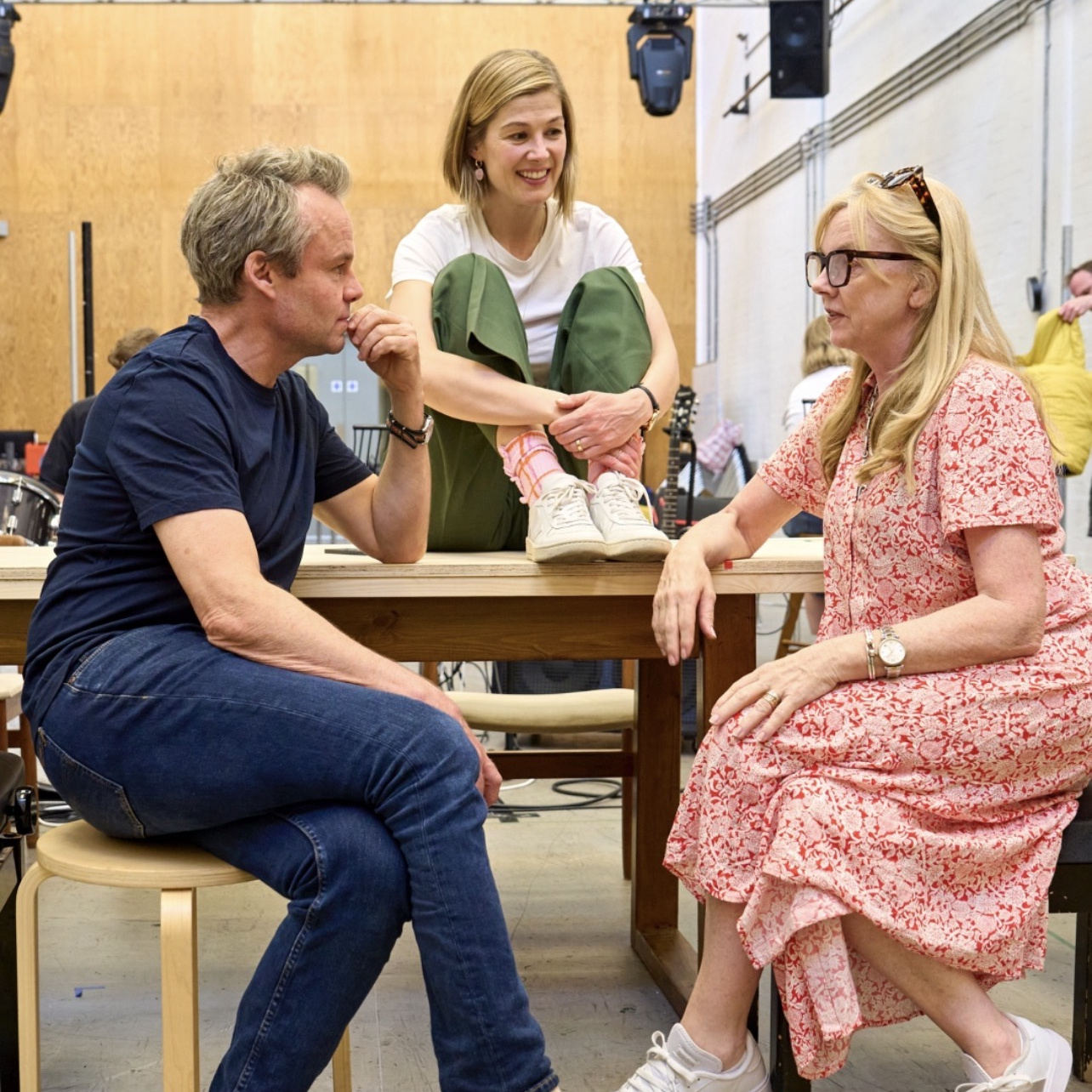
Suzie Miller put up with her share of mansplaining as a criminal defense lawyer in Australia, but when a theater pro in her native country declared, “Women can’t write plays,” she got down to business. An early work, Reasonable Doubt, won an award at the 2008 New York Fringe Festival; a decade later, Prima Facie, a scorching solo drama about sexual assault, became an international hit, starring 2023 Tony winner Jodie Comer. As a follow-up, Miller penned Inter Alia, featuring another charismatic female attorney whose avowed feminism is tested by a devastating accusation against her teenage son. Rosamund Pike will recreate her 2026 Olivier Award-winning performance as Judge Jessica Parks in the play’s Broadway transfer, which begins performances on November 10 at the Music Box Theatre. During a chat from her home Down Under, Miller gave Broadway.com a preview.
Let’s start with your latest dynamic lead character, played by Rosamund Pike. How would you describe Jessica?
She’s a highly successful judge—more successful than her [lawyer] husband, which is something she has to manage. She’s the mother of a boy she has tried to raise as a feminist, a son who has respect for women, and she prides herself on that. She also has lots of close girlfriends who are barristers and solicitors and judges. She’s like every woman I know: She is juggling.

Hence the title, a Latin legal term that means “among other things.”
Exactly. When I started, I was thinking about the scenario in the play, but as I got to know the character, I realized I was writing about the lives of working mothers.
Jessica’s motherhood is a crucial element in the play, something that isn’t portrayed often enough on stage.
In the first scene, she’s in the middle of a trial, with eight missed calls from her son. In the theater, you can hear the mothers laughing because they know exactly what it’s like to have to maintain a professional face while managing a crisis at home. And the “crisis” is usually something ridiculously banal like “I can’t find my shirt.” But the mother is the first person anybody calls as primary caregiver, even if she is under more stress than her partner. I wanted to make the invisible work women do all day visible in the play.
"I wanted to make the invisible work women do all day visible in the play."
—Suzie Miller on ‘Inter Alia’
Without giving anything away, how does Jessica’s family life come into conflict with her work as a criminal court judge?
Her son has just turned 18, and he is accused of something that absolutely explodes her life, the thing mothers of sons are most anxious about. There’s the terror of the accusation, hoping that you would react a certain way as a feminist, but knowing it requires a different type of brain as a mother. I felt strongly about what I wrote in Prima Facie [in which the lead character accuses a colleague of sexual assault], but I have a daughter and a son—and I wondered what it would feel like if the young man I love most in the world was suddenly in a situation of being judged. How would I cope with that?

A striking element of Inter Alia are the quick shifts between what Jessica says and what she is thinking.
I wanted to show the multiple voices women are constantly managing. When I started writing plays, there were no women playwrights being acknowledged in Australia. Someone actually said to me, “Women can’t write plays,” and, “If you don’t have a male protagonist, no one will come.” I thought, this is crazy! It became an act of sheer desire to write something that meant something to me in terms of exploring women’s inner voices. The women I know are operating on 10 tracks at once, managing their careers, their emotional relationships, their households, their aging parents, their friendships, their desire to express themselves and to see their needs reflected. I wanted to show the multifaceted nature of a woman’s mind.
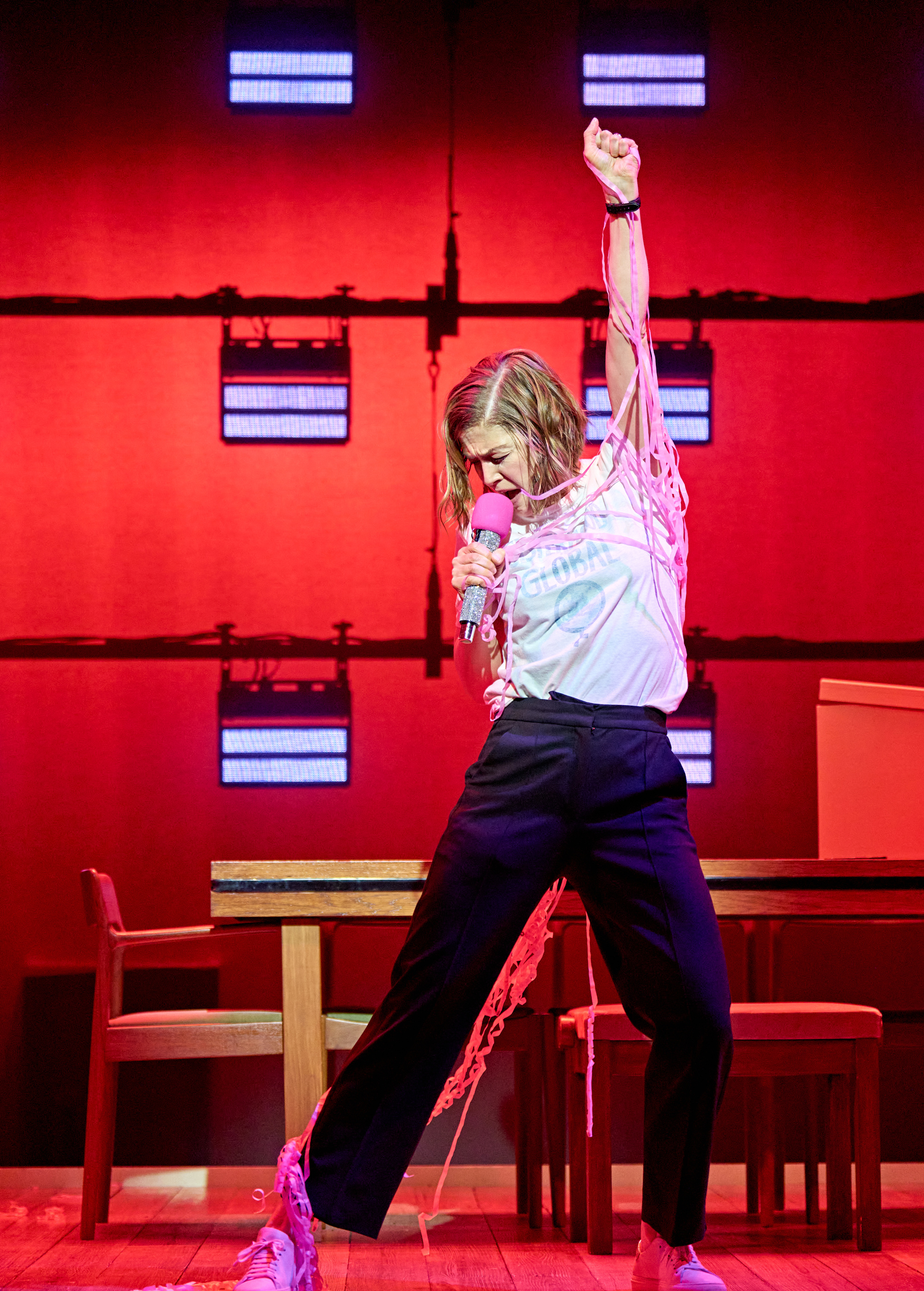
Rosamund Pike, an Oscar nominee for Gone Girl, is making her Broadway debut as Jessica. What qualities does she bring to the play?
First of all, she brings a really biting intelligence, which I love—it’s lovely to have a woman in the room who is smart, rigorous, thoughtful, witty and well-read and who understands the concepts of the play. She’s the mother of two boys who are about to be teenagers, so she’s on the cusp of conversations about what they might know or not know. What I found interesting is that she hadn’t been on stage in 15 years, so she was anxious. Because she’s a movie star! She was putting her career at risk to do this. I didn’t realize at first how significant it was for her to place her trust in this production. With a new play, the changes happening in rehearsal can be a shock when you’re trying to learn your lines and grab hold of the character. Some of the moments she has to embody are terrifying and devastating, and she goes through that every night at 100 rpm. And she just gets better and better, so what you’re going to see in New York is absolutely sensational. I don’t say that easily, but watching her in this play is extraordinary.
It’s been reported that your work helped bring about changes in how juries are instructed in sexual assault cases.
Isn’t that amazing? Three days after Prima Facie opened on the West End, I got a call from one of the main judges in the London Old Bailey system. She identified herself in a posh British accent and said she would like to talk to me about my play, which she had seen the night before. She sounded very formal, and my heart sank; I thought I was going to be sued. But she said, “I write the compendium that judges read to the jury before they go out for deliberation. I sat up all night thinking about your play, and I rewrote [the section about] what the jury must take into account in cases of rape and sexual assault. I’m ringing to ask your permission to use some of the words from the play in that statement.” I was floored. I had practiced law for 15 years—I’ve got a bachelor's and a masters in law—and that three-minute conversation had more impact than anything I’ve ever done. The “Prima Facie direction” is used every day in British courts.

After the success of Prima Facie, how are you feeling about bringing Inter Alia to Broadway?
It’s the dream, isn’t it? I have a really great relationship with Americans. I live mostly in Britain now, although I am Australian, and the way Americans talk about Australia is different to the way people talk about it in Britain. When I’m in Britain, I’m aware that we were a colony; [the British] don’t always understand that some of the mannerisms and class-isms are things Australians revolted against, the same way Americans did. [Laughs] It’s refreshing to speak to Americans, who are so upfront about things, much closer to the Australian way of being. America is a very easy place for me, and Broadway is so vibrant—there are so many beautiful theaters next to each other, piled up in that little zone. It’s such a joy, and I’m delighted to be coming back.
Get tickets to Inter Alia!