Kathleen Chalfant and Ellen McLaughlin on Pen Pals Off-Broadway and Their Angels in America Bond


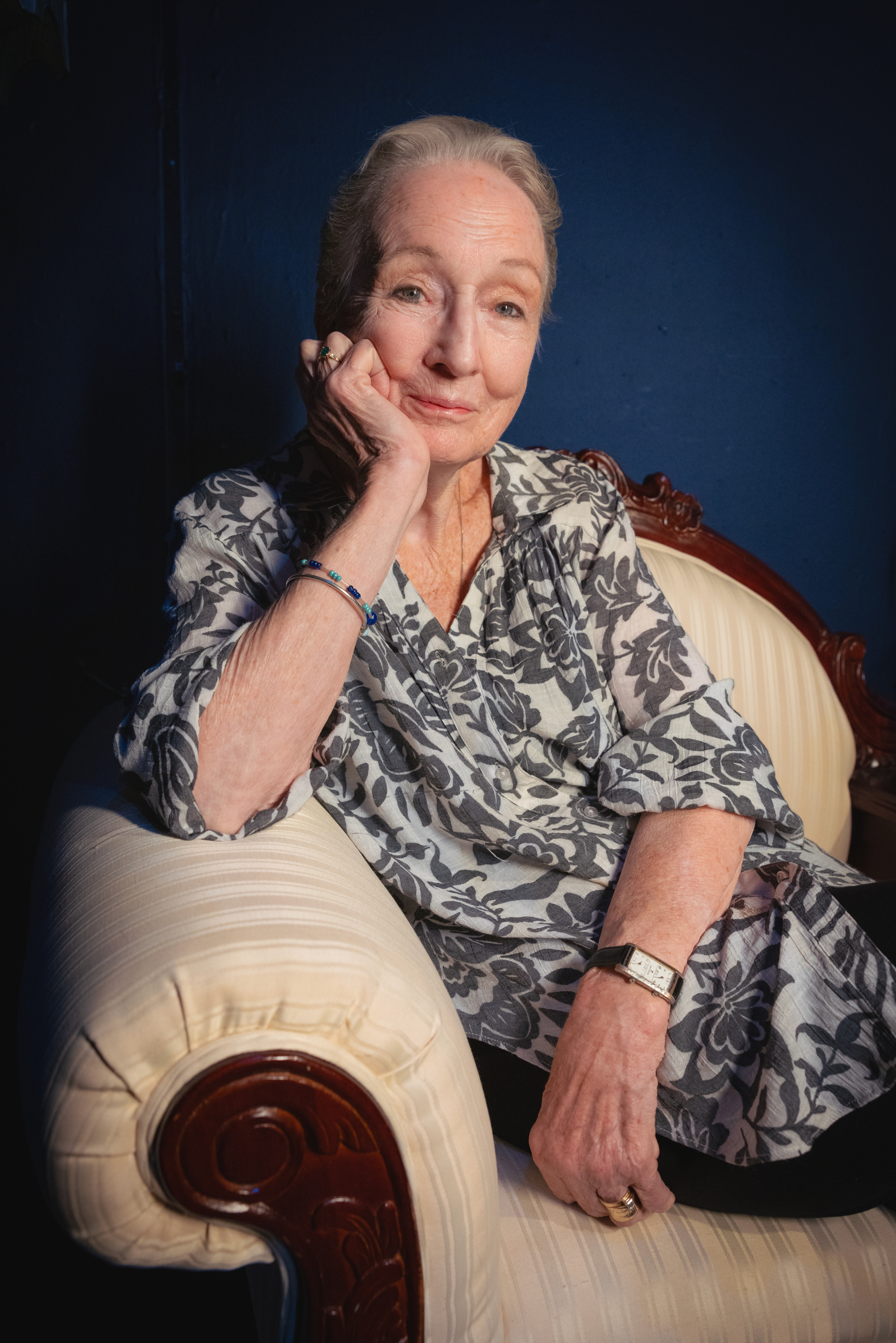
(Photo by Sergio Villarini for Broadway.com)
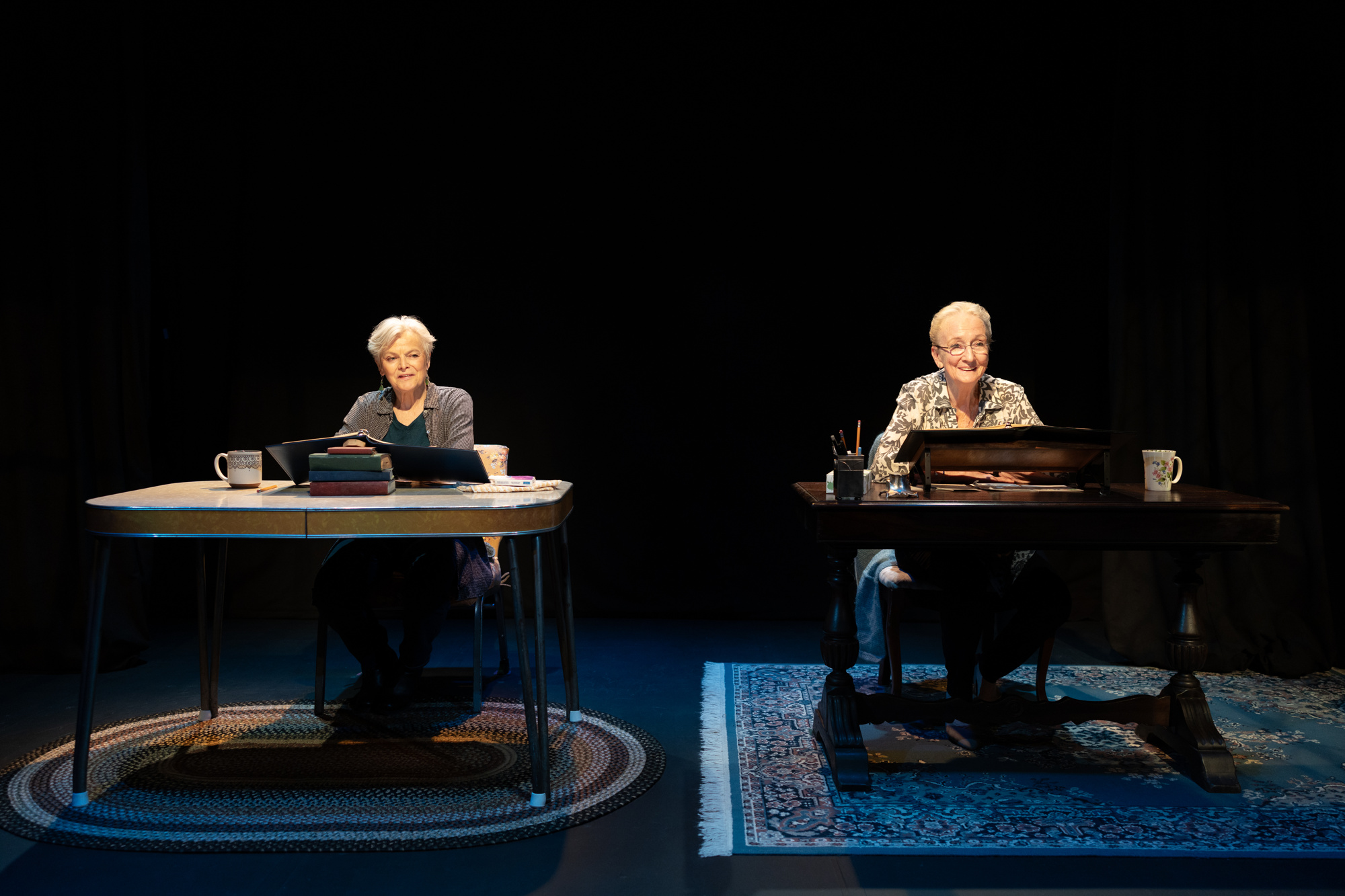
High on anyone’s list of unforgettable performances are those of the original Broadway cast of Angels in America, notably Kathleen Chalfant (Hannah Pitt, Ethel Rosenberg, a rabbi and more) and Ellen McLaughlin (the ceiling-crashing Angel and more). The co-stars formed an indelible bond during the 1993 premiere of Tony Kushner’s two-play masterpiece, a helpful foundation as they portray long-distance friends in the off-Broadway memory play Pen Pals. Michael Griffo’s two-hander begins in 1955, when 14-year-old Bernadette O’Brien of Secaucus, New Jersey, starts corresponding with Margaret Mary Marsch of Sheffield, England. Their letters, spanning a lifetime of ups and downs, are brought to life by a rotating roster of stars with scripts in hand. Chalfant and McLaughlin are performing until October 12, with plans to switch roles halfway through the run.
After Angels, Chalfant won multiple awards for her moving performance as a cancer patient in Wit, leading to an Obie for Lifetime Achievement. In addition to acting, McLaughlin is a playwright, a prolific adapter of Greek dramas and a professor of playwriting at Barnard College. During a Zoom call with Broadway.com from separate book-lined living rooms, they spoke about their enduring relationship and delight at tackling Pen Pals together.
It must be a treat for two real-life friends to play fictional pen pals. What drew you to the play?
Ellen McLaughlin: It’s a wonderful workout for an actor to go from 14 years old to 70-something in an hour and 15 minutes. Any actor would jump at the chance to do it; it’s a great meal.
Kathleen Chalfant: I love that it’s about a particular time. I was born in 1945, so the things it talks about are very familiar to me, and I have English family, so the cross-Atlantic counterpoint is interesting. But mostly, it’s about friendship, and it’s surprising. These two people are much more complex than you imagine at the beginning.
Ellen: I also like the fact that it talks quite frankly about class, in both countries. These are people who were affected by the aftermath of the Second World War and are limited by their lack of money and by the basic prejudice against women doing anything other than family. Their disagreement about the abortion one of them has, is interesting to me. It creates a rift that I have never seen explored.
"It’s a wonderful workout for an actor to go from 14 years old to 70-something in an hour and 15 minutes. Any actor would jump at the chance." —Ellen McLaughlin on 'Pen Pals'
Why does Pen Pals resonate with audiences?
Ellen: I think they respond to the absolute sincerity of it. It ends up being weirdly profound because it is about two women going through life smack in the middle of the century.
Kathleen: Ordinary life is never ordinary. So I think people are surprised by the complexity of these women and the fact that they engaged as people who are deeply connected, rather than saying the polite thing to each other.
Ellen: They’re confiding in a person they’ve never actually met—which I think is important—in a way they could never confide in anyone else, including their families. There’s something very moving about that.
Is it because they communicate in letters? It’s hard to imagine teenagers today having a pen pal.
Kathleen: Oh, you have pen pals now in the moment [via] text. There are people who live, essentially, on their phones—texting, not talking.
Ellen: When I was doing the play last winter [opposite Mary Beth Peil], I got a note backstage that said, “I was your pen pal when we were 14.” It was from my best friend in elementary school in D.C., where I grew up. She moved to Switzerland with her family when she was 13, and we were pen pals for three years. She said, “You can’t possibly know how important those letters were to me—you saved my life” because she had been very lonely. Of course, I was completely overcome. I got onstage, and there she was! There was something so deep about that connection, and that’s what people are responding to.
Turning to Angels in America, were you aware from the beginning of the magnitude of Tony Kushner’s achievement?
Ellen: I was aware of the magnitude, but I didn’t think it would become as monumental in the culture as it became—because I thought it was too good. [Laughs] I certainly didn’t think it was going to be a Pulitzer Prize-winning play. I thought the American public was too stupid for that.
Kathleen: The American public got it. The people who didn’t get it were the American producers, who needed to be reassured by an English production that the play was worthwhile. The only reason Angels came to New York was because it was a success in London.
Ellen: [New York Times critic] Frank Rich gave it one of the greatest reviews any play has ever gotten, and he gave it to the British production, which was nowhere near as good as ours.
Kathleen: Right! We had been at it for some time. Ellen was there from the beginning.
Ellen: Tony and I were friends as playwrights, so I knew about Angels before I was in it. When we first did readings, I was reading Prior [the role that won Stephen Spinella two Tonys], which was ridiculous. I remember reading the joint hallucination scene between Prior and Harper [played on Broadway by Marcia Gay Harden], a wonderful scene in which they dream into each other’s presence, and I thought, “This is going to change the way people write plays.” And it did.
"She has a genius gift for friendship and is a port in the storm for so many people." —Kathleen Chalfant on Ellen McLaughlin
According to the oral history The World Only Spins Forward, Ellen’s big entrance as the Angel didn’t happen at the first Broadway preview of Millennium Approaches.
Ellen: There were a lot of things going on that delayed my entrance. I was fine! I knew that I would either come down or I wouldn’t, but the person who shouted, “Bring the angel in!” was the stage manager, not me. You wouldn’t have been able to hear me because there was a lot of lightning and thunder happening. That wasn’t the worst thing that happened to me in that rig. [Laughs]
Kathleen, the range of characters you played was astounding.
Kathleen: It all came as a surprise. The first reading I was involved with was in the fall of 1988, and Tony said, “I want you to read the rabbi and the doctor and Ethel Rosenberg and the Mormon mother,” and he handed me the script, which I hadn’t seen. Somehow, out of my Christmas-and-Easter Episcopalian mouth came the rebbe. The person who appeared at that reading was the rebbe for the rest of the six years I was involved.
Ellen: Sometimes they show up.
Kathleen: That group of parts was an astonishing gift. I have to say, my very favorite of all of them was Aleksii Antedilluvianovich Prelapsarianov, the Oldest Living Bolshevik, who opens Perestroika. Everything that Aleksii said would happen after the fall of the Soviet Union is exactly what has happened.
Ellen: So much of the play is prescient. There are whole monologues that have absolutely come to pass. It ends on a bittersweet note because Prior isn’t dead yet and we know he will die—but he is saying, “We’re not going away. Our presence in the culture will never die.” And that also has come to pass.
At the risk of embarrassing the two of you, what do you admire most about each other, personally and professionally?
Ellen: It’s a very long list. I can start with her generosity and her integrity, and the fact that she has always been on the right side ethically of every fight. I trust Kathy. I go to her when I’m in trouble and need advice about what the moral choice is. Her strength of character and deep moral center gives her work as an actor gravitas and beauty. Who she is as a human being translates beautifully into what she can do as an actor. She has always been inspiring to me, and our friendship is one of the great joys of my life.
Kathleen: Everything she said! Beyond that, Ellen is a person of such astounding beauty, both physical and spiritual. Looking over at that [Zoom video] box, I was just thinking what a glorious creature she is. I’m also continually overwhelmed when someone I know intimately creates a work of art that is surprising and revelatory, which happens every time Ellen writes anything. She’s endlessly brave in her writing, and it’s been wonderful to watch her become the mature actor she is now. She has a genius gift for friendship and is a port in the storm for so many people. I am incredibly grateful for the gift of her friendship.
Get tickets to Pen Pals!