The Rocky Horror Show Returns to Broadway: Inside the Cult Classic’s Wild Origins and Lasting Legacy
Explore the origins of Richard O’Brien’s genre-defying musical, its midnight movie phenomenon and the new Broadway revival starring Luke Evans


What to Know
- The Rocky Horror Show returns to Broadway in a new revival directed by Tony winner Sam Pinkleton and starring Luke Evans as Dr. Frank-N-Furter, with performances running March 26 through June 21
- Created by Richard O’Brien, the genre-defying musical evolved from a 1973 London fringe production into a global cult phenomenon, fueled by the iconic 1975 film The Rocky Horror Picture Show and its legendary midnight screenings
- The show’s history includes a short-lived 1975 Broadway run, a 2000 revival and decades of fan-driven performances that cemented its legacy in pop culture
You never forget your first time. Some of us stumbled upon it by happenstance, others sought it out in a rowdy crowd. There may have been airborne toast involved. We’re talking, of course, about The Rocky Horror Show, Richard O’Brien’s fishnets, feathers and flesh-baring musical phenomenon. A sendup of B movie schlock and awe, Rocky Horror has been a pop culture mainstay since it premiered at London's Royal Court Theatre Upstairs in 1973. The subsequent film adaptation—for which the title was altered to The Rocky Horror Picture Show—spawned an unprecedented cult following, with fans routinely attending midnight screenings and performing in shadow casts.

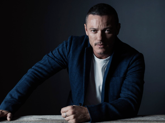
Now, a new generation of audiences will get to experience Rocky Horror on stage in a Broadway revival directed by Tony winner Sam Pinkleton, beginning performances on March 26 and running through June 21. Luke Evans leads the cast as Dr. Frank-N-Furter, a madcap “Sweet Transvestite” who engineers a sexual companion into being through experimental means. Mounted at Studio 54, Evans will be accompanied by Rachel Dratch, Andrew Durand, Amber Gray, Harvey Guillén, Stephanie Hsu, Juliette Lewis, Josh Rivera and Michaela Jaé Rodriguez. I would like, if I may, to take you on a strange journey, where the origins of Rocky Horror are unearthed from the underground to the mainstream and back. I see you shiver with antici...pation, so let’s do the "Time Warp" again.
It Was Great When It All Began
Raised in New Zealand, aspiring actor-musician Richard O’Brien came to London in the swinging '60s, seeking to reap the rewards of a post-war landscape that had suddenly been invigorated by sex, drugs and rock 'n' roll. He found work as a stunt performer in film before joining the touring cast of the counterculture musical Hair in 1970. That parlayed into a stint in the original London stage production of Jesus Christ Superstar in the West End, where he first met Australian director Jim Sharman. Originally cast as an apostle in the chorus, O'Brien was poised to take over the role of King Herod. His time in the spotlight was cut short by producer Robert Stigwood, who saw his debut performance and disagreed with O'Brien's interpretation of the character. With a 300 quid severance check and a pat on the shoulder, the young performer was given the boot.
Undeterred, he began developing a musical inspired by the low-budget horror flicks of his youth. Originally titled “They Came From Denton High,” the story followed the defilement of all-American sweethearts Brad and Janet, who stumble into a web of extraterrestrial terror and sexual transgression when their tire busts near a foreboding castle. O’Brien ran his idea by composer Richard Hartley and Sharman, who was so taken with the material that he decided to stage it.

Can I Be Frank?
In O’Brien’s script, Frank-N-Furter’s creation was to be a blond beefcake christened Rocky. In search of a singer with a body-builder physique, O’Brien camped outside a Westminster gym. While he was on the lookout, O’Brien ran into Tim Curry, whom he'd met when they were both in Hair. Curry lived down the street from the gym, which led to O’Brien sharing a draft of the script. Recognizing that O’Brien and Sharman were sitting on a theatrical goldmine, Curry pursued the project, ultimately landing the part of Frank. “It was important that the audience was aware that [Frank] could f**k anybody and was dangerous sexually. He was a very powerful figure, and he liked to run everything and dictate scenarios,” Curry told The New Yorker in 2025. “So when I was putting him together, there were deliberately holes in the fishnet tights. He looked like a rather battered street character.”
Curry originally intended for Frank to have a German accent, but had a change of heart upon overhearing a posh English woman on the train say, "Do you have a house in town or a house in the country?" At that moment, Frank-N-Furter’s oft-imitated vocal cadence was born. O’Brien wanted to play Eddie—a “lowdown, cheap little punk” who meets an untimely end—but Sharman felt he would be better suited to take on Frank's Nosferatu-esque steward, Riff Raff. Sharman also suggested the title be changed to The Rocky Horror Show shortly before the production began previews. Among the performers joining Curry and O’Brien onstage were Patricia Quinn as Riff Raff’s equally ghoulish sister, Magenta and “Little Nell” Campbell as Frank’s tap dancing groupie, Columbia. Julie Covington, who was the first singer to record Andrew Lloyd Webber and Tim Rice’s ballad “Don’t Cry For Me Argentina,” originated the role of Janet.
God Save the Queen
Costume designer Sue Blane had previously worked with Curry on a production of Jean Genet’s The Maids, where the actor was costumed in a Victorian corset. Due to limited resources, the corset was refurbished for Frank-N-Furter and would later be used again for the film. Blane has been credited with spearheading punk aesthetics through her ragtag Rocky Horror designs, incorporating leather, safety pins and torn-up lingerie. Sharman drew from Weimar cabaret and childhood memories of his father’s traveling boxing troupe to imbue the production with a sideshow sensibility.

In the summer of 1973, The Rocky Horror Show premiered to a rapturous reception from London theatergoers. Opening night was befittingly underscored by thunder, rain and lightning. Glam rock androgyny was well-suited for an audience that was keen on gender-bending musicians like David Bowie, and the show’s libidinal humor fell in line with a prudish culture coming into its sexual consciousness. Writing for The Guardian, theater critic Michael Billington deemed Rocky Horror a “deft piece of Pop-Artaud,” raving “this show won me over entirely because it achieves the rare feat of being witty and erotic at the same time.”
Though it was only supposed to run for three weeks, Rocky Horror was repeatedly extended and eventually transferred to the spacious Chelsea Classic Cinema, followed by the neighboring King’s Road Theatre. The show closed a whopping seven years later, having received a final transfer to the Comedy Theatre in the West End. No one quite knew what to make of this runaway success, but all parties agreed that something was certainly afoot.
Wild and Untamed in L.A.
Music industry impresario Lou Adler already had a storied life in entertainment before adding Rocky Horror to his résumé. In the '60s, Adler had signed The Mamas & the Papas to their first record label and helped usher in the “Summer of Love” by co-founding the Monterey International Pop Festival. His career ascended to new heights in 1972 when he served as the sole producer on Carole King’s iconic album Tapestry. When Adler caught a glimpse of Curry in the London staging of Rocky Horror, he knew he had to get involved. “[It was] Tim Curry’s legs to begin with,” Adler told Rolling Stone in 2015. “As much as he had a manly feel about him, it was seeing him dressed as Frank-N-Furter.”
Adler had attempted to break into the film industry when he co-produced Robert Altman’s surreal M*A*S*H follow-up Brewster McCloud in 1970. Though the film was a financial disappointment, Adler saw cinematic potential in Rocky Horror and felt he could use his industry pull to produce a box office hit. Before he could commit to financing a film adaptation, Adler needed to see how the material would land with American audiences. With a song in his heart and dollar signs in his eyes, Adler put up the funds to bring Rocky Horror to Los Angeles, staging it at his recently mounted performance venue/nightclub, the Roxy Theatre.
Although the original creative team stayed largely intact, Curry was the sole cast member to be brought over from across the pond. Most notable among the American replacements was Texas transplant Meat Loaf, who was cast in the dual roles of Eddie and Dr. Scott, a scientist investigating Frank’s operation. Situated on West Hollywood’s Sunset Strip, the Roxy was the latest addition to a string of swinging hot spots where rockers, runaways and hangers-on partied until the sun came up. Thus, Rocky Horror and its message of “absolute pleasure” at all costs was the perfect fit for L.A.’s libertine playground.
Hollywood Treatment
Rocky Horror premiered at the Roxy in spring of 1974. Opening night was attended by Cher, Jack Nicholson, Angelica Huston, John Lennon, Mick Jagger and his wife Bianca, among other celebrities. After seeing the show, Jagger expressed interest in buying the film rights from O’Brien. Though this kind of celebrity involvement would have all but ensured a built-in audience, Adler convinced O’Brien to hold out in the name of creative control.
Enter: Gordon Stulberg, Adler’s former attorney who had become the president and chief operating officer of 20th Century Fox. Adler extended an invite to Rocky Horror with the stipulation that Stulberg bring his kids. As Adler anticipated, Stulberg’s kids were over the moon with what they had seen on stage and a deal was struck: The Rocky Horror Show was to become The Rocky Horror Picture Show, with a modest budget allocated and just over a month to shoot in London.

Not In Denton Anymore
Curry, Campbell, O’Brien and Quinn reprised the roles they had originated in Rocky Horror’s film adaptation, with Meat Loaf supplying his rough-and-tumble swagger as Eddie (he was disappointed to discover he would not be Dr. Scott this time, who was instead played by Jonathan Adams, the original narrator from the London production). Brian Thompson, who designed the sets for Rocky Horror’s previous stage iterations, returned for the big-screen version.
Casting director Joel Thurm was eyeing Susan Sarandon to play Janet but had to find a way around her agent, who had vetoed the project. Thurm managed to rope the rising starlet in by telling her friend Barry Bostwick to bring Sarandon along when he auditioned for the part of Brad. Playing naive, Thurm asked if she could read with Bostwick as a favor. Next thing she knew, Sarandon was flying out of L.A. to shoot Rocky Horror with Bostwick, much to her agent’s dismay. In a 2022 career retrospective for Vanity Fair, the Oscar winner said that she won the part by taking a more humorous approach than previous characterizations, seeing Janet as “the personification of every ingénue that I had played up to that point: kind of sweet on the outside but a bitch underneath.”
Most of Rocky Horror was shot at Oakley Court, a Victorian property in Berkshire. The gothic manor had been used in several British horror movies from the ‘50s and ‘60s, including The Bride of Dracula and William Castle’s The Old Dark House. This may have lent itself to the film’s atmosphere but it made for a difficult shooting experience for all involved. The castle’s antiquated plumbing meant there was no heat, no bathrooms and a perpetual leak. During the “Floor Show” musical number, the actors splashed about in a pool, which resulted in Sarandon catching pneumonia. There were also multiple fire-related incidents during the shoot: both Sarandon’s trailer and the one designated “warm room” where space heaters had been situated went up in flames.
Near the end of the shoot, Sharman had a dream involving a pair of crimson lips emerging from a black void. In a last minute addition, he had Quinn apply red lipstick and mouth the words to a recording of O’Brien singing “Science Fiction/Double Feature.” The close-up on Quinn’s lips became the film’s iconic opening sequence.
After a grueling six weeks, production wrapped and the crew went their separate ways. Curry, O’Brien and Meat Loaf headed to New York, where Rocky Horror was to be staged on Broadway. On the heels of its success in London and L.A., Adler felt the show would be a surefire hit in the Empire State. For all of his savvy show business gambles, this instance would prove to be a rare miscalculation on Adler’s part.
It’s Not Easy Having a Good Time
Broadway audiences first bore witness to The Rocky Horror Show in March 1975 at the Belasco Theatre. Adler planned on staging it outside Manhattan but shifted gears when a scheduling conflict prevented him from securing the outer boroughs venue he was gunning for. Aside from O’Brien, the cast was composed of performers from the Roxy. New Yorkers were largely unamused with this California import, which Adler chalked up to an East Coast aversion toward L.A. and its artistic offerings. The headline that accompanied Lillian Africano’s takedown in Asbury Park Press summed up the critic’s consensus: “Rocky Horror Is Exactly That.”

The show closed after a month, having played only 45 performances. Speaking to The New York Times in a 2025 interview, Curry said, “Audiences, on Broadway at least, were expecting substance. And the substance they got at the Belasco was not particularly to their taste.” For Curry, the disappointment of his Broadway debut remains a sore spot. “I try not to think about it. There’s not much point in paddling through old failures.”
Creatures of the Night
The Rocky Horror Picture Show was released in September 1975, five months after the stage version shuttered on Broadway. The marketing department at 20th Century Fox had little faith in the film’s profitability and neglected to give it a proper advertising campaign. By October, Rocky Horror had been pulled from theaters. However, Fox executive Tim Deegan had shown up to an early test screening in Santa Barbara and noted an enthusiastic response from the college students in attendance. Sensing there was an untapped market at their disposal, Deegan arranged for Rocky Horror to be screened in New York and Austin at midnight.
Something strange began to occur shortly thereafter: The same group of people kept coming back week after week, bringing new regulars with them to each subsequent screening. Audiences were multiplying and word was spreading, with public demand for Rocky Horror causing an uptick in screenings across the country. Fans started showing up in costume and yelling things after certain lines. (For example, when an elderly woman in the first scene says, “I always cry at weddings,” fans would yell back, “Do you always laugh at funerals?”). This evolved into the use of props, with water guns being squirted when it rains onscreen and toast being thrown when Frank proposes a toast to his dinner guests.
As viewership grew, fans formed their own shadow casts, mimicking the action in front of the screen in real time. Many of these traditions are attributed to the late Sal Piro, who partook in some of New York’s earliest midnight screenings and served as the president of the official Rocky Horror Picture Show Fan Club from 1977 until his death in 2023. What was once thought to be dead on arrival has gone on to become the longest continuous theatrical run in history.

Don't Dream It, Be It
For generations, the cult of Rocky Horror has served as a vital source of community, in part because of its unabashed queerness. Rather than placate those who may be uncomfortable with its subject matter, Rocky Horror revels in its own subversion, parodying fears of “sexual deviance” with a lipstick-smeared grin. O’Brien, who identifies as transgender, has said that watching his project take on a life of its own may have subliminally helped him come to terms with his own identity.
In the 2025 documentary Strange Journey: The Story of Rocky Horror, O’Brien said, “I never felt that I belonged anywhere and I was in no man's land. I was simply there with loads of other people. Those people who are marginalized, those people who are on the fringes and feel lonely, they come together. [Rocky Horror] gives them a place where they feel they're not alone.”
Let’s Do the Time Warp Again!
O’Brien and Sharman reteamed for a Rocky Horror sequel entitled Shock Treatment in 1981, where Brad and Janet find themselves trapped in a sadistic game show. Most of the original Rocky Horror gang made appearances, albeit in different roles. Brad and Janet, however, were played by different actors entirely; Cliff DeYoung replaced Bostwick as Brad and Suspiria star Jessica Harper filled in for Sarandon as Janet. Curry and Meat Loaf were also missing. The film was a box office bomb and failed to attract the cult following that Rocky Horror had achieved.

The Rocky Horror Show's first Broadway revival fared better. Staged in 2000 at the Circle in the Square Theatre, this new millennium take was directed by Christopher Ashley with choreography by Jerry Mitchell. The eclectic cast featured Tom Hewitt as Frank, Raúl Esparza as Riff Raff, Jarrod Emick as Brad, Alice Ripley as Janet, Daphne Rubin-Vega as Magenta, Lea DeLaria as Eddie/Dr. Scott and Sebastian LaCause as Rocky. Joan Jett brought punk rock bona fides to Columbia and television host Dick Cavett appeared as the Narrator. Throughout the show's run, the Narrator became a vessel for tongue-in-cheek stunt casting, with Jerry Springer, Gilbert Gottfried, Penn & Teller and Sally Jessy Raphael stepping into the role at various points. The revival was considerably more successful than the original Broadway outing, receiving four Tony nominations and closing after 437 performances.
Laverne Cox starred as Frank in a 2016 television remake produced by Fox, though some fans felt the increased production value stifled the charms of the source material. O’Brien has been floating the idea of another installment to the franchise for years, some of which are said to involve Frank’s mother on an intergalactic tirade and Brad taking up employment as a Vegas go-go dancer.
As enticing as these concepts are, O’Brien concedes that for the most part, Rocky Horror does not belong to him anymore. The musical’s afterlife lies in the hands of its fervent fanbase and now, a Broadway revival. This latest iteration will no doubt expand the reach of Rocky Horror, which has grazed nearly every demographic since its humble inception—even royals.
In a 2005 interview with NPR, Curry relayed an anecdote about his run-in with the Prince and Princess of Wales. While they were visiting him backstage after a 1985 performance of Love for Love at the Royal National Theatre, Diana noted that he had been in The Rocky Horror Picture Show. Curry responded, “Yes, ma'am, I was but I'm sure that you haven't seen it.” With a Cheshire smile, Diana retorted, “Oh yes. It quite completed my education.”
Get tickets to The Rocky Horror Show!