

Billy Crystal’s 860 Is ‘A Celebration of Life,’ Says Broadway Director Scott Ellis
The Tony-nominated director opens up about bringing Crystal’s deeply personal story of loss, resilience and hope to Broadway

What to Know
- Billy Crystal’s new Broadway solo show 860 explores the loss of his longtime home in the Palisades fires
- Director Scott Ellis discusses developing the production, blending humor and heartbreak and bringing Crystal’s memories to life onstage
- 860 is now in previews at the Imperial Theatre, with opening night set for October 21

When Billy Crystal lost his home of 46 years to the Palisades fires—the house where he raised his children, watched his grandchildren grow up and shared a life with his wife, Janice Crystal—he said, "Every inch of our house was filled with love. Beautiful memories that can't be taken away." Crystal's new one-man show, 860, is named for that address and revisits those memories. Through his signature blend of humor and heart, Crystal weaves an intimate narrative that explores loss, resilience and the power of community.
For director Scott Ellis, helping Crystal bring his deeply personal story to the Broadway stage meant uncovering the universal themes within it. The Tony nominee spoke to Broadway.com about workshopping the show, early audience reactions and what he discovered along the way.
When did Billy approach you about 860?
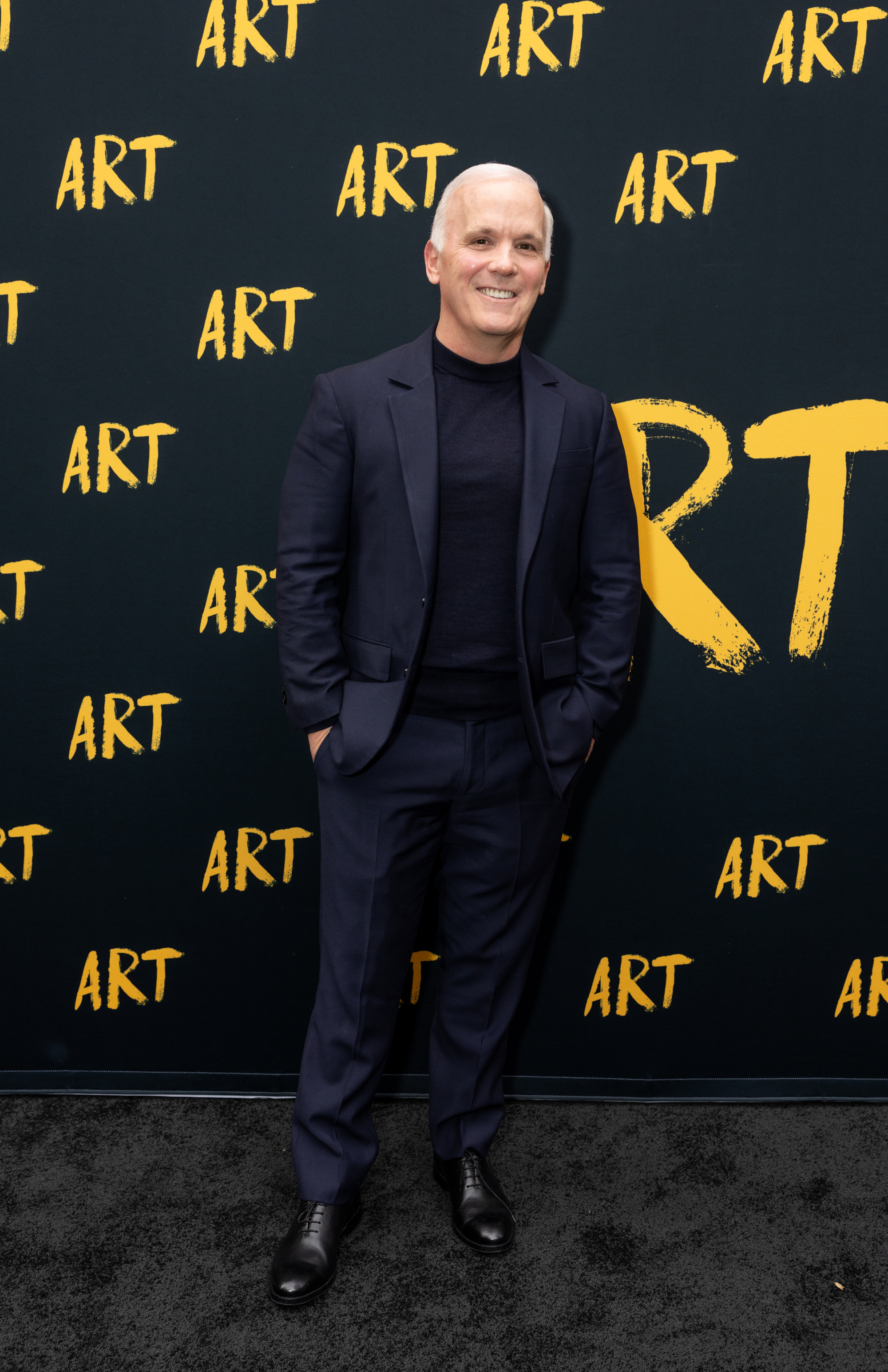
About a year ago. He was meeting with directors and I was one of them. I got a call and I said, "Sure, it's Billy Crystal. Yes." So I met him and as he tells the story, he thought we'd be there for 20, 30 minutes. We ended up being there for two hours just talking, and him telling his story and showing me photos. I was doing Art at the time, and he came to see it and then we had more conversations and he asked me to do it.
So it's been a work in progress for a while.
We started sitting at a table reading, and then the next step was the changes. It's changed quite a lot. We went into another table read where I invited 20 people in. And then we ended up doing it live in front of an audience for two nights. We took a break, came back and did it for another five nights in front of audiences. It was sort of like a tiny out-of-town tryout for us, just to start hearing it in front of people and learning what we needed to learn.
Because it's just the two of you, did you workshop more than you normally would as a director?
I guess so. He had the story. He had this incredible beginning and ending, which I walked away [from] going, "This is perfect." Then it was just what you're doing in the middle, telling more stories. It was a great journey with him. I think most important was getting it in front of people so we could hear how people were reacting and what needed to be cut, things that worked, things that didn't work.
What made you want to get involved?
What I felt. The fact that he's ultimately talking about loss—I mean, listen, he lost everything. Their family lost everything. So I thought, how do we relate to that? I've never had that experience. But when you really delve into it, what he's talking about is loss, is the next chapter. If this had happened when he was 25, it would be a very different experience, but it happened much later in life. What are the next chapters? What are those decisions? What does stuff mean to you? I kept finding things that I thought were universal, larger questions that people who didn't go through what he and Janice went through would still be able to connect with.
Like 860, Billy's first one-man show, 700 Sundays, tackled loss. Did you discuss that work?
We didn't talk too much about it. He obviously did it and knows it well, but I wanted to focus on how we were planning to tell this story. It was very different than 700 Sundays. It's a very successful, wonderful piece of theater, so you can't pretend it didn't happen. But the focus was this story.
Why do you think Billy is so adept at telling stories of tragedy through comedy?
Well, first of all, that's who he is. He talks about how important laughter is in his life. There is the framework of something horrible that happened, but he goes back into memories of stuff that was lost and that triggers some incredibly funny stories. He's a remarkable storyteller and certainly knows comedy better than most. I think when people hear it's about the loss of his home, you think, "That's going to be a really sad evening." It's poignant. There is some sadness, but there's a great deal of joy also, of what he's discovering and him moving on. And I found that incredibly moving, that despite everything he was still saying, "We're moving on, and family is so important." His family and his wife, Janice, you see that tightness and you see that's how you can survive some of this.
How have audiences responded to Billy's storytelling?
It was our first preview, and I remember thinking, "Oh, they're connecting to this." They want to listen to this story. Visually, we've done a lot of different interesting things that I wanted to put into the storytelling. So I think that helps [make it] a theatrical experience. But it just boils down to one person who's telling a story. And I don't know if there's anyone better out there who can tell a story as well as he does. So the audience leaned in immediately, and they go on this journey from beginning to end.
"I kept finding things that I thought were universal, larger questions that people who didn't go through what he and Janice went through would still be able to connect with." —Scott Ellis
How did the visuals come together?
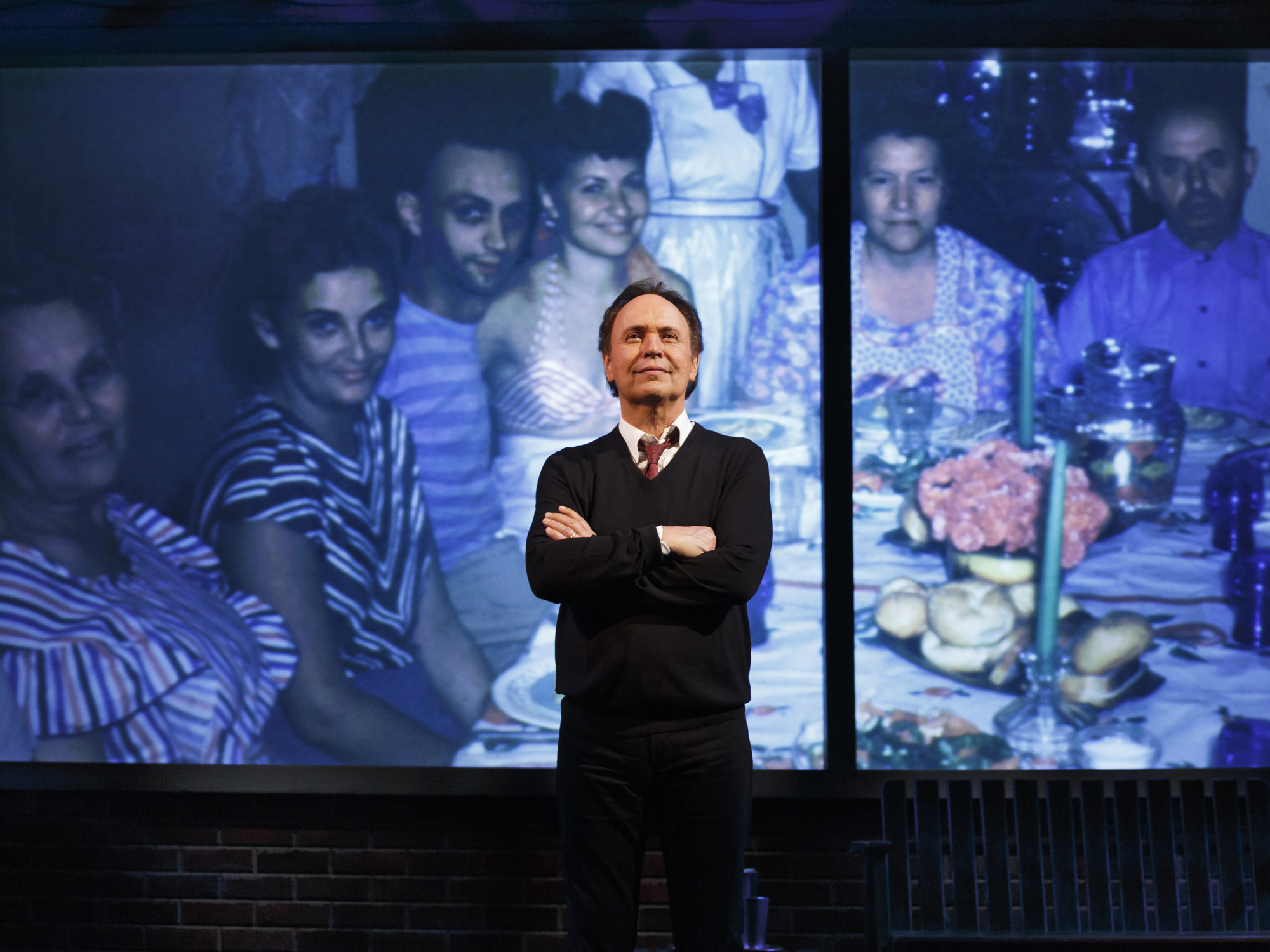
Billy has and had in his life a lot of photos and videos. When we first met, he showed me a chunk of them. He showed me the beginning of when the fire was coming, the discovery, and he showed me the end when he went back to see what was left. That was the framework, so in between, how do you tell the story? Well, through a lot of his photos. We have the incredible Hana Kim who's doing the projections and all the art, helping to tell that story visually. Billy would come in and say, "Oh, I have this photo," and we'd look at it, or, "I have this video." So it was just finding what was fitting in this puzzle. And then Marc Shaiman coming in and scoring it, I don't think any of us thought it would go as far as it has. But I love it and it makes it for, I think, a unique evening.
And the set is a recreation of his former home office?
We decided to bring the office in a little bit of an abstract way, meaning, it is his office, but visually it's all toned down because it's all memory. He's remembering the office. Everything he talks about, I wanted it to come from the office. And, as [scenic designer] Scott Pask said so beautifully, setting this in the office helped propel why we're telling these stories. He's such a brilliant designer. You could do it without anything, just some slides and projections, but I think we've all worked hard to make it a theatrical event.
This must be emotional for Billy as well. Why did he want to share his story this way?
I think he would have to answer this. But again, because he's a storyteller, I always ask him, "Did you think at all that one day you would tell this story?" And he said, "Yes." I thought, "That's so interesting." And again, that's who he is. But somewhere in all of this, in the back of his mind, he thought, "I'm going to tell this story," and I thought that was remarkable. It's really just a reminder of how you move forward after tragedy. I think you do it with friends and family if you're lucky to have them. I know that helped him get through this and get up to the stage.
What can audiences expect from 860?
I never say, "I hope the audience walks away with this," because everyone will have a different experience with it, you know? But I do think watching, being able to connect with someone who has gone through what he and his family went through, and that he did get on the other side of it—he's changed, all of us would be. But the fact that he's gotten on the other side and still being able to move forward, I find incredibly moving. He didn't give up where I think a lot of people could have given up and said, "I've lost it all." And so there's a celebration of life during what was the hardest thing he's ever gone through—he says that. And I think that's part of getting to know him. I think that is who he is. He keeps living, he keeps moving forward.
860 is now in previews, opening October 21 at the Imperial Theatre. Get tickets!

