Brandon J. Dirden and Crystal A. Dickinson on Marriage, Molière and Making Theater Together
The husband-and-wife duo on directing and acting in Bill Irwin’s adaptation of The Imaginary Invalid


(Photo by Sergio Villarini for Broadway.com)
What to Know
- Brandon J. Dirden directs his wife, Crystal A. Dickinson, in Broadway’s The Imaginary Invalid
- The couple share their rules for mixing marriage and work
- Bill Irwin handpicked them both for the Molière comedy, much to their surprise
Brandon J. Dirden and Crystal A. Dickinson have shared a life in the theater since meeting in graduate school. Now, the couple are sharing a Broadway stage in a new way. Dirden makes his Broadway directorial debut with Roundabout Theatre Company’s The Imaginary Invalid, adapted by and starring their longtime friend Bill Irwin, with Dickinson playing Irwin’s scheming second wife Béline. The pair sat down at the Todd Haimes Theatre to talk about their early days in New York, working with a comic genius, the ground rules of a theatrical marriage and a rather impressive collection of potato chips.

Brandon, you made your Broadway debut in this very theater in Prelude to a Kiss, and now you’re here making your Broadway directorial debut. How does that feel?
Brandon J. Dirden: Absolutely ridiculous. I mean, it’s like lightning striking twice, you know? My first time on a stage in New York was here in this building. My dressing room was one floor from Crystal’s [current] dressing room.
Tell me about your early days in New York.
Crystal A. Dickinson: We lived in Atlanta before. I was teaching at Spelman College. Brandon always wanted to come to New York. So I said, “OK, all right, great. You go on. I’m going to save some money. You go first with Jason, his brother. We’ll give it a year.”
Brandon: If it goes well, one year.
Were you already married?
Crystal: We had just gotten married in August.
Brandon: And I moved up in October.
You had real faith in him.
Crystal: Yeah. And then six weeks later—
Brandon: I said, “I think we might be OK. Come on up.”
What did your first Broadway experience teach you?
Brandon: I thought I was going to learn all the secrets of Broadway, like a secret handshake. So I show up in the room, and it’s just like any other room where you just have people who are dedicated to telling a story the best way they can. The core value of putting on the play was the same. It’s just the values of good storytelling.

Let’s clear something up. You didn’t cast your wife in this show. You inherited this casting, Brandon?
Brandon: That’s correct.
Crystal: We’ve known Bill a long time now. We both met him at the Signature [Theatre Company], right?
Brandon: Yeah.
Crystal: We got to know Bill that way. Sometimes [Brandon] does cast me in his stuff. This time it was Bill. Someone came to the show the other day and was like, “I’ve never seen you do anything like this.” Bill was standing there, and I said, “He did. He knew.” I don’t know how he knew, but he did.
Brandon: I mean, it’s the same way Bill picked me to direct it. I mean, I don’t know, like, “Bill, what in my resumé says Molière?”
"I believe whoever you choose to partner with as a life partner, you have to be a fan of whatever they do." —Brandon J. Dirden
Crystal, your character, Béline, isn’t exactly a devoted wife. What’s your case for defending her?
Crystal: Everybody’s gotta make a living! [Laughs] She wants what she wants. She’s very honest about her intentions: He’ll be dead soon. How bad could it be, right? Grapevine was like, lonely man? Lost his wife? I was helping out!

We’ve seen people like her before.
Crystal: Throughout all of history. They see themselves as ambitious. They want what they want, and they’re gonna get it. In their minds, who is it hurting?
This play is more than 350 years old. What does Molière have to say to us today?
Brandon: Before we started, I went to Paris. I’d never been. I was like let me just go get into Molière. Let’s walk the streets and absorb the culture and give myself every chance to understand the landscape of what’s mentioned in the play. Of course, I went on the hottest days ever in Paris, and so they canceled all the shows. I didn’t get to see the production I had planned to see. I was standing in front of the place where he died, and I asked Molière, “Why am I here? If you didn’t want me to see this play, what am I to take away from this?” And the voice I felt and heard back was like, “Be useful. What are you asking me for? It’s yours. I wrote it 350 years ago. What do you need today?” So you ask yourself, how is this of service to the audience today?
What rings true for you in the piece?
Brandon: I think we all have something that we have some cultish-like obsession about in our lives, right? I think this play is saying, what is that thing in your life that is an obstacle that’s keeping you from really being available to those people closest to you? In this play, Argan and his relationship with his daughter, who he clearly loves, is really being tested because of his obsession with this thing that he thinks is so important to him, right? The fear of death. It’s not about staying healthy. It’s really about not dying.
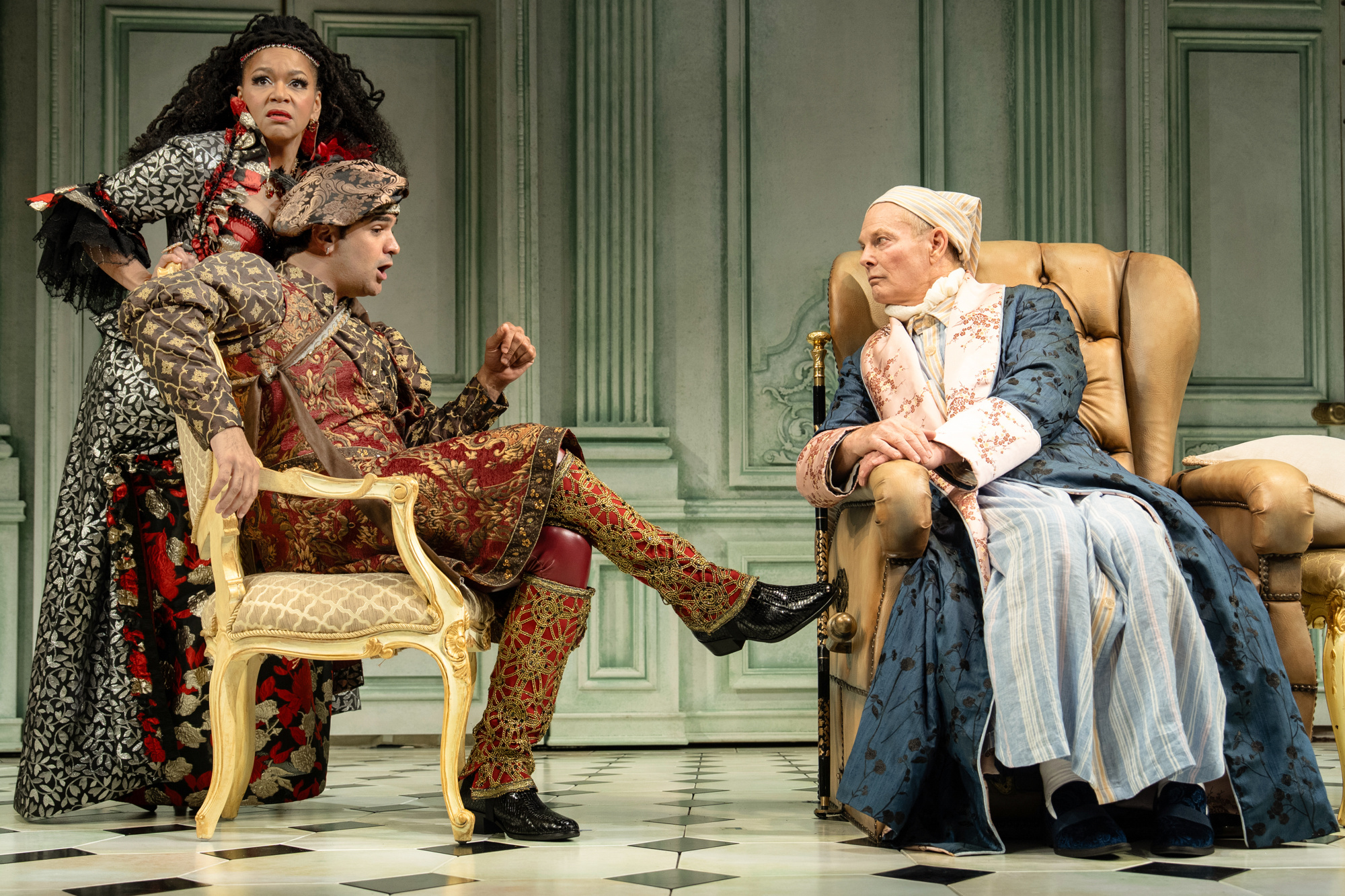
The play is also an outrageous comedy. Crystal, how much freedom did you have to push the humor?
Crystal: It never stops. There’s Brooks Ashmanskas in our cast, so it never stops. We never stop laughing and joking. It didn’t matter whether we were doing the play, or we were just eating lunch.
Beyond the laughs, what do you hope audiences get from this production?
Crystal: This play reminds us that art can really heal. I feel like when we’re at the end of the play, and Bill has done his coda that he’s written, and I look out at the people there, I see smiles and delight on people’s faces. I don’t know how they were when they came in, but I know how they are when we leave them. Art really can transform your heart and mind.

Brandon, Bill Irwin is such a singular physical performer. What was it like directing him?
Brandon: Coming into it, I thought I would be incredibly intimidated to work with him. I thought I would still be intimidated as a director, ’cause, like, what am I gonna tell Bill Irwin about his adaptation? But one thing that Bill made very clear in the beginning was the need to have a partnership with someone on the outside who can keep him honest about making sure that the story was always clear and always present. He’s the most painstaking actor I’ve ever worked with. The detail, the precision. He likes to work with a mirror. So it’s like, “If I’m looking, it’s like, if my knee, if the angle just goes 30 more degrees, then that has an opportunity to be funny.” I mean, it is that specific with Bill. And he is the most humble genius I’ve ever really worked with. So that intimidation quickly gave way to excitement of being in true collaboration with somebody.
How did that collaboration shape the production?
Brandon: Bill would come to me with these images that weren’t necessarily connected to a moment in the play. He had this image of a masked figure, and I started thinking about commedia dell’arte and how Molière borrowed from that tradition. Bill’s adaptation is bringing the play into the present, so I thought, let’s also go back to where Molière got it from. The phrase I like to use is “handshake with history.” How are we trying to not just honor, but be in conversation with what we know and what we’ve learned from the play?
"People ask us, ‘Oh, do you leave it at home?’ It’s like, how could we? That’s how we met." —Crystal A. Dickinson
You’ve spent much of your lives making theater together. What’s it like working with someone who knows you so well?
Crystal: Fun. You know, we went to grad school together. So I’ve seen him in, like, a unitard. You know what I’m saying? He’s seen me be chunky peanut butter. There’s no surprise after that. Brandon’s first year of school, we did Angels in America together. He was Belize, and I was the Angel. People ask us, “Oh, do you leave it at home?” It’s like, how could we? That’s how we met.
Brandon: You know, when I got to school, I had dated actresses before, and I swore I’d never date another actor. I swore I wouldn’t because it's a competition: Who’s working? Who’s not working? And then when I saw Crystal in the rehearsal process of Angels in America, I just became a fan. A huge fan. I believe whoever you choose to partner with as a life partner, you have to be a fan of whatever they do. And it works out that I just think she’s not just a brilliant actor, but she’s a brilliant thinker about how to make art. And she is a brilliant partner for me as I make my own art, and I hope to be that for her as well.
Crystal: Ditto.
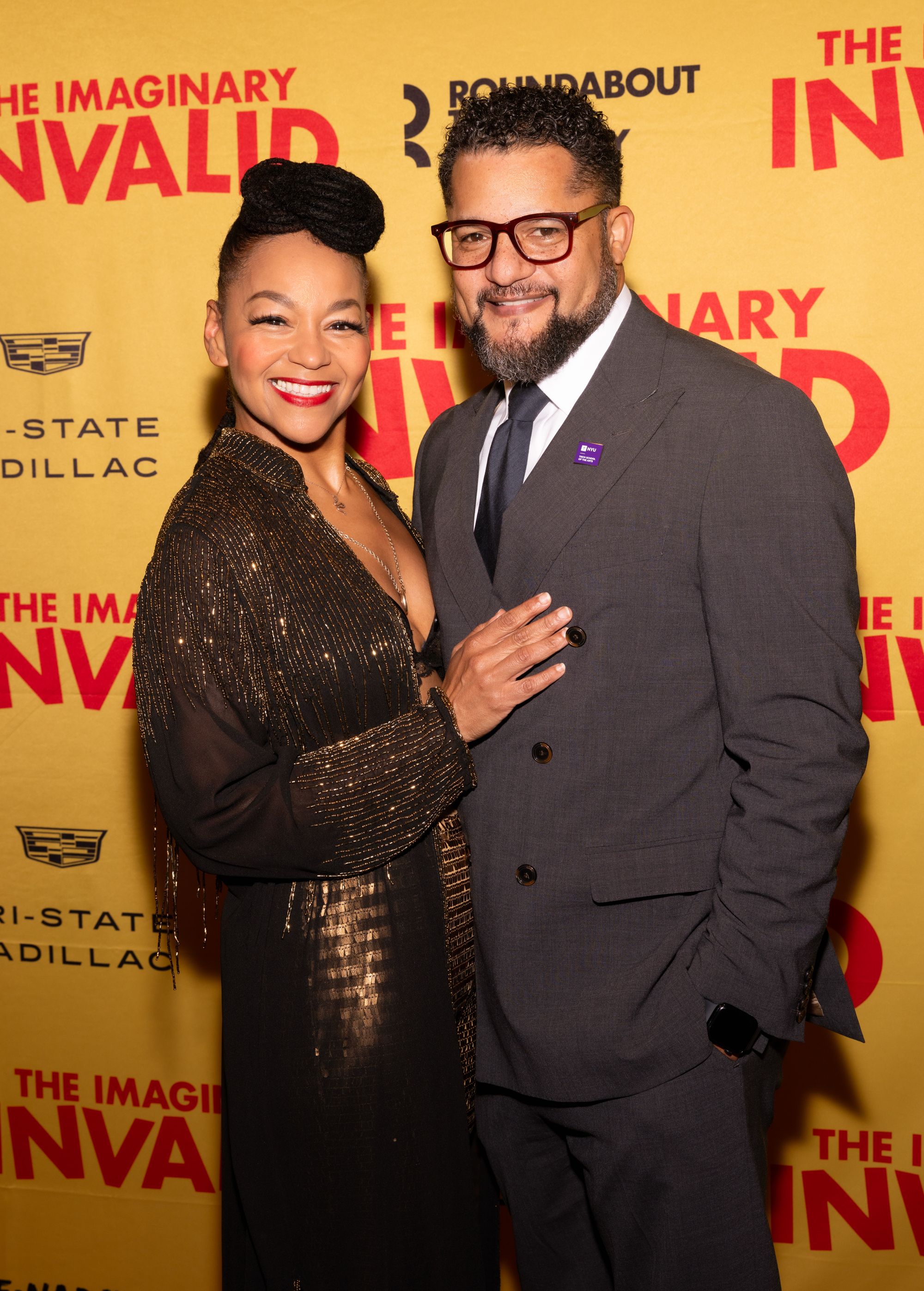
Did you establish any ground rules for working together?
Crystal: We had to have some rules towards the beginning, because it was hard. Brandon was working, and I wasn’t working. He couldn’t complain. That was one thing. There’s no complaining when you’re working. If you’re working, you don’t get to complain. And then the other one was, if we had a thought about each other’s work when we saw it, we would ask first. Ask if you want to hear it.
Brandon: Seriously, “I have a thought. I have a thought about something. Would you like to hear it?”
Crystal: Very respectful.
What does Brandon see in you as an actor that another director might not?
Crystal: He trusts me. He trusts me immensely. He trusts that I’ve done the work I need to do. He trusts that I’m going to come up with something that he can shape. He trusts we’re going to have an intelligent conversation about the art. It’s trust.
Brandon, you’ve worked with extraordinary directors. What have you learned from them?
Brandon: My favorite directors are the ones who trust actors. Dude, I love actors. I love us. But my favorite directors afford actors the time and space to just work through the process. I’ve also learned from great directors that if you have eight actors in this show, you’ve got to learn eight different languages. It’s not incumbent upon them just to learn the way I work. It is incumbent upon me to find that common ground of where they are in their process and how to name certain things that are useful to them in the moment.
Crystal: This is why I really do think he’s one of the greatest directors I’ve ever worked with. And I don’t say that lightly. He has a very mathematical mind. He loves solving a problem, and directing gives him infinite problems. So it’s like the best job for him, you know?
This play tackles hypochondria, among other things. Tell me about each other’s wellness quirks.
Crystal: Well, when I met this man, he had a chip collection. A potato chip collection. Above his refrigerator, there was a collection of open bags of potato chips. Like a little potato chip museum. And that was interesting.

How many bags are we talking about?
Crystal: More than one person should have.
Brandon: But, you know, you go to a grocery store and there’s like two for six—
Crystal: But he’s since come over to my side. He and Chase, our son, sometimes they make fun of me, but they know what’s good for them.
Brandon: It’s true. And my cholesterol thanks you for it.
And what about Crystal?
Brandon: Crystal, as long as I’ve known her, has always been, to some degree, a meditator. She practices silence. I’m starting to do it now because I see the value of regulating the nervous system and calming the anxiety and just really putting things in perspective. Crystal knows herself better than any other person that I know. That’s the biggest thing I admire about her.
Crystal: Well, you say some nice stuff when I said something about your potato chips!
Get tickets to The Imaginary Invalid!