A Flying House and a Shifting World: Inside the Set of The Lost Boys on Broadway With Dane Laffrey
The Tony-winning scenic designer reveals how he brings Santa Carla to life at the Palace Theatre

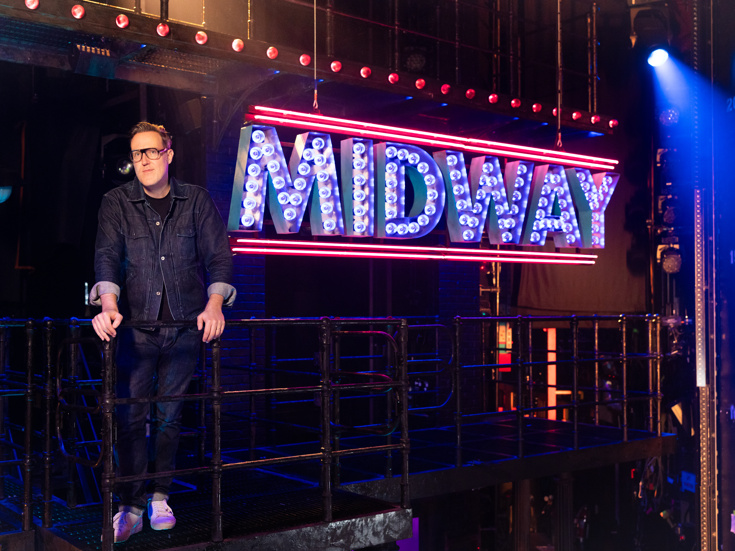
(Photo by Sergio Villarini for Broadway.com)
What to Know
- Tony-winning set designer Dane Laffrey offers a behind-the-scenes look at The Lost Boys at the Palace Theatre
- Laffrey reveals how the Broadway musical transitions between multiple locations, including a two-story family home, a boardwalk and a vampire lair
- The designer also discusses collaborating with director Michael Arden, creating the show's intricate moving scenery and bringing its iconic motorcycle sequence to life
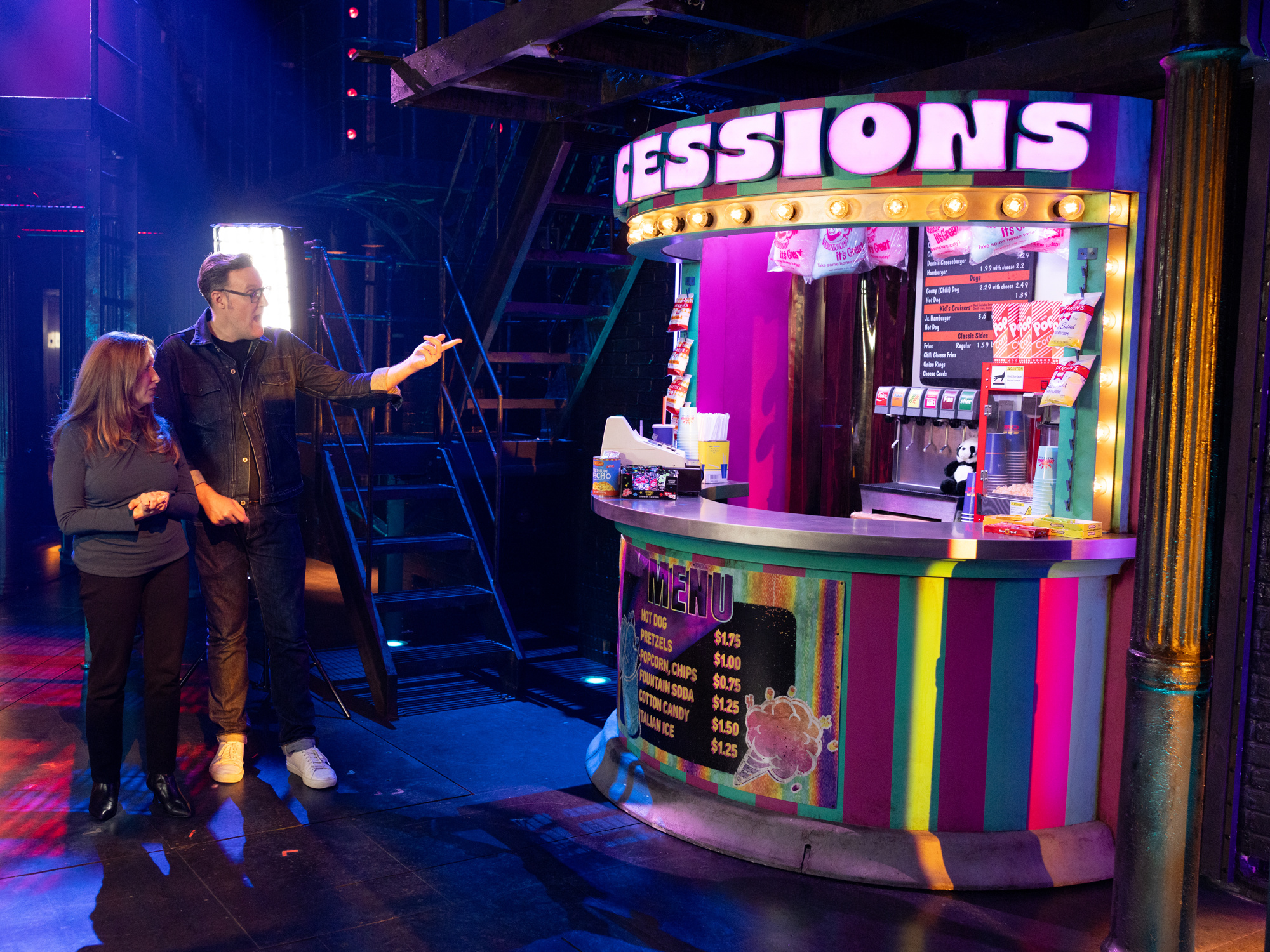
The Lost Boys on Broadway doesn’t skimp on spectacle, from soaring vampires to a wild motorcycle chase. One of the most astonishing components of the production is Dane Laffrey’s Tony-winning scenic design, which features massive set pieces moving seamlessly through industrial scaffolding. Broadway.com Managing Editor Beth Stevens paid a visit to the Palace Theatre, where Laffrey broke down his multi-level set and the intricately crafted world of Santa Carla, California.
Laffrey is a frequent collaborator of director Michael Arden. Their work together can currently be seen on Broadway in Maybe Happy Ending, which earned Laffrey his first Tony Award, and the Lincoln Center Theater revival of A Few Good Men. When Arden brought him on for The Lost Boys, Laffrey had not seen the 1987 film on which the musical is based. He eventually watched the film, but held off during early development so he could “come at it as a blank slate and encounter the writing as theatrical writing, not as an adaptation. It was a great early part of the process to just think about it as a play.”
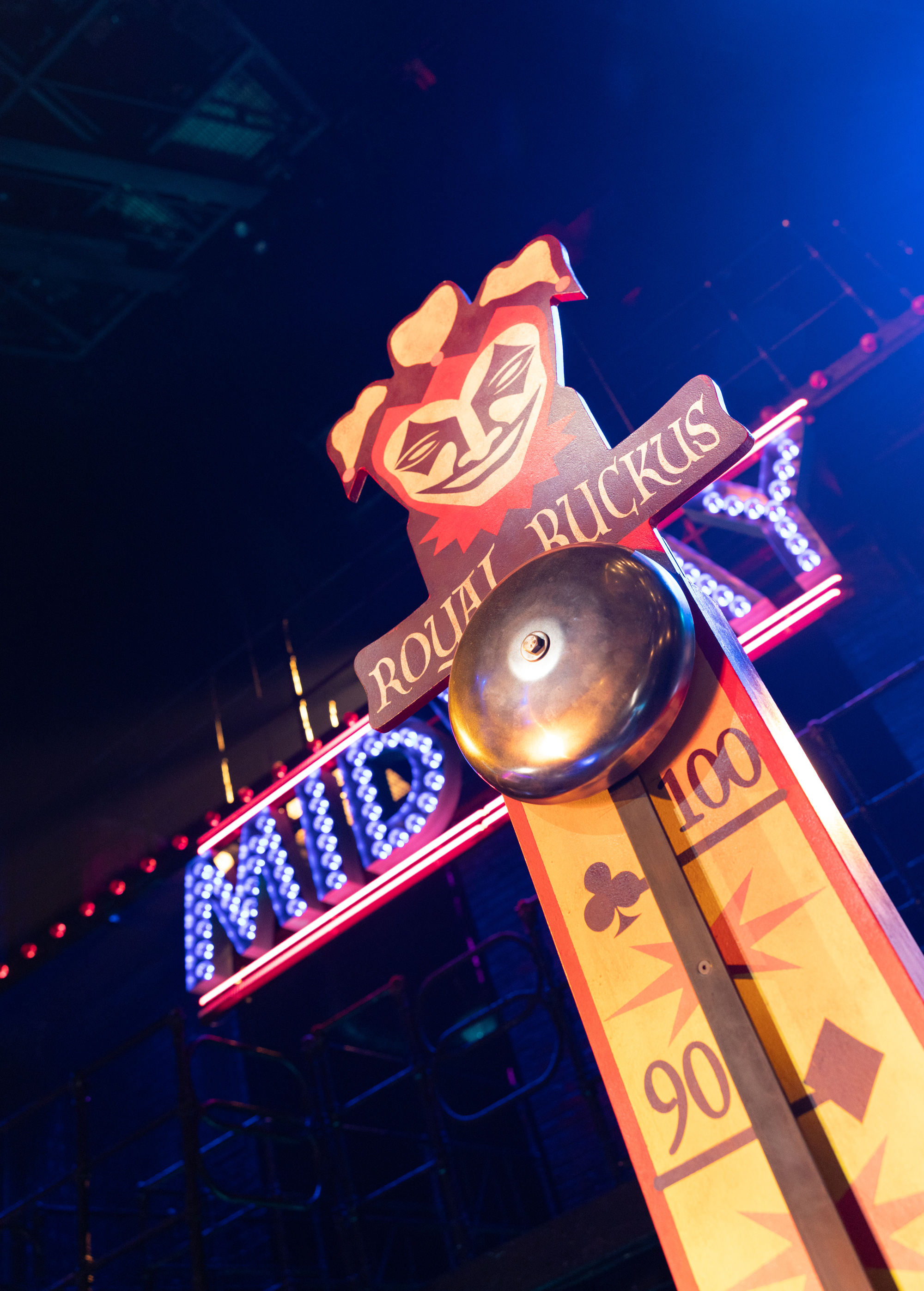
With more than a dozen set changes, The Lost Boys whisks audiences from a two-story home to a neon-soaked boardwalk to the depths of the vampire lair, often in a matter of seconds. Laffrey says these shifts mirror the experience of the show's central character. “I think there is a vocabulary that we have built where you're in one place and then suddenly you're someplace else and you really don't know how you got there. The protagonist of the show, Michael Emerson, that's a bit of his experience. We're trying to lens what's going on for him for the audience.”
At the heart of The Lost Boys is the Emerson family home, a cabin filled with wood carvings and taxidermy. “Their initial take on it and the initial confrontation with the house is like, ‘Oh my God, I can't stay here.’ And then by the end of it, it's something that's worth defending,” Laffrey says. “It's something that they have found and built together. This is about belonging and it's really beautiful. It really does evolve a lot.”
The two-story set piece is flown in and out throughout the show, a design feature that nearly fell victim to spatial limitations. “We did a big pivot that I am so grateful we were all courageous enough to make [in terms of] how the house worked [and] how the house came on and off,” says Laffrey. “The most interesting thing to focus on if you're a repeat viewer is that every time [the Emersons' house] appears, things are just subtly different because they're moving in. They're making it more of a home.”
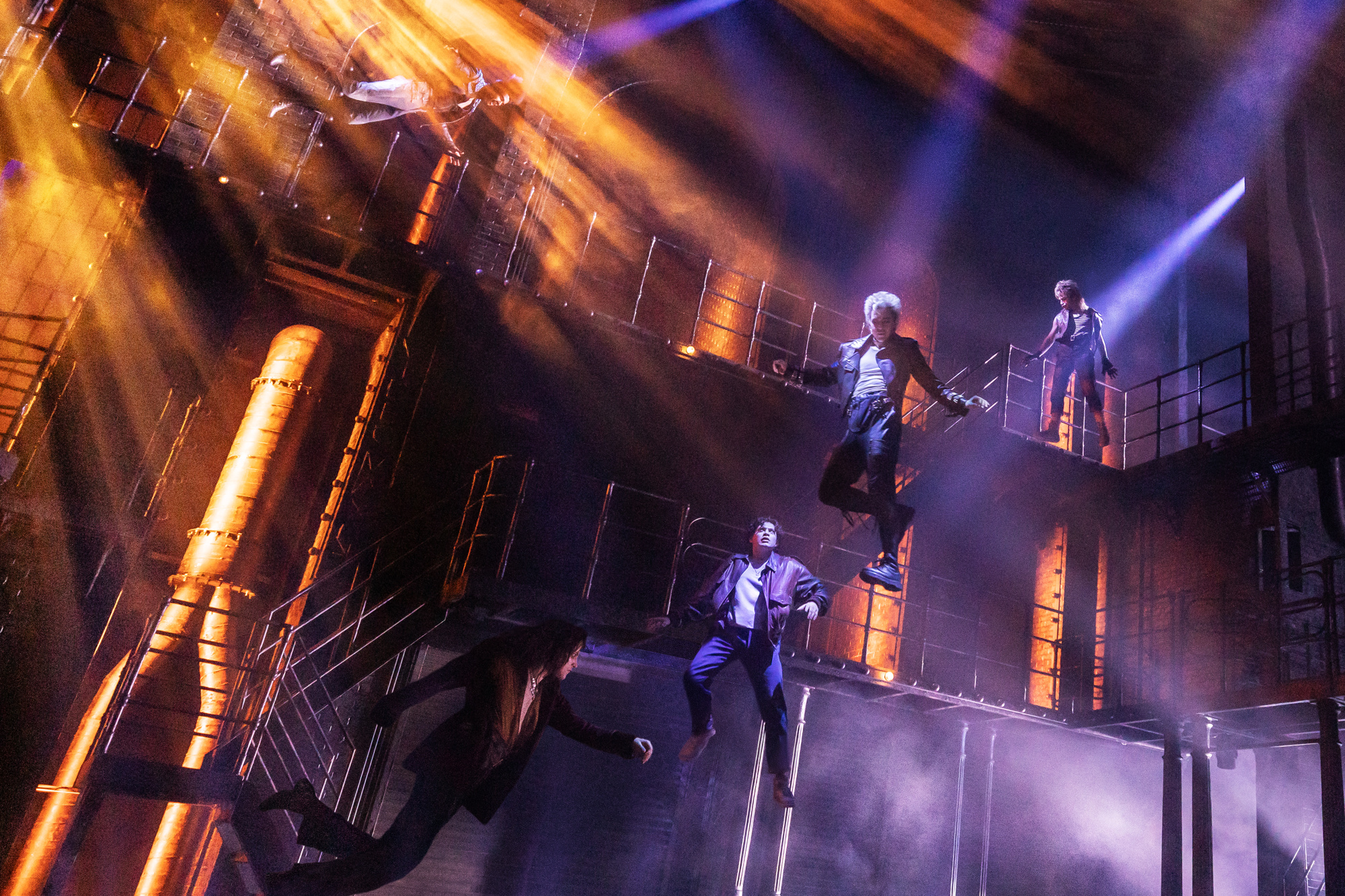
Laffrey also puts the Palace Theatre’s architecture to work in creating Santa Carla. “So much of what we're doing here is giving you little pieces along the way that let your imagination fill in the rest,” says Laffrey. “The entire back brick wall of the Palace is covered in this huge graphic that's a big painted Santa Carla advertisement that you only get glimpses of, but you can see the Ferris wheel and a bit of the roller coaster.”
The production's motorcycle chase offers another example of how Laffrey transforms familiar scenery into something unexpected. “At the end of the motorcycle race is a dramatic moment, and then they arrive outside of the vampire lair,” he explains. “Of course, we're just showing you the same thing you've seen all night in a different light, in a different way, in a different context and it takes on a different value.” It's what Laffrey calls "a great theatrical transcendence.”
Watch the video below for more secrets from The Lost Boys set—including amusement park attractions, a steep climb into the rafters and a surprising elevator ride.
Get tickets to The Lost Boys!