Just What the Doctor Ordered: 5 Reasons to See The Imaginary Invalid on Broadway
Bill Irwin, Rachel Bloom and a riotous Broadway company give Molière’s comedy a modern checkup

(Photo: Joan Marcus)
What to Know
- Bill Irwin stars in his own Broadway adaptation of Molière’s The Imaginary Invalid
- Rachel Bloom, Brooks Ashmanskas and more make the comedy about hypochondria relevant today
- Brandon J. Dirden directs the revival exploring health obsession and family ties
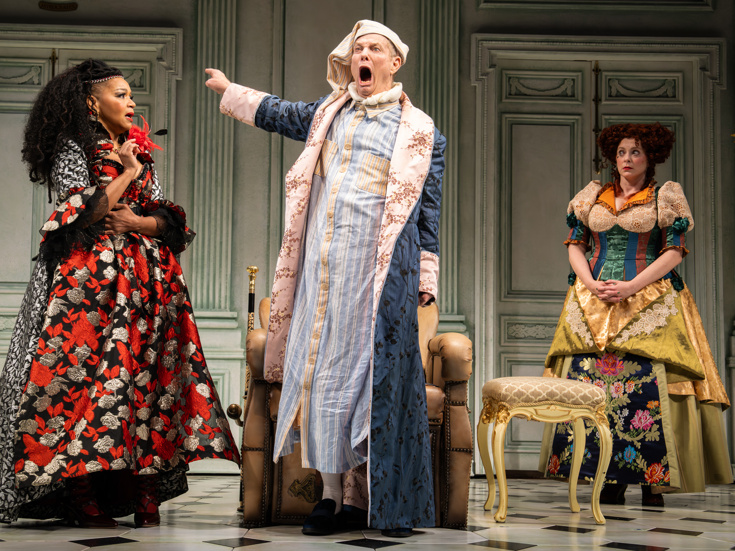
The ailments are imagined, but the family drama is real in Molière’s The Imaginary Invalid, now playing at Broadway’s Todd Haimes Theatre. Directed by Brandon J. Dirden and starring Bill Irwin in his own new adaptation, the comedy follows a man whose obsession with his health threatens everyone else’s happiness, including his lovestruck daughter. With medical bills mounting and a marriage scheme brewing, this newly adapted classic has plenty to say about the lengths we’ll go to feel better, what really matters in the end and how both still resonate today.
1. It’s full of Bill Irwin magic.
The Imaginary Invalid might sound like something on a syllabus, but Bill Irwin’s new adaptation makes the Molière comedy immediately accessible. The Tony winner told Broadway.com that he sees his version as "a handshake with history." Starring as the health-obsessed Argan, Irwin brings surgical precision to his writing and acting. Known for his physical prowess, Irwin spends most of his stage time confined to a chair, and yet you can't take your eyes off of him.
2. This household deserves a reality show.
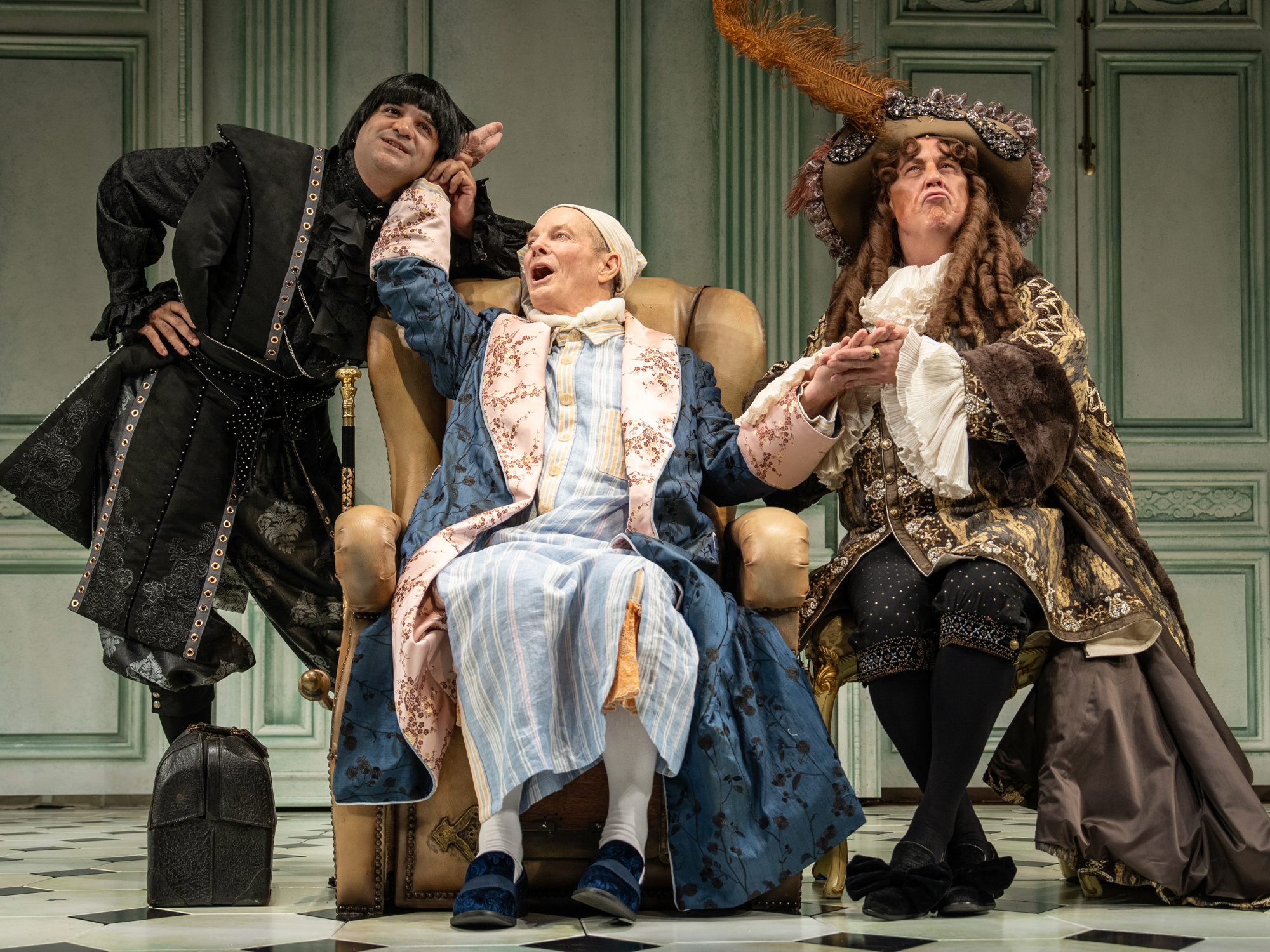
The Invalid characters are achetypes that comfortably fall somewhere between fairy tales and reality TV, and the actors know exactly how to get inside them. Known for his devastating comic timing, Brooks Ashmanskas is unleashed in the best way, while Rachel Bloom, in her Broadway debut, gives the audience entry into the madness. Crystal A. Dickinson plays a scheming second wife who would be at home in The Real Housewives of Paris. Ava Lalezarzadeh and Daniel Croix Henderson, who play the besotted young couple, hold their own alongside the Broadway vets, making this a household with no weak links. Dylan Baker and Hiram Delgado round out this formidable lineup. With multiple actors playing more than one character and a madcap speed to the comedy, these pros make everything seamless.
3. There are some seriously sick views.
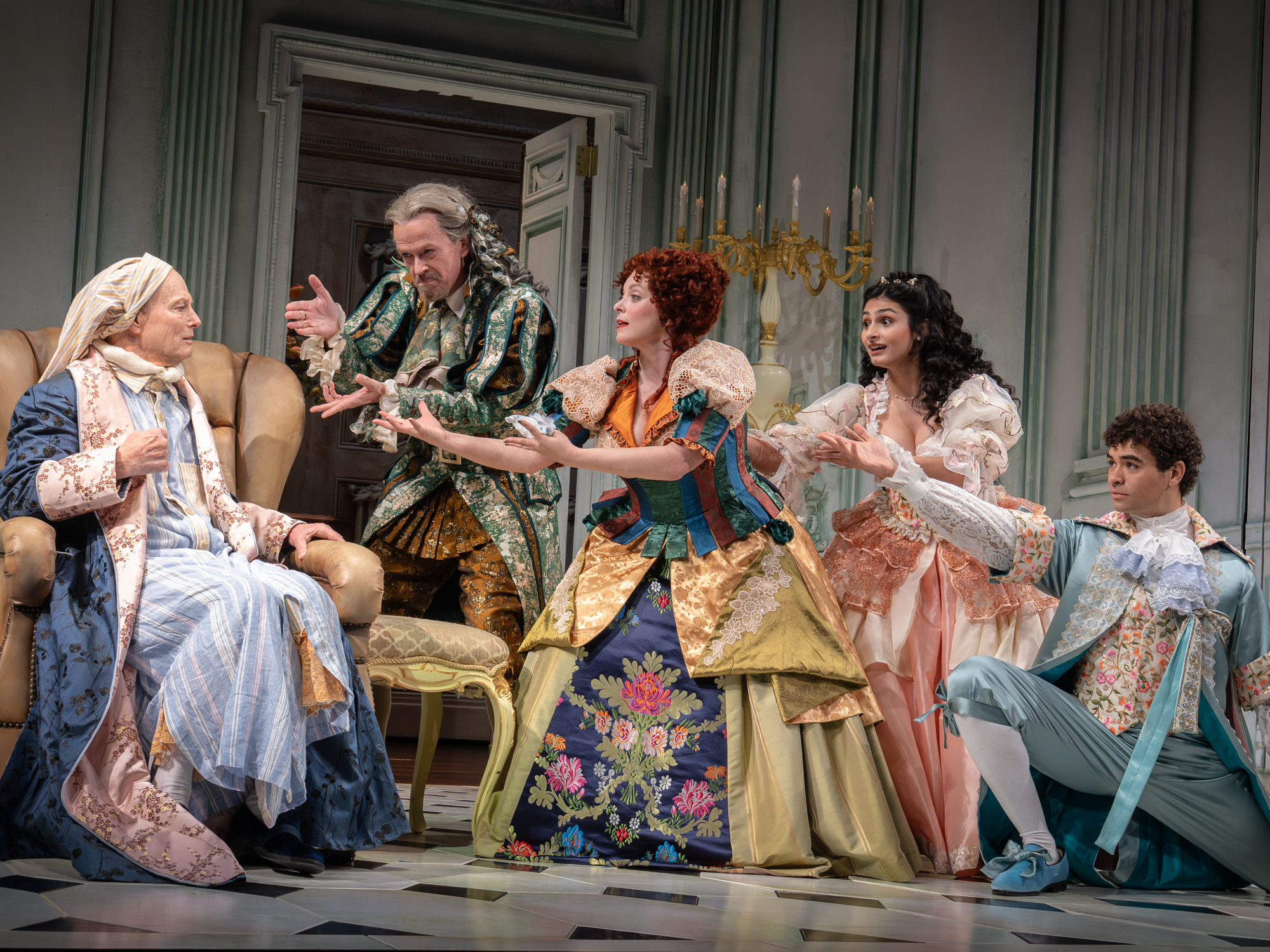
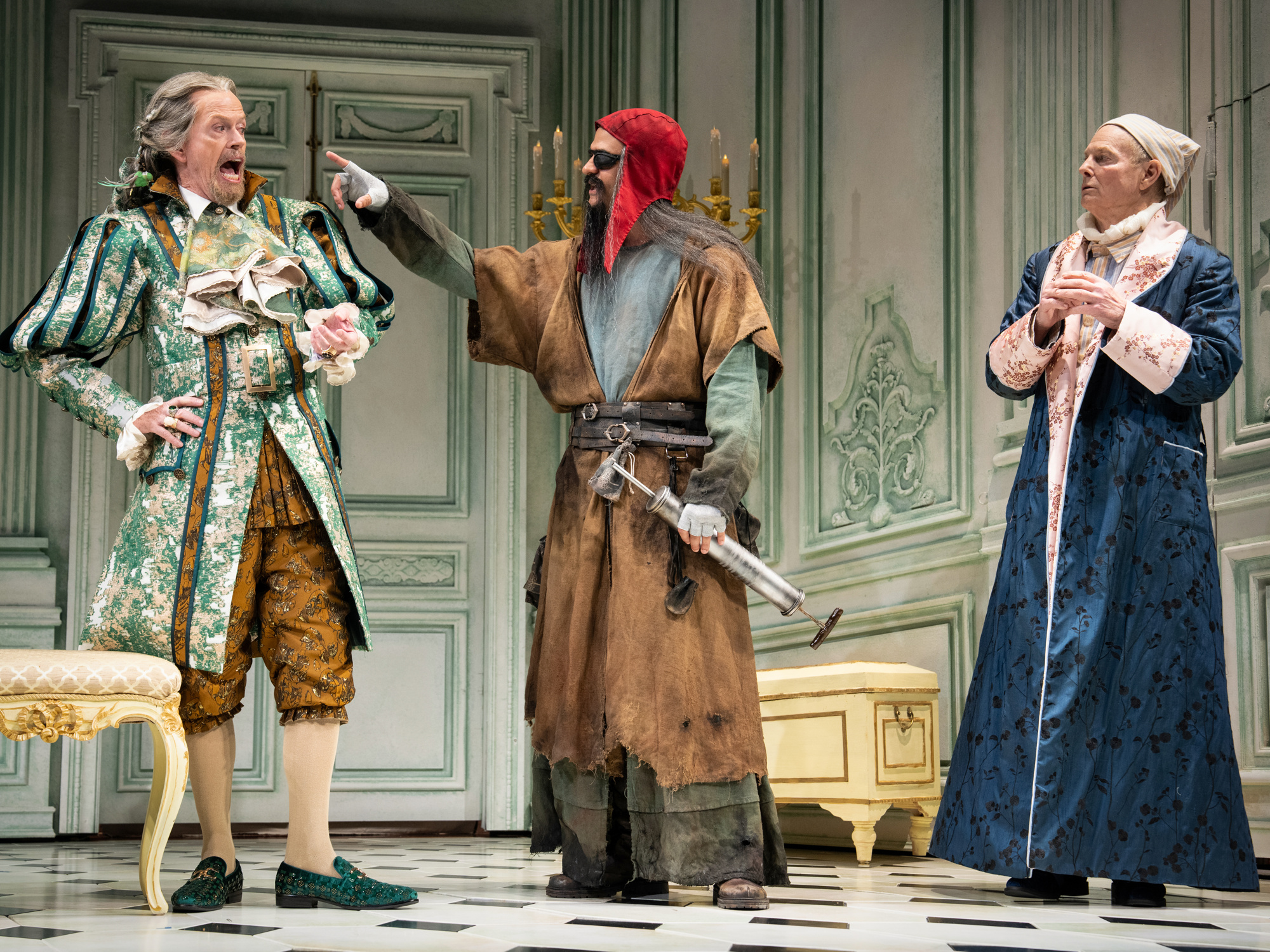
Argan might be a hypochondriac, but his surroundings are actually sick (in the good sense of the word). Beowulf Boritt’s elegant scenic design is complemented by Karen Perry’s layered costumes, making everyone’s color theory dreams come true. Nikiya Mathis’ hair and wig design are the cherry on top. Argan’s health paranoia becomes ever feverish, but the production's aesthetic beauty is a balm for the audience.
4. Convalescence comes full circle.
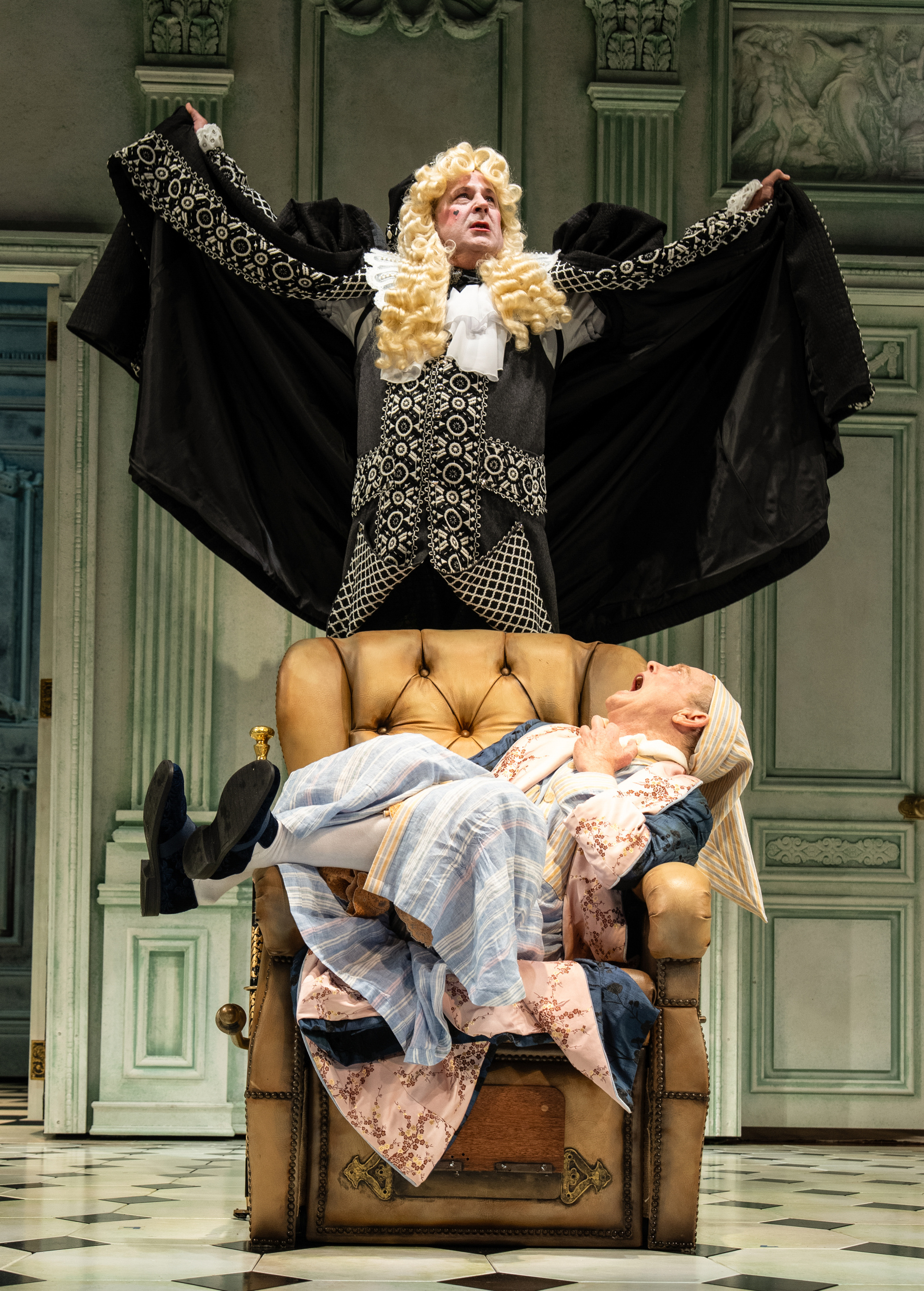
The opening scene introduces the commedia dell’arte traditions behind the mayhem. Meanwhile, Irwin's moving coda shows off the physical sparkle you might expect from him. With a joyous sendoff, he offers a timely message about the humanity and care needed for real healing, both mental and physical.
5. Wellness culture could use a sick day.
Apparently, obsessing over your health was wild long before red light therapy, flotation pods and raw milk. Irwin and Dirden connect Molière’s 17th-century world to our own through the enduring conviction that there must be one more treatment worth trying. The remedies may have changed, but the fixation is familiar: Yesteryear’s daily enema is today’s protein-maxxing.
Get tickets to The Imaginary Invalid!