Dez Duron on Finding His Voice and His Team in Broadway’s Maybe Happy Ending
The former Yale quarterback discusses his unconventional path to playing Gil Brentley and why the Tony-winning musical feels like home

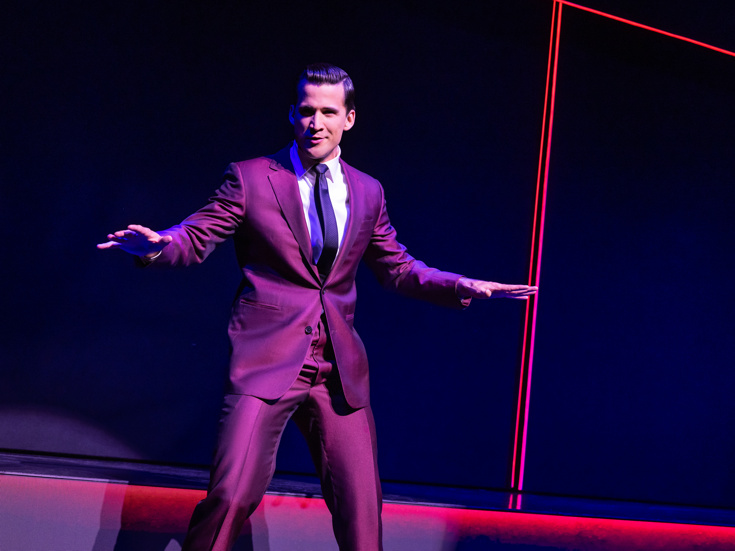
(Photo: Evan Zimmerman for MurphyMade)
What to Know
- Dez Duron returns as jazz singer Gil Brentley in Broadway’s Tony-winning Maybe Happy Ending
- The former Yale quarterback and The Voice contestant opens up about his jazz influences and finding community on Broadway
- Duron shares his dream musical roles, including Just In Time
Dez Duron’s Instagram bio is a charmingly cheeky list of things he nearly accomplished: “Grammy nominee, Yale dropout, The Voice Top 8 and other almosts.” Modesty aside, Duron’s list hints at impressive things he actually did achieve: The Grammy nod honored his silky vocals as jazz singer Gil Brentley in Maybe Happy Ending; he played quarterback for Yale’s junior varsity football team before leaving to concentrate on performing; and Christina Aguilera chose him for her Voice team in 2012, giving him the confidence to pursue a singing career.
After creating the role of Gil in Maybe Happy Ending’s pre-pandemic run at Atlanta’s Alliance Theatre, Duron embarked on a long and happy stint on Broadway, with plenty of concerts on the side. (Catch his holiday show at Joe’s Pub on December 14.) After a month-long hiatus, during which his friend Stella Cole made her Broadway debut as Gil (in her case, pronounced “Jill”), he’s back in the show and feeling grateful for his pivot into musical theater.
You’ve just returned from a month off, including lots of social media support for Stella Cole as Gil.
I was elated that she was the one coming in for a four-week stint. From the beginning, Stella’s name had been thrown around playfully by me, Darren [Criss] and [director] Michael Arden because we’re all fans. I’ve known Stella a long time and been a fan even longer. When the opportunity to expand the casting came up, I had already asked her to be my guest star at Joe’s Pub, and I said, “Would you sing ‘Why Love’ with me?” As soon as we sang together, I thought, “This makes so much sense.” She and I have similar dreams, and we didn’t get to Broadway through a linear path. Our voices weren’t typical musical theater voices, but this unique opportunity came along to make our Broadway debuts.
Maybe Happy Ending recently became the longest running show at the Belasco Theatre. How does it feel to be part of a milestone like that?
Incredible. This whole ride has been one special moment after another, especially having started out trying to sell people on the show because there was nothing to compare it to. I left [for rehearsals] feeling… not skeptical, but wary. I even told my roommate in Nashville, “Keep my room open, because I may be back in three months.” Now it’s been two years!
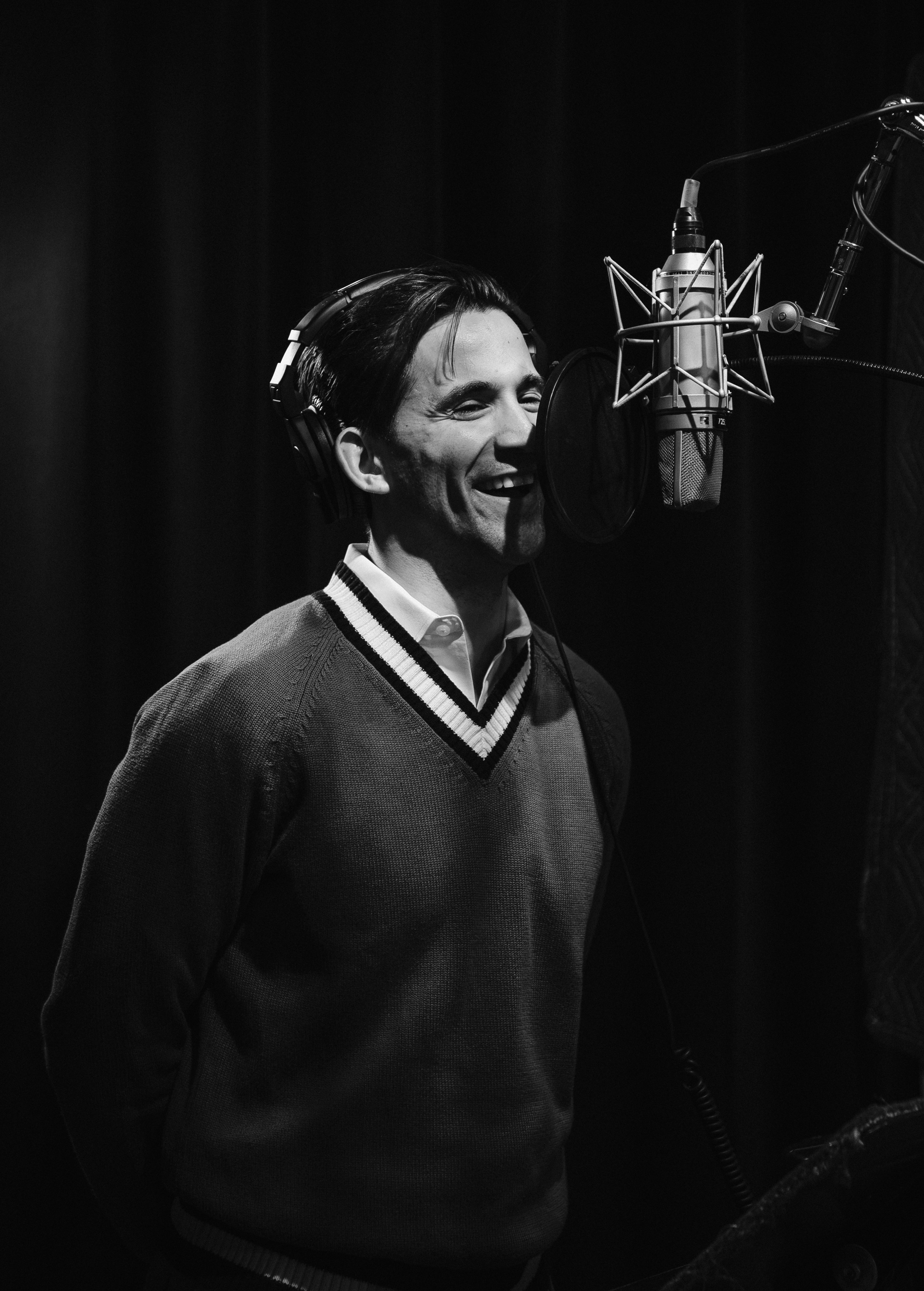
(Photo by Sergio Villarini for Broadway.com)
The show’s success must feel extra special, having opened in such a competitive season of 14 new musicals.
It was wild. I felt like if we could get enough eyes on it, people would love the show. The Tony became my elevator pitch: “It won Best Musical! You need to see it.” Robots falling in love, with jazz music? There are so many strange elements that shouldn’t fit together, but that’s the magic of it: The writing is so specific and wonderful and poignant, and the songs are so beautiful. It all fits perfectly.
Gil is a unique role, in which you pop in and out to sing five songs. What do you enjoy about that?
I feel like Gil is part of the cast, but he’s also part of the crew and part of the audience. He’s kind of this ghost who floats in and out of the fourth wall. It’s a fun thing to play with. I’ve heard it compared to Jiminy Cricket [Laughs]; I’ve heard it compared to the Muses in Hercules; the comparisons are endless. He’s expressing emotions that the lead characters can’t because it’s not in their programming. It’s fun to be sort of a narrator who is rooting for the characters but also experiencing the show with them. His history isn’t tied to the plot, so I can try new things as needed.
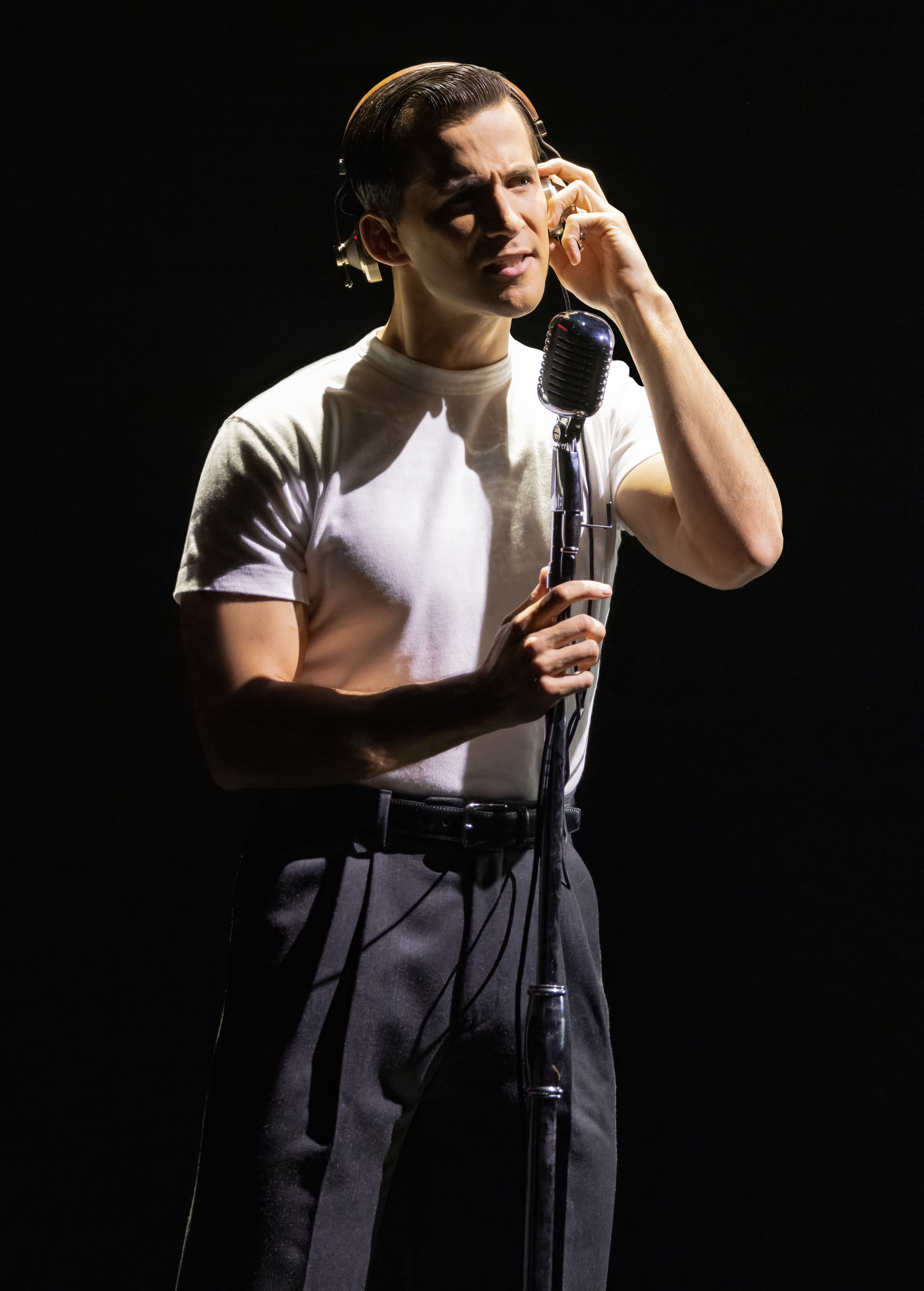
(Photo: Evan Zimmerman for MurphyMade)
Do you have talent crushes, as lead robot Oliver does with Gil?
The person who introduced me to this style of music was Michael Bublé; his album It’s Time blew my mind. Gospel music was my first love, and Frank Sinatra’s storytelling moved me in the same way gospel music did. Nat King Cole was a huge influence for Gil because his phrasing is so distinctive and classic and of the time. Mel Tormé is a singer I had a huge crush on, as well, and most recently, Blossom Dearie is someone I love for the simplicity and authenticity she brings to her vocals. Jazz is such an expression of feeling and spontaneity, and I think that’s what Oliver loves about it, too.
Your resume includes several fun facts, including being coached by Christina Aguilera on The Voice, a very different world from jazz or musical theater.
When people ask me about The Voice, I usually say that I had cystic acne and lost 10 pounds because I was so stressed, but I had the time of my life and learned so much. It’s very similar to Broadway in that you’re surrounded by professionals. The stakes are high, but everyone is doing their job at a high level, so all you have to do is concentrate on your specific job.
What were you up to in the years between The Voice and Maybe Happy Ending?
I was in Nashville doing Sinatra-style residencies and singing the American Songbook at private events and weddings. I had made a demo at 18 singing “The Very Thought of You” and “Smile”—Nat King Cole songs. When you move to L.A. at 21 and sit down with a label and a manager, they’re saying, “You’re going to do pop music, and when you turn 40, you can start singing that music.” It was hard to find people who understood what I wanted to do, so it’s been wonderful to have this [show] affirm what I want to sound like.
"I come from sports, and the best part for me is being on this team." —Dez Duron
Let’s back up for a second. You have six siblings and attended a Christian school founded by your grandfather in Shreveport, Louisiana. From there, you went to Yale. Was that a culture shock?
It was an intense culture shock. Shreveport isn’t a small town, but my “village” was, and I didn’t venture out much from that. There was my church and my school, and if you didn’t go to those, I probably didn’t know you until my senior year, when I joined community theater. I loved Yale. I went from a homogeneous culture to a place where no two people thought exactly the same, and that was heaven. I love people, and I love getting to know what makes them tick, so walking to class and hearing different accents and languages was incredible. At the same time, it was challenging, with no one around who really gets where you’re from.
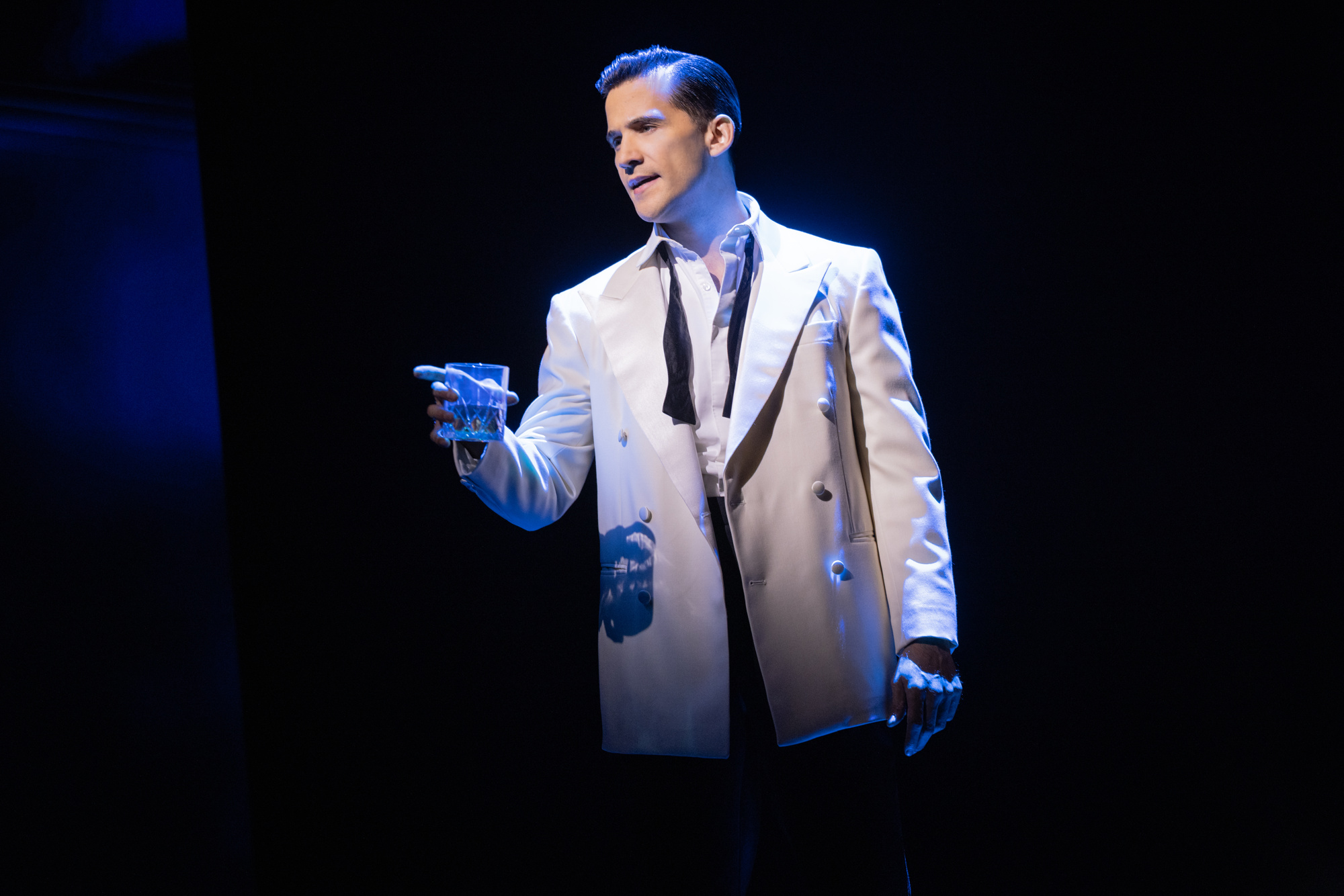
(Photo: Evan Zimmerman for MurphyMade)
Were your parents supportive?
They were excited for me, but it felt very random to them. In my junior year [of high school] we were asked, “Where do you see yourself in five years?” and I said, “I see myself playing quarterback for the Crimson Knights of Harvard.” My parents were like, “What in the world? Where did that come from?” Since I was a young kid, it had been, “I’m going to finish high school and then I’m moving to L.A. to either starve or be a singer.” Then I got to high school, and it’s like, okay, college exists—and for some reason, I said to myself, “If I’m going to college, I’m going Ivy.”
And you made it, playing football at Yale. I wonder how many other former college quarterbacks have appeared on Broadway.
I think it’s relatively rare. [Laughs] I was just sitting in my dressing room with Derek Klena getting the 411 on his UCLA journey and the Savannah Bananas of it all. [Klena played college baseball before becoming a Tony-nominated Broadway actor; he now pitches for the Savannah Bananas exhibition team.] It was funny to connect with someone who had such a similar journey. He left school after his sophomore year the same way I did.
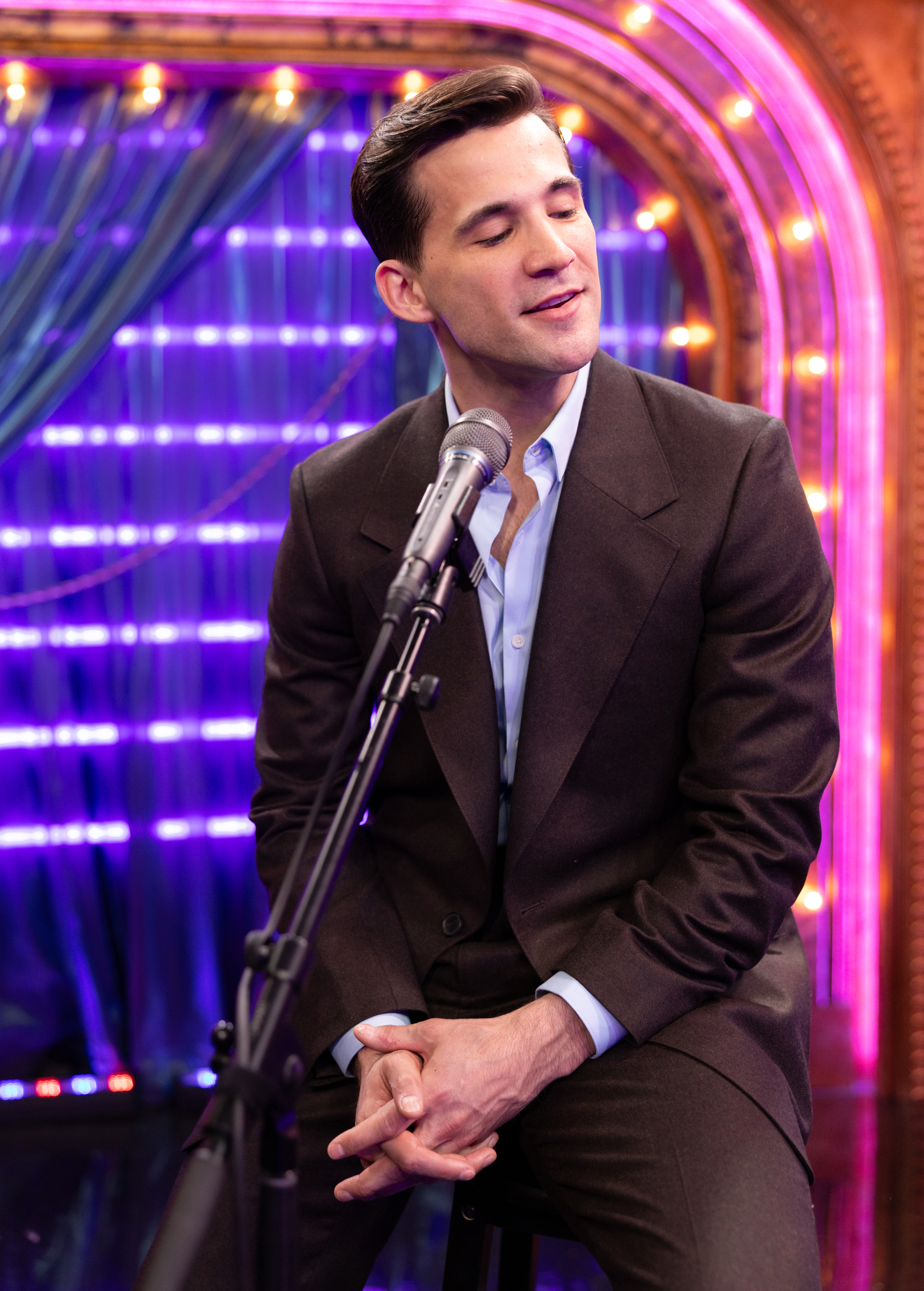
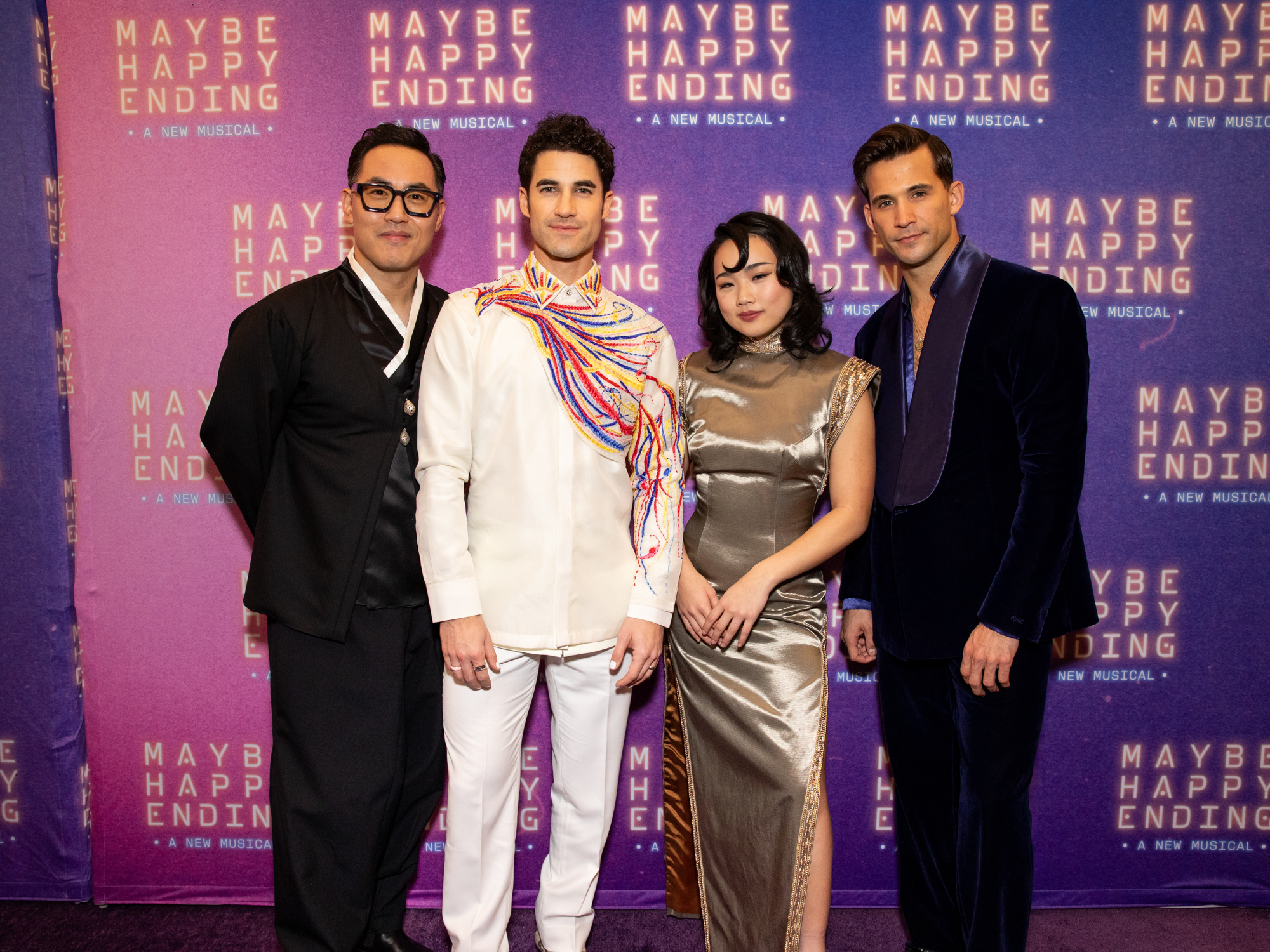
(Photo by Sergio Villarini for Broadway.com)
Does this experience make you want to take on a more traditional acting role in a musical?
I would love to. I’ve done some musical workshops, but I would love to do something that’s a little more involved, [a character] who interacts with the other characters. Gil’s sort of on an island.
Any dream shows?
I’ve probably aged out of it, but I love Pippin. I love Guys and Dolls and Hello, Dolly!. Just In Time would be a dream come true.
How about the Sinatra bio musical, if it comes over from London?
Oh, that would be an absolute dream. Frank Sinatra is my hero.
What’s been the highlight of your long run in Maybe Happy Ending?
There have been so many. The path of a music artist can be very isolating and lonely. You’re showing up to gigs with one or two other musicians, and then you’re gone. One of the highlights of this experience is being able to say at the end of the day, “I’ll see you tomorrow,” having community and a common goal. Especially with this show, we put our whole selves into creating something we were proud of. I come from sports, and the best part for me is being on this team.
Get tickets to Maybe Happy Ending!