
Tessa Thompson on Her Broadway Debut and the Unique Challenge of The Fear of 13
In a candid conversation, Thompson reflects on theater roots, creative ambition and sharing the Broadway stage with Adrien Brody

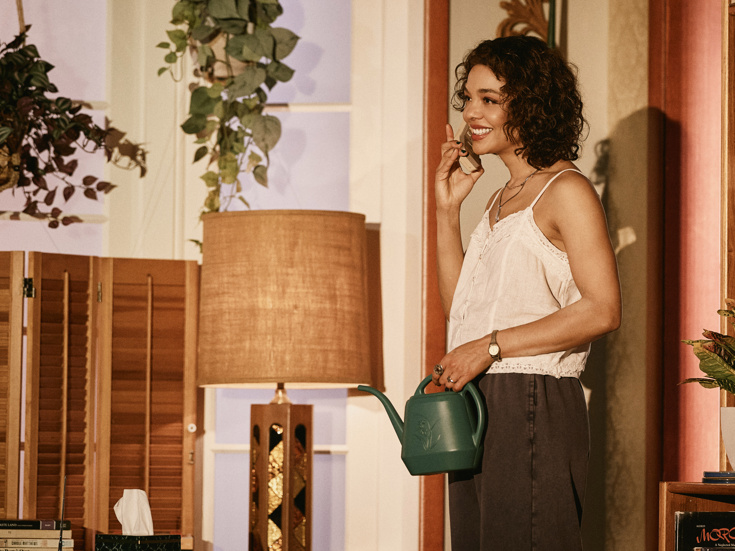
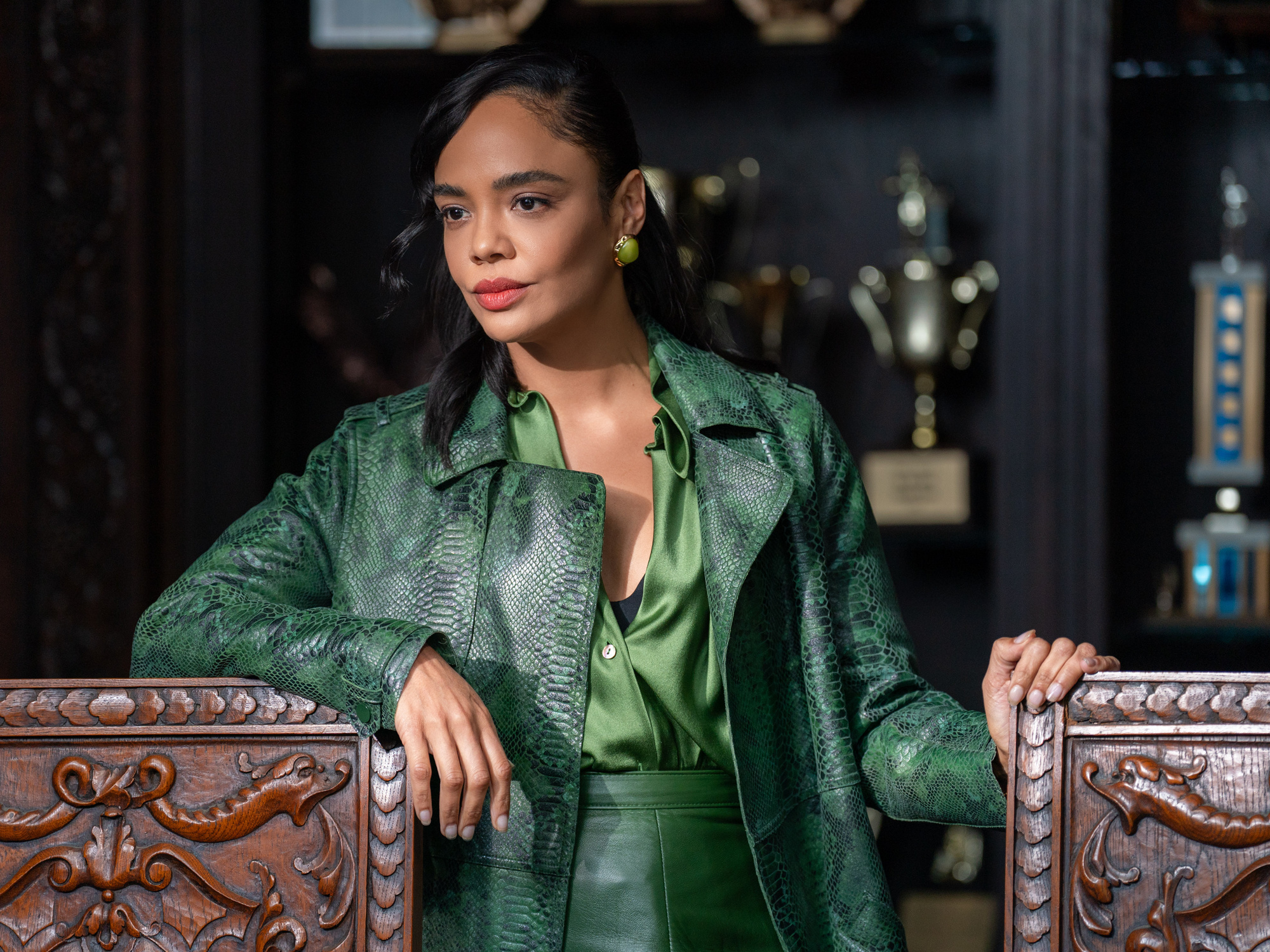
(Photo: Emilio Madrid)
What to Know
- Tessa Thompson makes her Broadway debut in The Fear of 13, starring opposite Adrien Brody in a true story about wrongfully convicted death row inmate Nick Yarris
- Thompson plays prison volunteer Jacki Miles, navigating a unique onstage challenge—building a romance and emotional connection while physically distanced from Brody
- In a candid Q&A, Thompson discusses her return to theater after 10 years, working with Adrien Brody and balancing blockbuster films with passion projects as an actor-producer
One of the smartest decisions the creative team of The Fear of 13 made was casting Tessa Thompson in her Broadway debut opposite two-time Oscar winner Adrien Brody. This true story of Nick Yarris, stuck on death row for a murder he didn’t commit, needs a strong stage partner for Brody, and who better than the actress who has matched wits on screen with Michael B. Jordan (three Creed films), Chris Hemsworth (two Thor films), Ruth Negga (Passing) and fellow Broadway newcomer Jon Bernthal (the Netflix series His & Hers)? Thompson is also a charismatic leading lady, as evidenced by her Golden Globe-nominated star turn in Hedda, a gorgeously updated film version of Hedda Gabler, which she also produced.
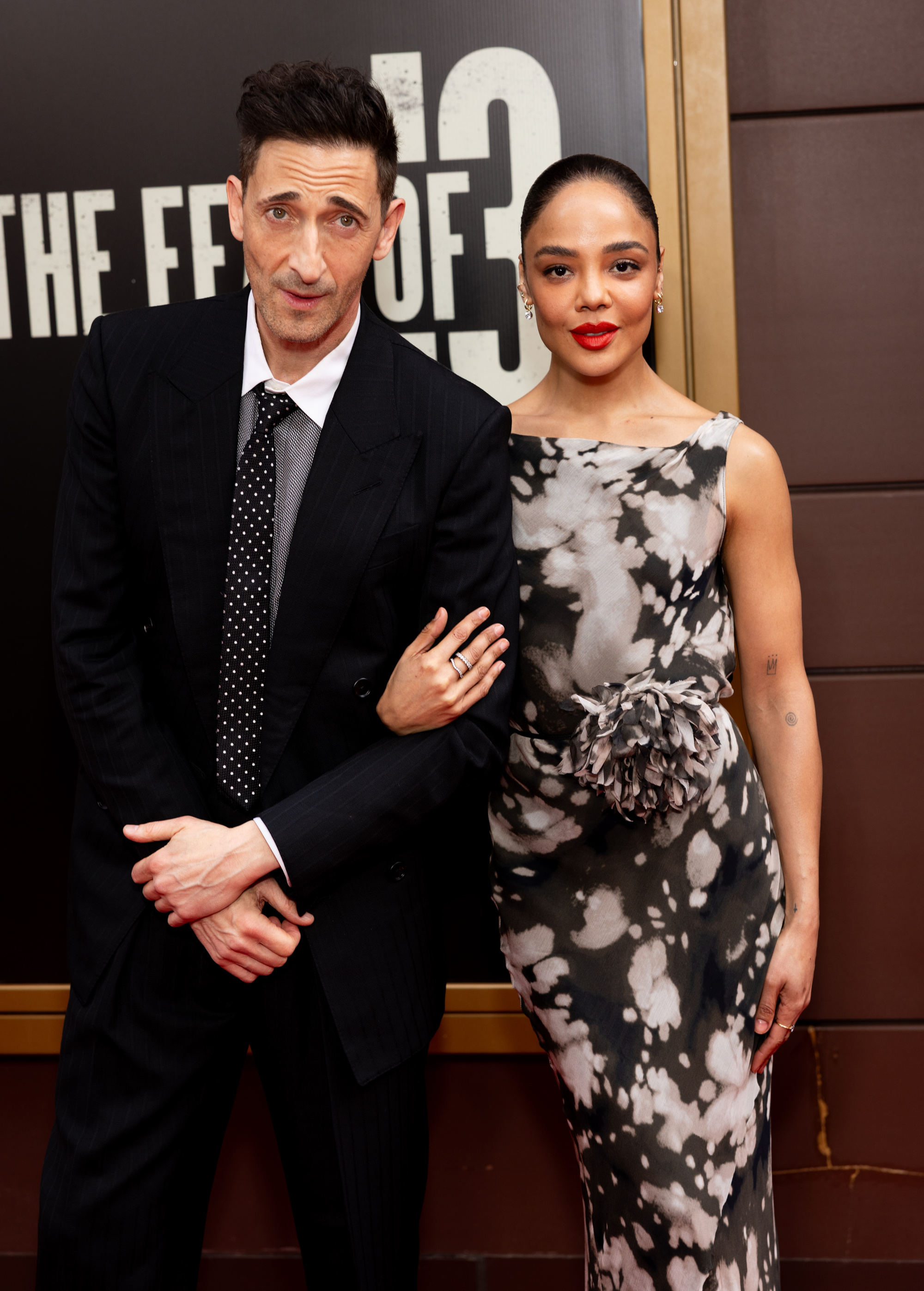
The Fear of 13 presents a unique challenge for Thompson, who must convey the budding romance between her character, prison volunteer Jacki Miles, and Yarris while remaining 10 feet apart from Brody. She also eases the audience into the story while seated onstage observing the action for extended periods. Thompson chatted with Broadway.com about falling in love with theater in her native Los Angeles and her satisfaction in mixing big-budget films with smaller, more personal projects as both producer and performer.
Congratulations on a terrific Broadway debut. What has this experience been like for you?
It’s been wonderful. I haven’t done a play in 10 years, and it’s been so nice to make my Broadway debut and to get to work with Adrien and [playwright] Lindsey [Ferrentino]. They did the show on the West End a couple of years ago, but the piece has continued to evolve. Adrien remarks that he is still learning and finding new things, so to be a part of crafting this with him has been a joy, as well as being part of an incredible ensemble with Ephraim Sykes and Victor Cruz and all these dazzling actors. I’m particularly enjoying being inside the Broadway community because it’s so social; you really engage with people at the stage door.
Jacki doesn’t appear in the documentary that formed the basis for the play. How did you build the character?
I did as much research as I could, spending time with people who actually do this work, and I made connections with volunteers at the Pennsylvania Prison Society. I read a wonderful ethnography about family members of people who are incarcerated, and one chapter that I found illuminating, for obvious reasons, was on people who had begun as volunteers and had become spouses or partners. I did whatever I could to feel firmly planted inside that world. One interesting challenge is the fact that Jacki spends so much of the play listening.
What’s that like for you?
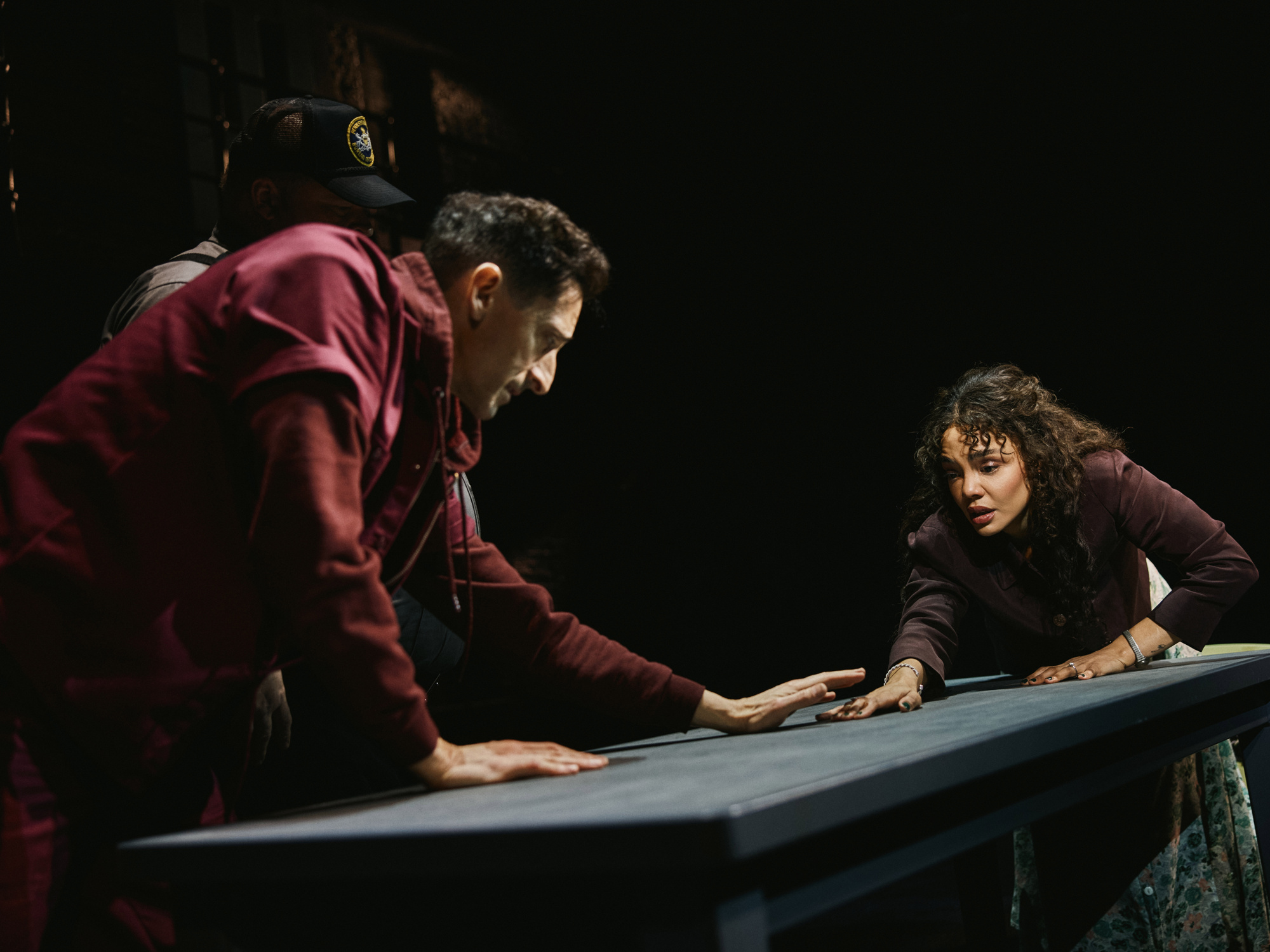
It’s incredible. Adrien and I almost never leave the stage for two hours straight, and I’m enjoying the amount of concentration that takes, just actively listening and trying to communicate with the audience in the moments you don’t speak. Sometimes I can feel that the audience is on Jacki’s side, understanding her emotional journey, and sometimes I can feel them being more judgmental, which is fascinating.
You’ve created great chemistry not only with Adrien but also with your screen co-stars. What’s the key to that?
When I know I’m going to be working with somebody, I typically go back and rewatch their films, or watch the ones I haven’t seen. I spend time watching their interviews and just studying them. I really like people—I think it’s why I do this job. In the theater, especially, I feel like chemistry is fast-tracked because you’re sitting around the table telling stories about your life, and I enjoy finding that kind of intimacy in working relationships. I also think that chemistry with an actor has to do with the energy around the project you’re working on. Adrien and I have tremendous respect for each other as actors making our Broadway debuts, and we want to honor this story. Nick Yarris is one of many who have been [wrongly] incarcerated for years, and many exonerees come to our show. We’re trying to do them justice.
"Find people who are like-minded, who want to make the same work you want to make, then go after the stories that feel imperative to you and take big swings."
—Tessa Thompson
You started your career playing Ariel and Juliet in a women’s Shakespeare company. What are your memories of that time?
Oh my god, my memories are really vivid, even though it was such a long time ago. I was studying cultural anthropology [at Santa Monica College], not even thinking about becoming an actor, although I had acted all through school. In fact, my fourth grade teacher just surprised me by coming to the show, and she brought a photograph of me in a school presentation on the first stage I ever stepped on. I had done Shakespeare in high school but never connected with it until I saw the incredible work [the Los Angeles Women’s Shakespeare Company] were doing. Suddenly, the text was clear as a bell, and I realized that when Shakespeare is done well, it’s accessible and universal. I started apprenticing with them because I wanted to understand how to do that, and the experience was truly transformative.
The range of film roles you’ve done is sort of mind-boggling, from Marvel blockbusters to Passing to Sylvie’s Love. How did you achieve that mix?
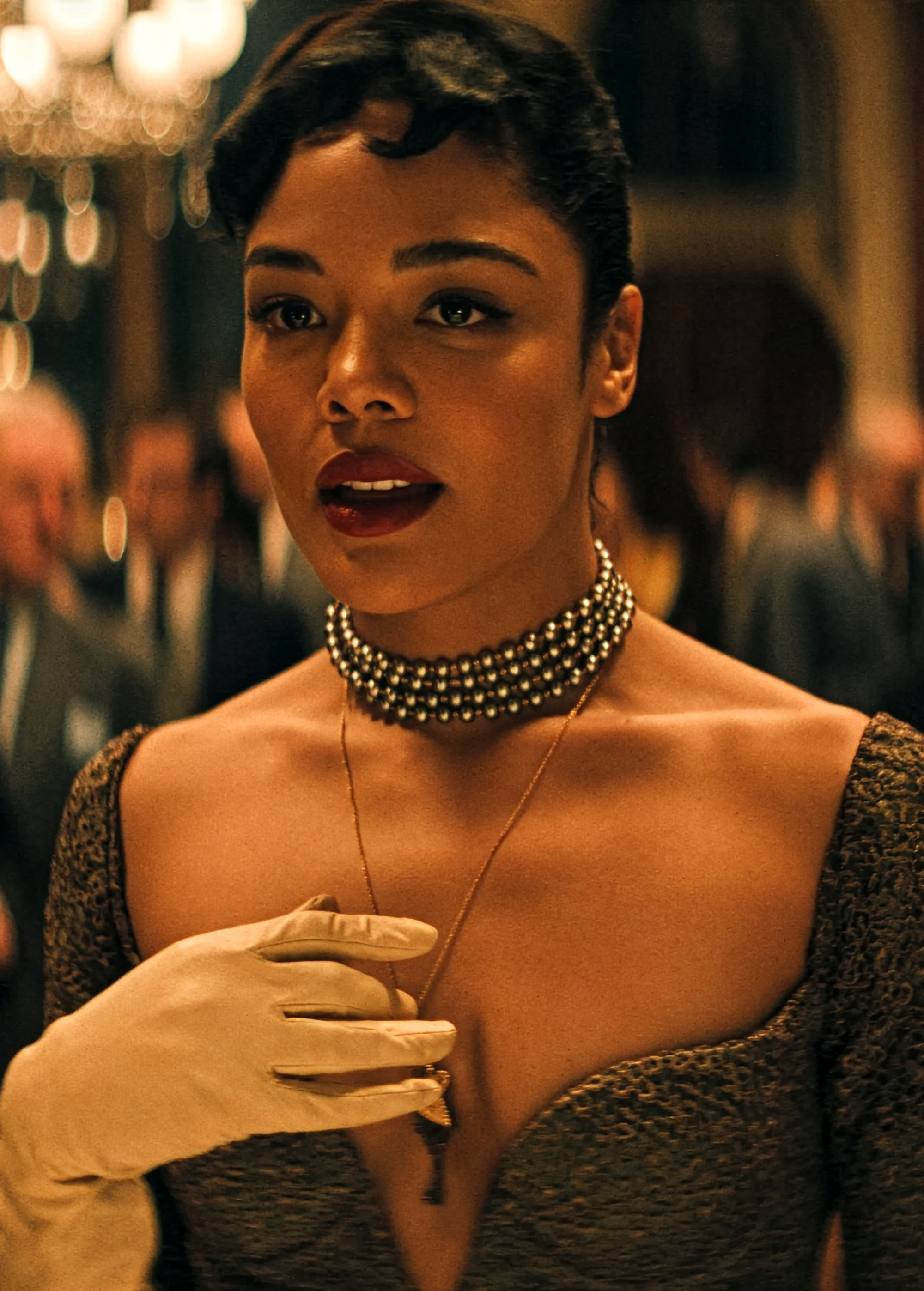
I feel very lucky that I’ve been able to work across so many genre pockets with so many directors: Nia DaCosta [on Hedda], Ryan Coogler [on the Creed movies], Boots Riley [on Sorry to Bother You], people who are doing tremendous things to contribute to the canon and particularly to tell stories about Black humanity that defy categories. They continue to sharpen what my north star is. I also like the tension between dreaming of a project or getting cast in something and then feeling, “Oh, goodness, can I do this?” It means there’s something about the piece that’s going to stretch me, and I’m a glutton for that. I want to keep doing that for as long as people will have me. And if they won’t have me, I’ll produce it myself!
Your take on the role of Hedda Gabler was so vivid. Could you see yourself playing her on stage?
Nia DaCosta and I were out socially the other night, and somebody asked us, “Hey, why don’t you guys do Hedda on stage?” Funnily, we had never spoken about it, and we thought, “Oh, that’s interesting.” I think if we were to do it, we would do a more classic version. [The film is set in 1950s England.] The first Ibsen heroine I was ever interested in was Nora in A Doll’s House. I read that play when I was 16 and was blown away. My work on the stage began with the classics, and it’s something I would love to return to at some point—Ibsen or [Tennessee] Williams or Shakespeare. Those plays were foundational, and it would be wonderful to return to them at the age I am now.
This has been a big year for your co-stars, with Michael B. Jordan winning an Oscar and Jon Bernthal making his Broadway debut. Have you been able to see Dog Day Afternoon?
I have! I went to see it in previews with another dear friend who is also making her Broadway debut, Ayo Edebiri [star of the Broadway revival of Proof]. Jon and I were in His & Hers, and Ayo and Ebon [Moss-Bachrach] are in The Bear, so it was nice to celebrate our co-stars. I already have my day on the books to see Proof, and there’s a date I can see Cats: The Jellicle Ball. It’s been great to be part of this season on Broadway. I see my friends a lot, and we’re always texting, checking in and sharing resources: “If you need a good masseuse, here’s this number” or, “If you need an IV drip, I can help.”
Newcomers to Broadway always marvel how supportive the community is.
It’s remarkable. Obviously, it’s the folks who people the stages, but also all the folks behind the scenes—the company managers and stage management and physiotherapists. I’ve met the most extraordinary people who make these dazzling performances possible.
You’re a busy film producer, not just “in name only.” What advice would you give young women who want to create work for stage and screen?
Oh goodness, certainly to find a community, but I guess it would be just to do it. I had started by being an executive producer of projects I was already in, but during COVID, like many of us, I took stock and thought about things I was not doing enough of, whether it was spending time with family or learning how to make sourdough. I don’t know how to bake anything, so sourdough didn’t work out, but I did start to build this idea of what my production company, Viva Maude [named for the 1971 film Harold and Maude], would look like. I read tons of books and short stories and thought about the work I wanted to do, then I started chasing it. Is God Is, a film I produced, had its premiere last night at BAM [Brooklyn Academy of Music], and it was so exciting.
Is God Is started as a play, right?
It was a play by Aleshea Harris; she adapted it for the screen and it’s her directorial debut. It stars Kara Young, who, of course, is Broadway royalty, Mallori Johnson, Sterling K. Brown, Vivica Fox, Erika Alexander and Janelle Monáe—an extraordinary cast. I remember reading the play, and when I got wind that Aleshea wanted to make a film version, my producing partners and I said, “We should try to make this movie with her.” My recommendation would be to find people who are like-minded, who want to make the same work you want to make, then go after the stories that feel imperative to you and take big swings. Just chase it.
Get tickets to The Fear of 13!

