
Renesito Avich Has Been Preparing for Buena Vista Social Club His Whole Life
The Cuban musician on playing his hero Eliades Ochoa, mastering the tres and sharing the music that shaped him with Broadway audiences

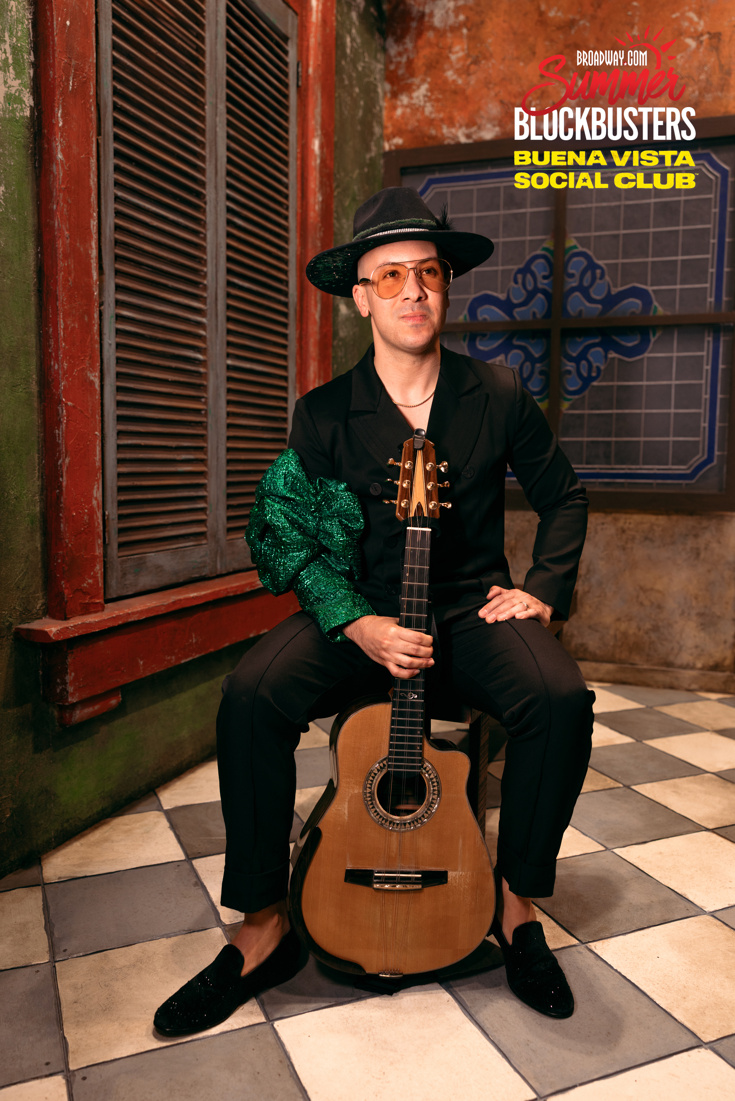
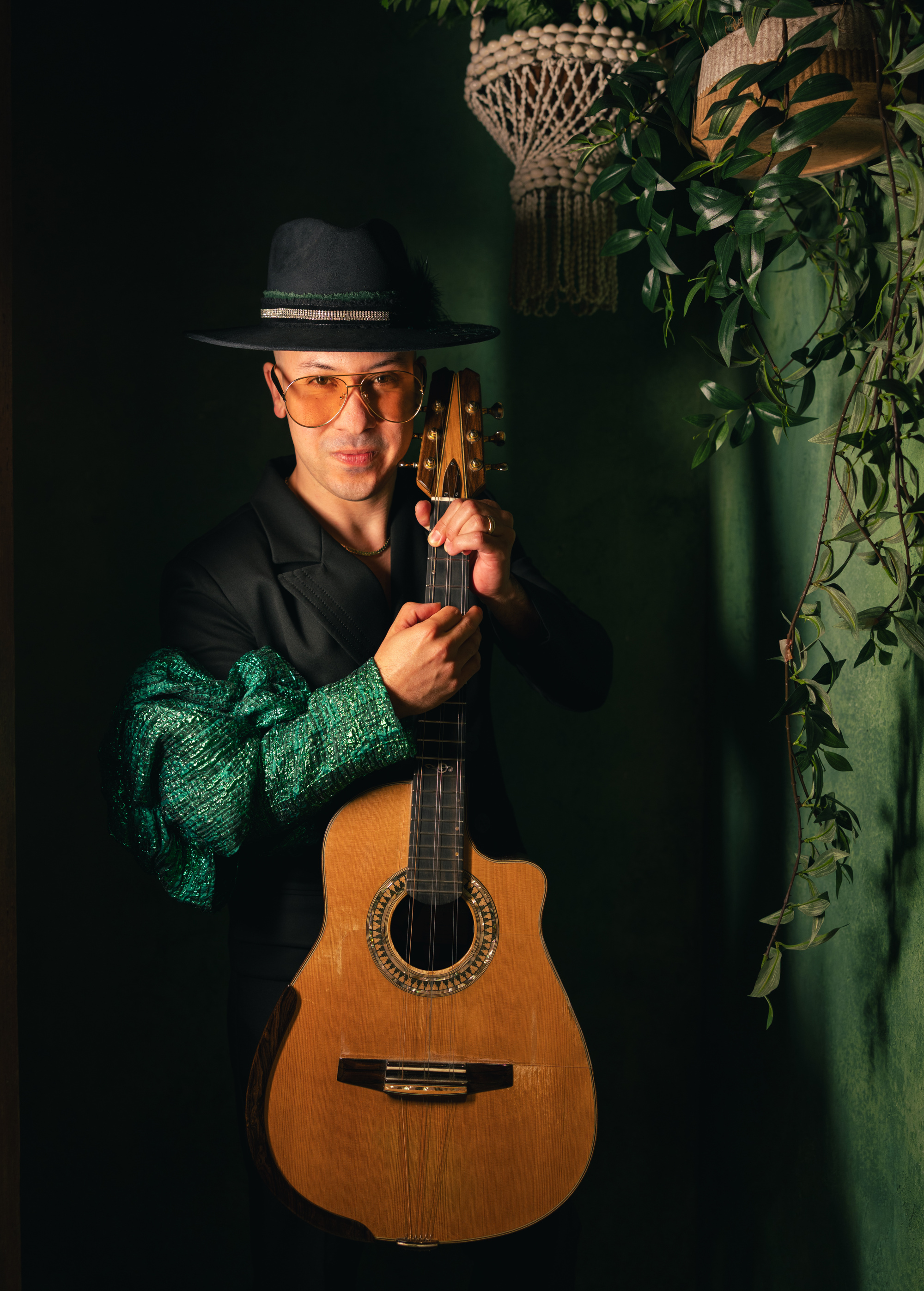
(Photo by Sergio Villarini for Broadway.com)
What to Know
- Buena Vista Social Club star Renesito Avich discusses portraying Cuban music icon Eliades Ochoa on Broadway
- The acclaimed tres player shares the traditions behind Cuban son and how he brings them to new audiences
- Avich also talks about the band's Special Tony Award, nightly standing ovations and balancing Broadway with fatherhood
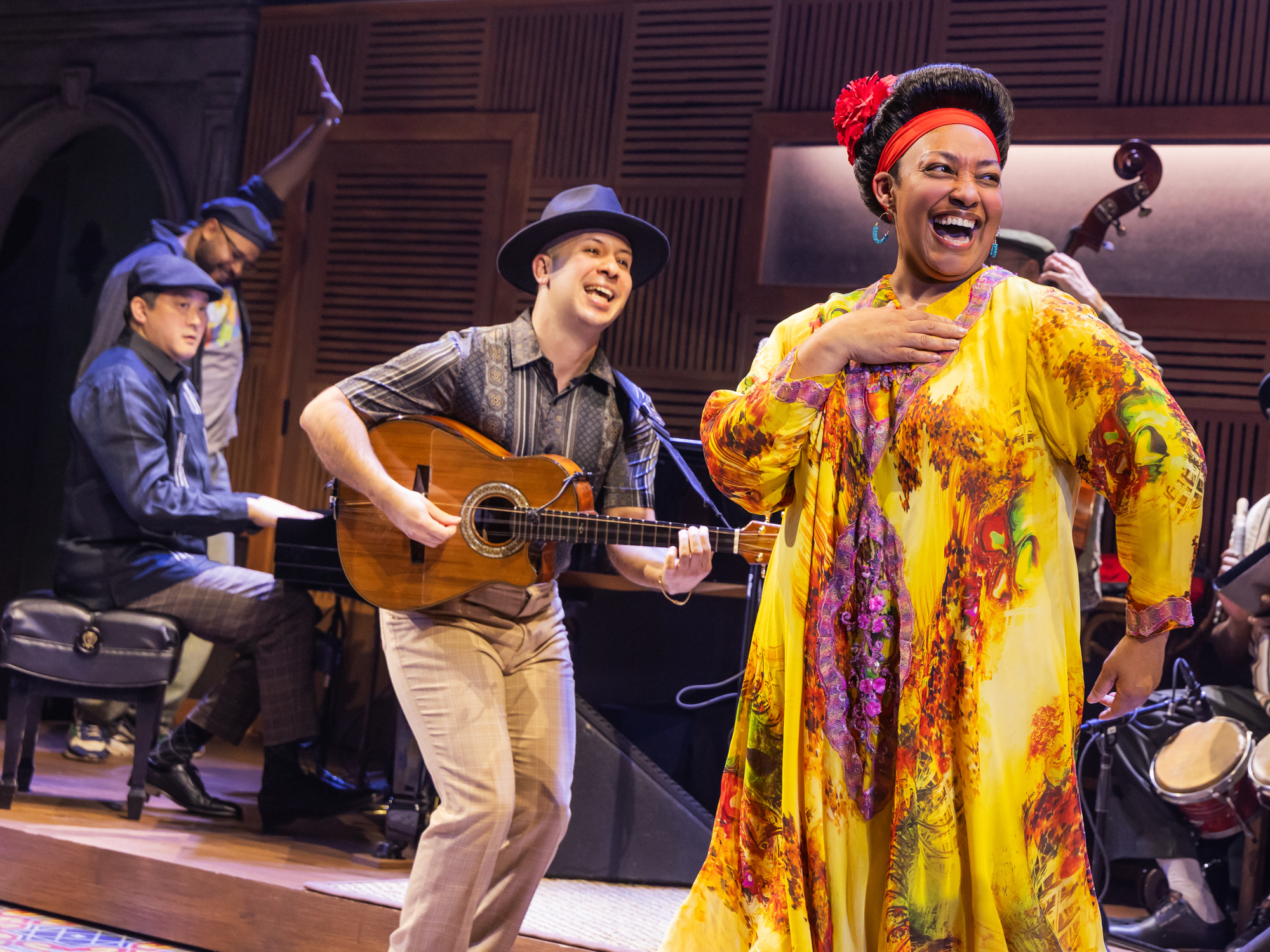
Broadway's Buena Vista Social Club brings the story and individuals behind the legendary album to life onstage, celebrating Cuban music and introducing its powerful sound to new audiences. The band at the heart of the production is made up of world-class musicians, including Cuban tres guitarist Renesito Avich. The singer-songwriter, multi-instrumentalist, arranger and producer portrays Buena Vista Social Club founding member Eliades Ochoa, also known as the "Cuban Johnny Cash." It's a surreal experience for Avich, who grew up in Santiago de Cuba and routinely watched Ochoa perform. "I think Cuba and my culture is one of the reasons that I'm here," he shared of his role in the Broadway blockbuster.
An hour before curtain, amid pre-show sound checks and post-World Cup match chatter, Avich sat down with us in the house of the Schoenfeld Theatre. He opened up about the honor and responsibility of representing one of his heroes, the joy of connecting with people through instrumental improvisation, and why he loves wearing so many hats.
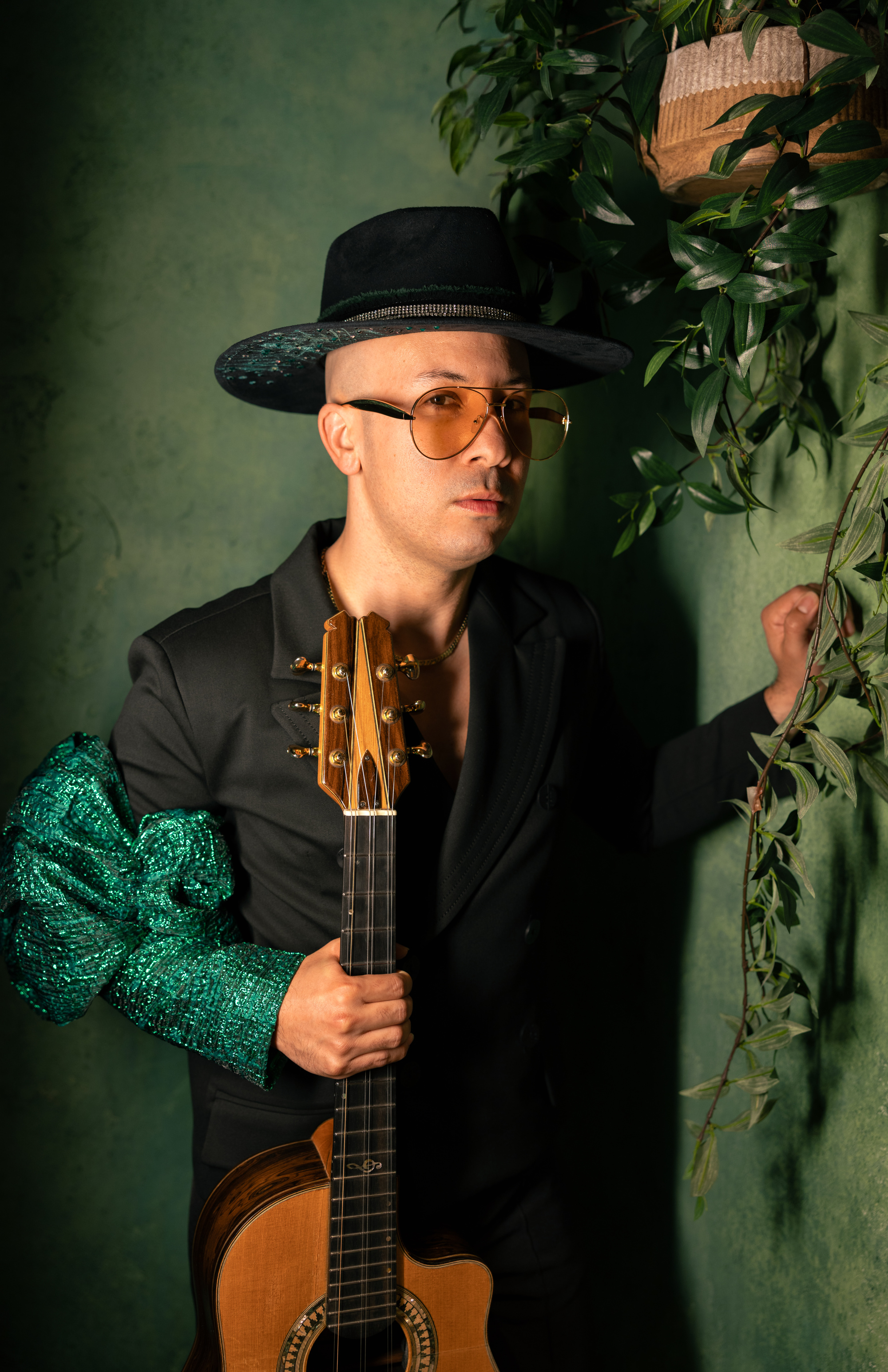
Can you share what it was like growing up in Santiago de Cuba surrounded by this music?
I think that growing up in Santiago de Cuba is the reason that I'm here on Broadway. Listening to the sound of the tres, the percussion... For instance, one of the pieces in the show, called "Cumbanchero," it's a percussive way to wake up in Cuba. When I was 10 years old, I knew about the Buena Vista Social Club, and then I fell in love with Compay Segundo's sound of it. I became a guitar player and studied classical guitar for 13 years, and then moved to the national instrument of Cuba, which is the tres. The tres is one of the sounds that identifies all Cuban music. When I was 17, I moved to Havana. I studied at the University of the Arts and stayed in Havana for eight years and then moved here to the States, to Sarasota, Florida. Coming from Santiago de Cuba, I've been an immigrant since I was 16 years old.
You first wanted to play percussion, right?
That's right. I remember after school—you have to picture me at eight years old, running out of school straight to a conga line to play percussion on it. My parents were kind of like, it's too early to do that, but percussion was my first love. Then I studied guitar, but the tres, it's kind of a transition in between the guitar and the percussion. The tres is so percussive and it keeps the rhythm pattern of the Cuban music. That's the way I found to express my percussive [technique].
Why do you think you were drawn to it at such a young age?
I think the reason is being born in Santiago, because almost everyone has a drum in their house. I remember friends of my grandfather's having drums in their house. I remember my grandfather playing the LP of "Lágrimas Negras," for instance, which is one of the pieces that I play here. I think the environment of it made me choose the type of music that I perform.
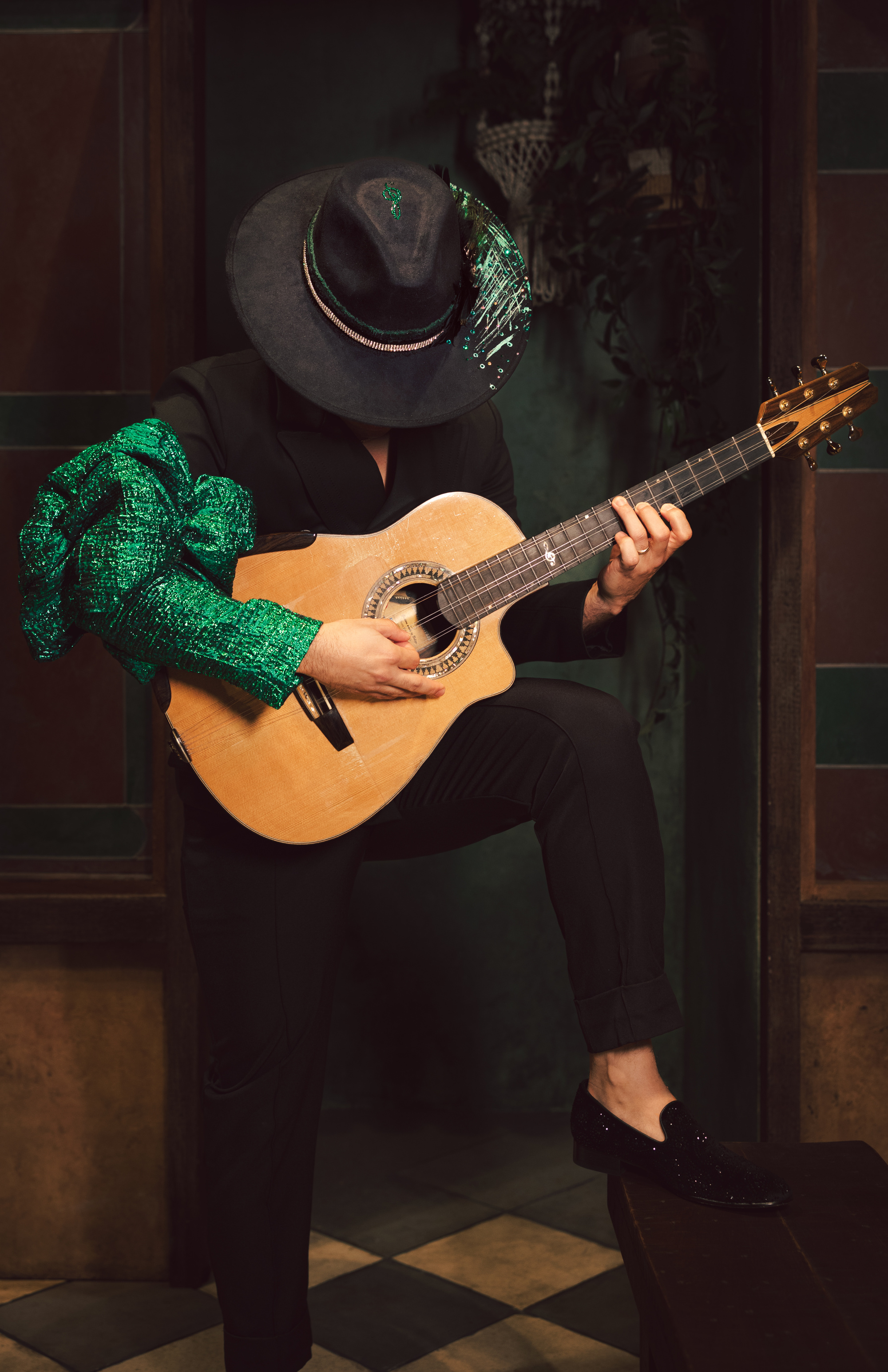
For those who don't know, can you expand on what the tres is, and how it's used in Cuban son?
I'm so glad you brought this up. The tres is our national guitar. It has three pairs of strings, three double strings. The usual classical guitar has six single strings. If you're a musician, it is tuning C major chord open, G-C-E. The son (s-o-n), it's kind of a big deal for me. When I moved to the States, I started learning English. Of course I know what a song (s-o-n-g) is, but I wanted to talk about the son; where I'm coming from, the son that I'm bringing from my culture. The Cuban son is the base of what I consider the most popular and famous genre of Cuba, and also it's a way to see the blending between Africa and Spain and all the roots from Cuba coming from Guantánamo. Guantánamo is next to Santiago and everything happened there in the music's history. Changüí, nengón, kiribá: this family of African rhythms, Creole rhythms, became the Cuban son. And then the Cuban son exploded in the '50s. One of the first Cuban sons—the most famous Cuban son ["El Manisero"]—was recorded in New Jersey in 1928, so being in this area means a lot.
When you moved to Havana, how did that music scene differ from what you experienced growing up in Santiago de Cuba?
It's the capital of Cuba, so I think Havana had a little taste of every piece of Cuba. I moved there to study in the university, but I also was able to learn and to experiment with one of my idols growing up in Cuba. The music scene is definitely broader and bigger and I was able to touch my direction of classical music with the tres, which is not common.
"I was waiting for a big stage to expose my music; I just didn't know Broadway was that big stage."
—Renesito Avich
How would you describe your personal style?
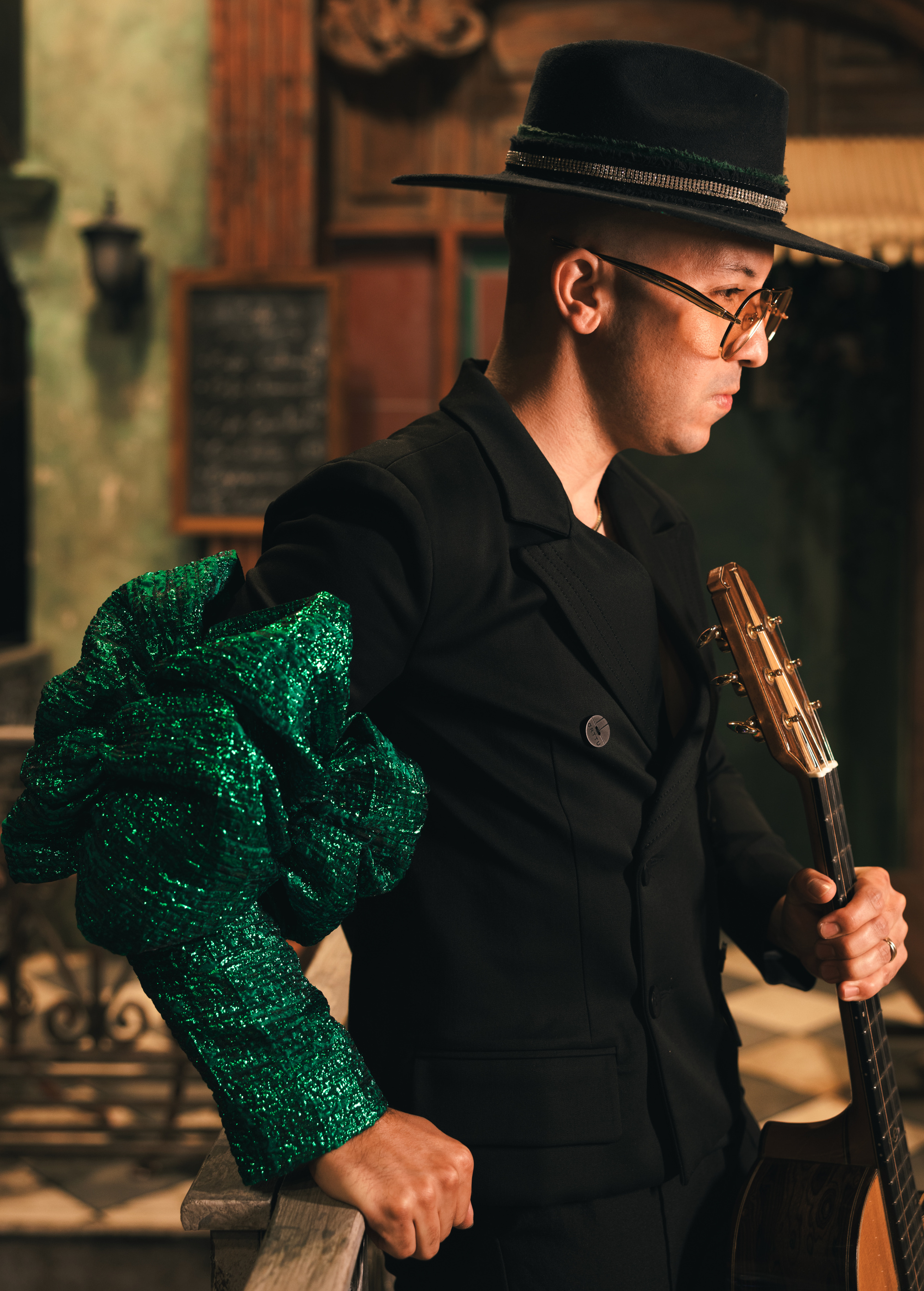
It's another way to express [myself], but also a way to connect with people. I think this music deserves a good outfit to be there for them, for the audience. Also, as a tresero—when a musician plays the tres, they're called a tresero—it's part of the style. But I'm into the hats and very grateful to the many designers that have helped me with the hats along the way.
When were you first approached about the Buena Vista Social Club musical, and what was your initial reaction?
In 2021, I got a call about it and I thought it was a scam. [Laughs] Juan de Marcos, the producer, called me back and said, "It's not a scam. They're doing casting for Buena Vista Social Club."
How did you prepare for the audition?
At first I was nervous, but I remember in the casting they said, "Just play a piece of 'Chan Chan.'" They wanted to hear me playing what I used to play on small stages. I'm grateful for the opportunity. I've been lucky enough to have spent most of my life making a living on music. I was waiting for a big stage to expose my music; I just didn't know Broadway was that big stage.
What does it mean to you to be playing a real person, and one who is so influential?
Being here and [playing] the character of Eliades Ochoa, a person that I have been studying for a long time, it means the life for me. I take this very personally, very seriously every night, no matter how many nights we do it. Eliades has a particular fingerprint on the way he plays the guitar, and to be responsible to bring that in the show on tres is a big deal for me. He has his own unique style, but just bringing the spirit of Eliades in the show as a musician, as a singer also, is a big responsibility.
Have you had the opportunity to meet Eliades?
I have. We met in Miami in 2024 in person. He remembered me, as a kid, sitting right in front of him every lunchtime on the Casa de la Trova. It's a beautiful thing. The way he also supports me on social media… I can't wait for him to see the show. He hasn't seen it yet, but I think he will.
Did the response to Buena Vista on Broadway surprise you at all?
It did. I remember once our director, Saheem Ali said, "It doesn't matter the reaction of the crowd, you have to believe in your art." But it's been so beautiful. Every night we are so spoiled. We're so spoiled with standing ovations. It's been a joy.
The band has the opportunity to improv onstage as well, right?
Yes, we do. The show has some spaces where we can be creative, and I think that's my favorite part. I'm just trying to take advantage of it to share with people and to connect with them.
Can you share a few examples?
It's been fun lately! The last one we did, we did a dance-along with John Leguizamo, and he was part of Encanto, so we did "We Don't Talk About Bruno." But since I have the space to improvise, if I see a lot of Puerto Ricans in the house, for instance, I will play something for Puerto Rico. If it's Mother's Day, I will play something for Mother's Day. I try to be commemorative. Sometimes I see that people know the repertoire of Buena Vista Social Club, so I play just a little piece of a song that is not also in the repertoire of the musical, so they'll recognize it. I've been lucky enough that they give me the space to decide what to perform in that piece, and it's a beautiful liberty.
The Buena Vista Social Club band was honored with a Special Tony Award in 2025. How did that feel?
I wasn't expecting that at all. None of us were expecting a Tony. This type of Tony made history. We just learned that because we're new in the industry, we're new to the awards as well. But this is a homage that I feel the Tony Awards made to us and to our music, as well as to our country, and we don't take that for granted. We were really grateful about it and I see it as a commitment to keep the spark getting bigger.
More than 500 performances in, how do you keep that spark lit?
When I come to the show, I have different memories from my family, from my country, but I also look every night to the audience. How excited they are to see us—that's it. That's the feeling that keeps me going and bringing good energy every night.
What about your life and career outside of Broadway?
I just released a new song called "Tiempo." That's also something that New York taught me, how important time is. I just had a new baby, who is 11 months old. To be a father, it's about how much time you get to give to family, but also to the show and then to my career as an independent artist. I can't wait to share more music. I can't wait to see you all here at Buena Visa Social Club!
Get tickets to Buena Vista Social Club!

