
The Phantom Gets Personal: Behind the Mask With Masquerade’s Kyle Scatliffe
The Hamilton alum on working with director Diane Paulus, embracing the unexpected and making theatergoers feel like kids again

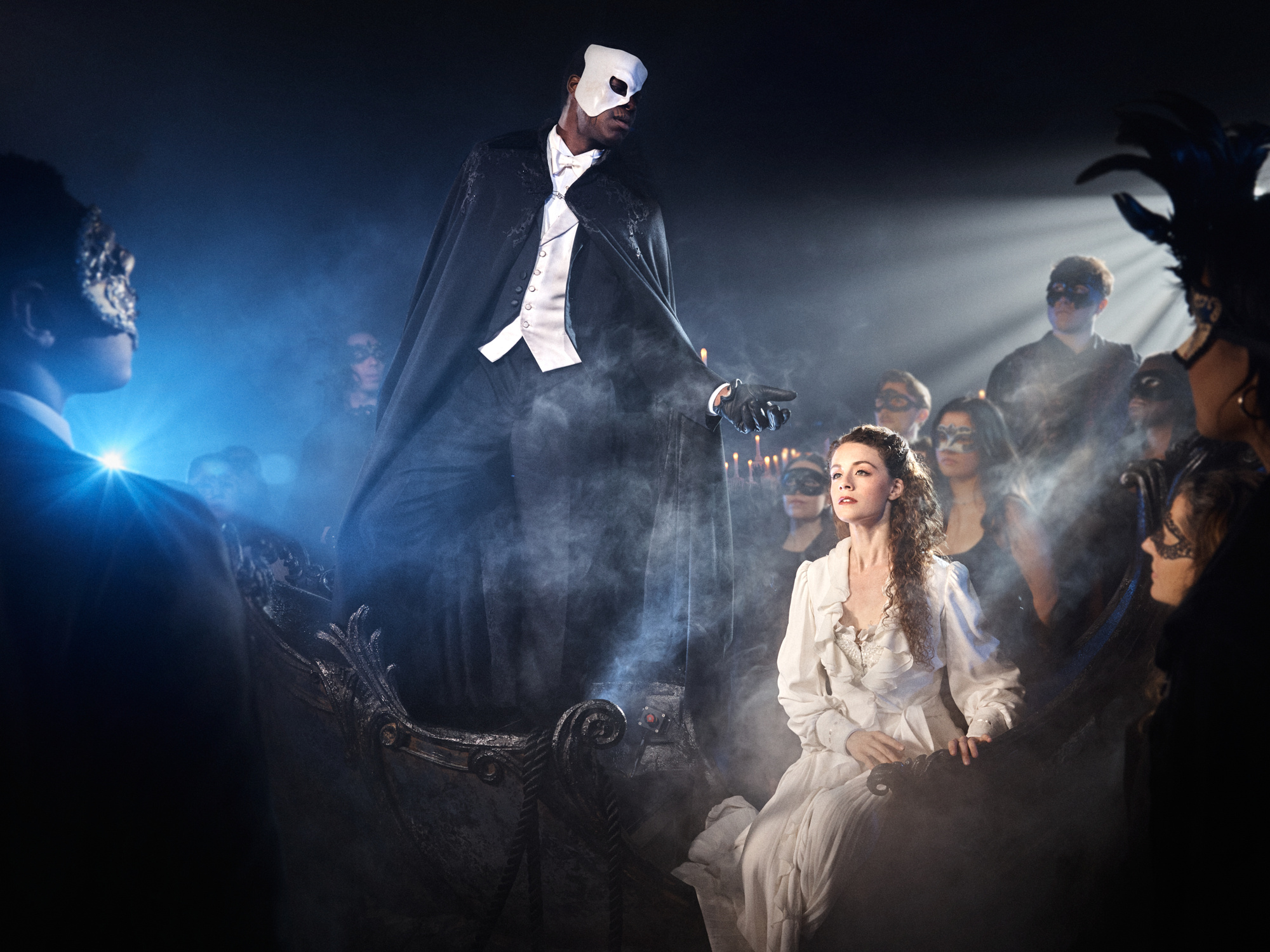
(Photo: Matthew Murphy and Evan Zimmerman for MurphyMade)
What to Know
- Kyle Scatliffe plays one of six Phantoms in Masquerade, the immersive reimagining of Andrew Lloyd Webber’s Phantom of the Opera
- The former Hamilton and Les Misérables star explains how this role draws on both film and stage acting techniques
- Scatliffe shares backstage details, from Bob Dylan’s carnival gates to the coordination of six staggered performances
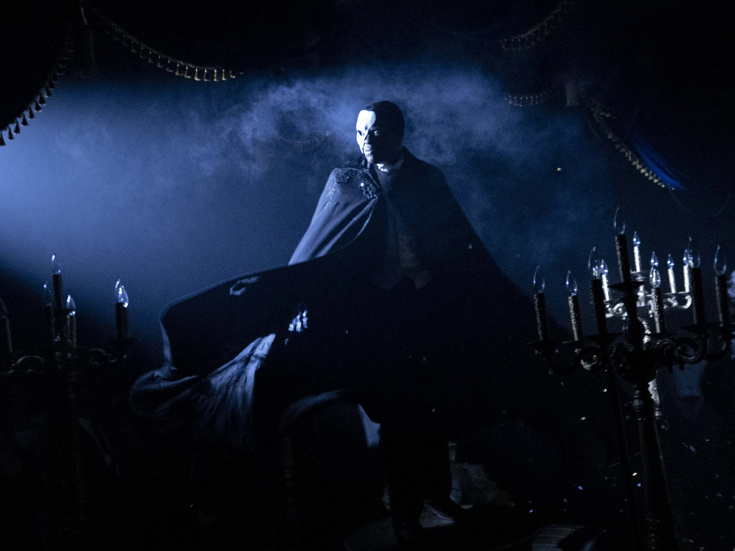
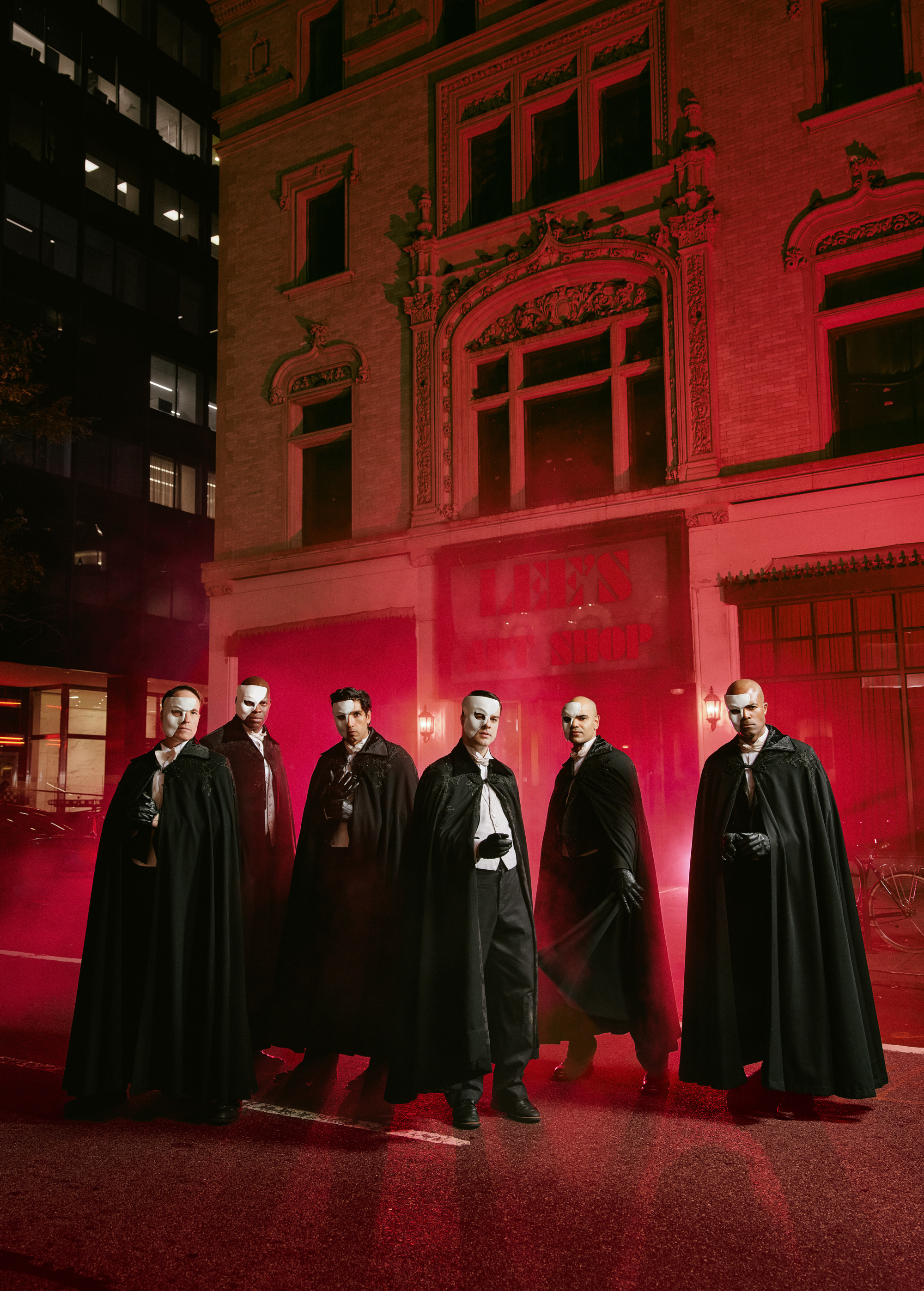
Kyle Scatliffe is having a ball haunting the halls of the former Lee's Art Shop as one of six Phantoms in Masquerade. The immersive reimagining of Andrew Lloyd Webber's Phantom of the Opera brings audiences inside the story as events unfold from the Phantom's perspective. The Hamilton alum opens up about navigating unpredictable audience interactions, how performing up close has changed him as an actor and why Masquerade has been some of his most exhausting and rewarding work yet.
What drew you to Masquerade?
I'd heard through the grapevine that someone was trying to make an immersive Phantom. As a baritone especially, these songs are just majestic and incredible and the story is so intricate. It's a show that I've always wanted to do, since I was a kid. Then I saw who was directing it and it was Diane [Paulus], and I was like, "Oh, well clearly I want to do this." I got a chance to work with her before on a reading years ago, and I was really excited to go in. It's one of those moments where you feel like all the stars are aligning.
Had you ever played the Phantom before?
No, not once. And crazily enough—and this is so weird—about two years before, I had a dream that I was playing the Phantom and I woke up from the dream and made a joke video on Instagram about it. [Laughs] And then two years later I was doing it. Universe was looking out for me on that one.
What were rehearsals like for a show with so much audience interaction?
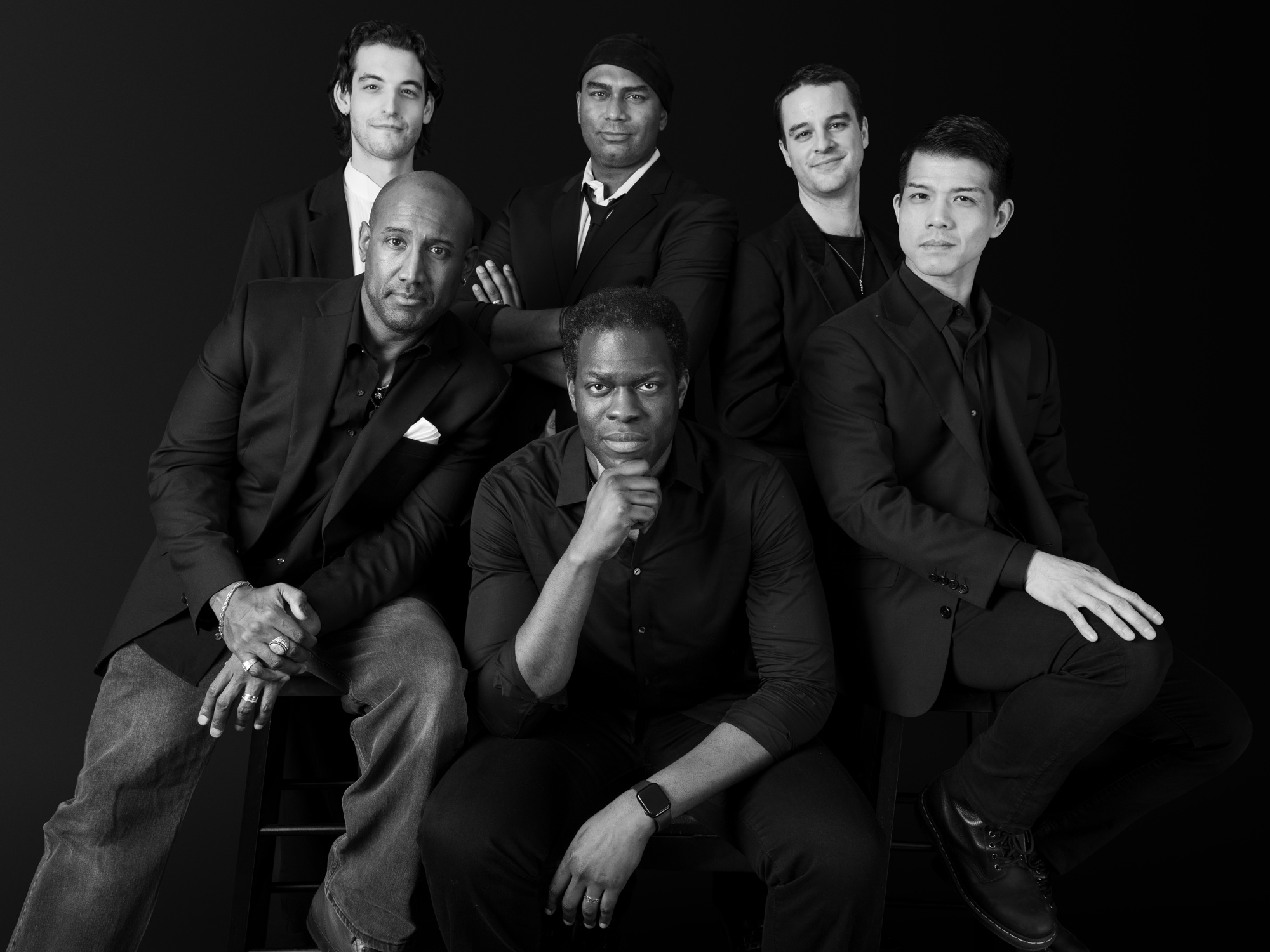
We had members of the team, friends and family of the team, come to watch it. If we weren't the ones rehearsing, we would try to emulate being the sort of people that might be there. We tried to act like we didn't know what was going to happen or what was new. We would try to do something that was a little off-kilter or weird. Because people are people, people do random things. Honestly, it was one of my favorite rehearsal processes because we were always changing something. The beauty of this process is because you have six Phantoms and six Christines, everyone is sharing parts. So we could constantly see what the other characters were seeing from the outside of the scene and help each other out.
Are the Phantom and Christine pairings set?
Yeah. There was a day in rehearsal, one of my favorite days, where they told us they were going to figure out the pairings. They brought us in and in the room were six circles with chairs, and we did the song "The Point of No Return" over and over again, switching Christines and Phantoms. And then we came in the next day and they already had it done. To this day, I don't know what the reasonings were, none of us do, but it was perfect. They perfectly matched us all.
How does playing the Phantom compare with your Broadway roles?
The 60 people are different every time. Our interactions as Phantom and Christine can be similar, but the rest of the show is not. The mission of the character stays the same; the obstacles to get there change. It's one of my favorite shows I've ever been in. We get to see the full 360 scope of humanity in a way that is very different.
What’s it like being close enough to see the audience’s reactions?
Last week, there was a guy who I could hear loudly sobbing before the show was even over. I'm acting, but all I'm thinking in my head is, "Aww. Are you good?" The show can be so visceral. You sometimes see people crack in a way that maybe they haven't in a while. You just see them open. For the story to end, we have to open and then they have to open. It really might be my favorite theater moment in my career, when you can see catharsis.
"It really might be my favorite theater moment in my career, when you can see catharsis." —Kyle Scatliffe
Are you drawing on improv experience or your broader training as an actor?
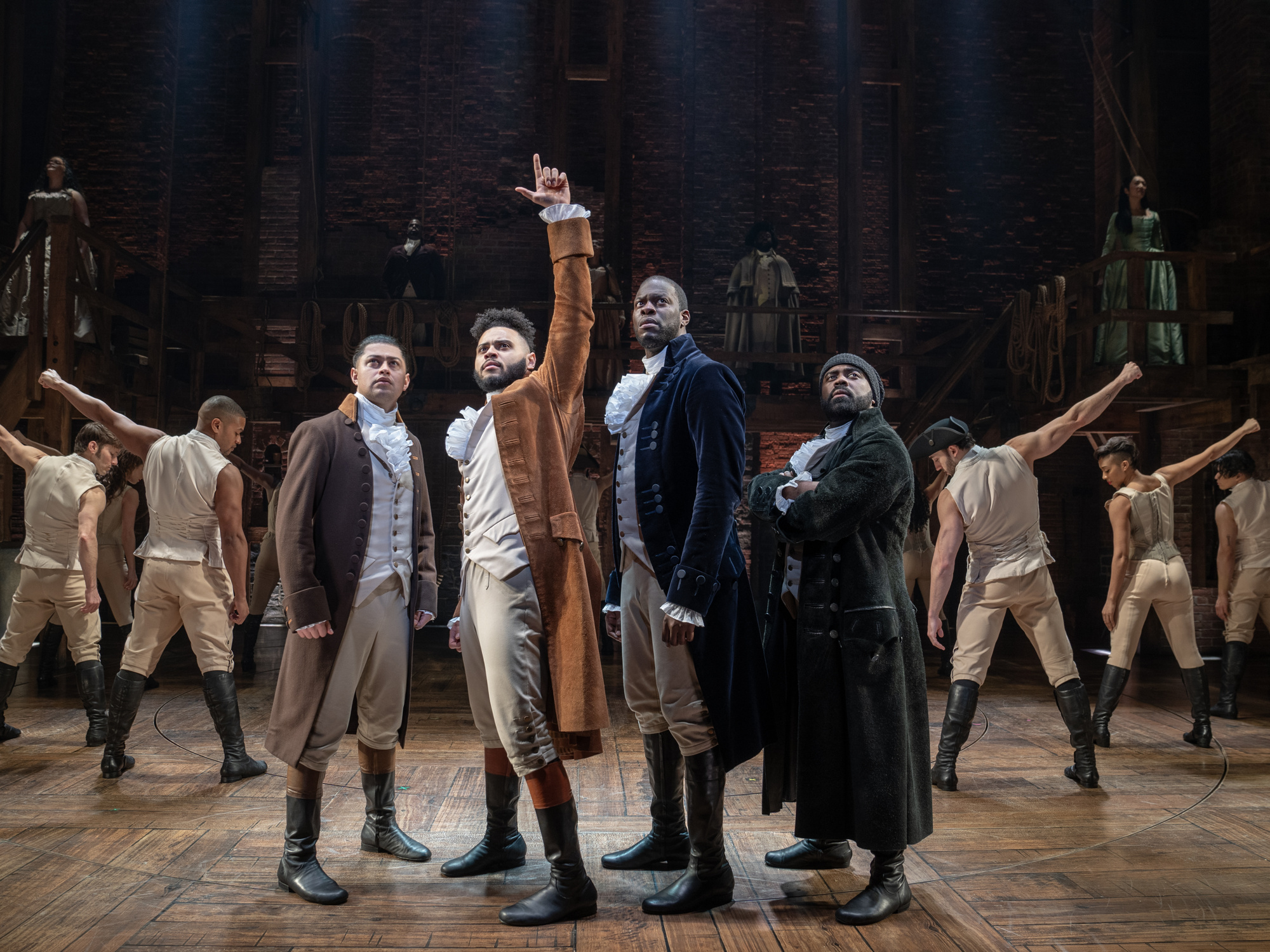
I would say it's general training. I've done improv classes, I've done stuff like that in school. You get better and better at improvising just because of the nature of the job. There was a time in Hamilton where there was this fly that was flying around the stage, and it was so big the audience could see it. And we couldn't act like it wasn't there. We're doing "Washington on Your Side" and Nik [Walker] is hitting me to get the fly. Eventually we get to "One Last Time" and the fly lands on [Gregory] Treco while he's singing, right at that pause in the song, and he smacks it and he gets it. Then he puts his hand out and the fly's there and he just flips it over and the fly falls and he says, "One last time." The whole audience cheered. So no matter what an audience member does, we got to roll with it. And it's funny because as the Phantom, we have a certain amount of agency, because we have invited you into our house. We're probably the only character in the show that can reprimand you silently. Even with a look, I've had to do that before and people get it. And it's fun, because they get to act. Technically, they're acting.
How has Masquerade changed your approach to acting?
I have a tendency to overthink as an actor, and then as I'm overthinking, I can freeze up. This environment forces you not to. It forces your body to constantly be on alert in a way that is so different than any show. This show is probably more exhausting than any show I've ever done, because [normally] you at least have a barrier. The way that Diane put it is that some rooms are film rooms and some rooms are theater rooms, and some rooms are both. I think that my film muscles have improved from doing this. There are tons of happy mistakes that happen in this show—with audience members, with your castmates, with yourself. The biggest factor of what I've been learning is how you feel does not matter. How they feel matters. You're leaving space for them. It is tightrope walking emotionally. This is a show where the magic of it is so real for them, and the more you believe the magic, the more they believe the magic.
Have you experienced Masquerade as an audience member?
The only time I ever saw the full production from start to finish was Hugh Panaro's last day. He's one of the most admirable actors and people I've ever worked with, and he has such a big heart and such a big love for this character. There's a difference between this Phantom and the one that is in the stage show. The stage show, you're watching how everything happened, and this one he is presenting to you how he believes everything happened, his side of the story. It is a show that begs you to watch it in order for you to understand it, even when you’re in it. As soon as I walked into the room, I was overwhelmed, and I just started laughing, like giddily laughing. You turn into a kid, you really do. It's like playtime begins. I'm like, "Oh, wow, we're turning people into kids." I had to experience that. Theater has this special thing where it can do that for people, but you don't always see it up close.
Is there a detail in the production you wish more audience members noticed?
There's gates to the carnival that are made by Bob Dylan. The steel gates of the carnival, they open for the first audience members that go up there. He made them for the show. And there is actual artwork around the entire building that is real, like marble statues. They're real collector's items that I'm constantly looking at and going, "That's crazy that that's in here."
Do you have a favorite room?
My favorite room—and it's probably because it's also my favorite lighting in the show—is the inside version of "All I Ask of You" in the attic room. I love that scene. I've had friends come see the show and think that they were actually outside when they were behind that window. There's something about that scene—the way it is lit, the way the room is dark, the way that we start among them, the way we use that room in general—it is some of my favorite blocking in the show. That room and the fly tower feel intrinsically filmic. That's actually how I describe the show to people. If they ask me, "What is it?" I'm like, "Imagine you're inside Phantom of the Opera, but it's a film. You're in the film, you're participating, you're inside of a movie." It is such a testament to the beauty of theater magic.
What might surprise audiences about what happens behind the scenes?
My favorite behind-the-scenes thing, we have two monitors in the basement where you can see every pulse [one of six staggered performances] at the same time. The stage manager is inside of a room that has every camera in the building showing her everything, which is crazy overwhelming. But you actually could see how, within an inch of its life, the show is built. If you're watching that monitor, you watch one pulse leave, you watch one pulse come in and then it happens again. You see how close the pulses are to each other and how you still don't know they're there. I always look at people and tell them, "When you're in the basement, the other pulse is in the basement with you, you just don't know they're there because they're hidden from you and you can't hear them."
What other musical would you love to see get the Masquerade treatment?
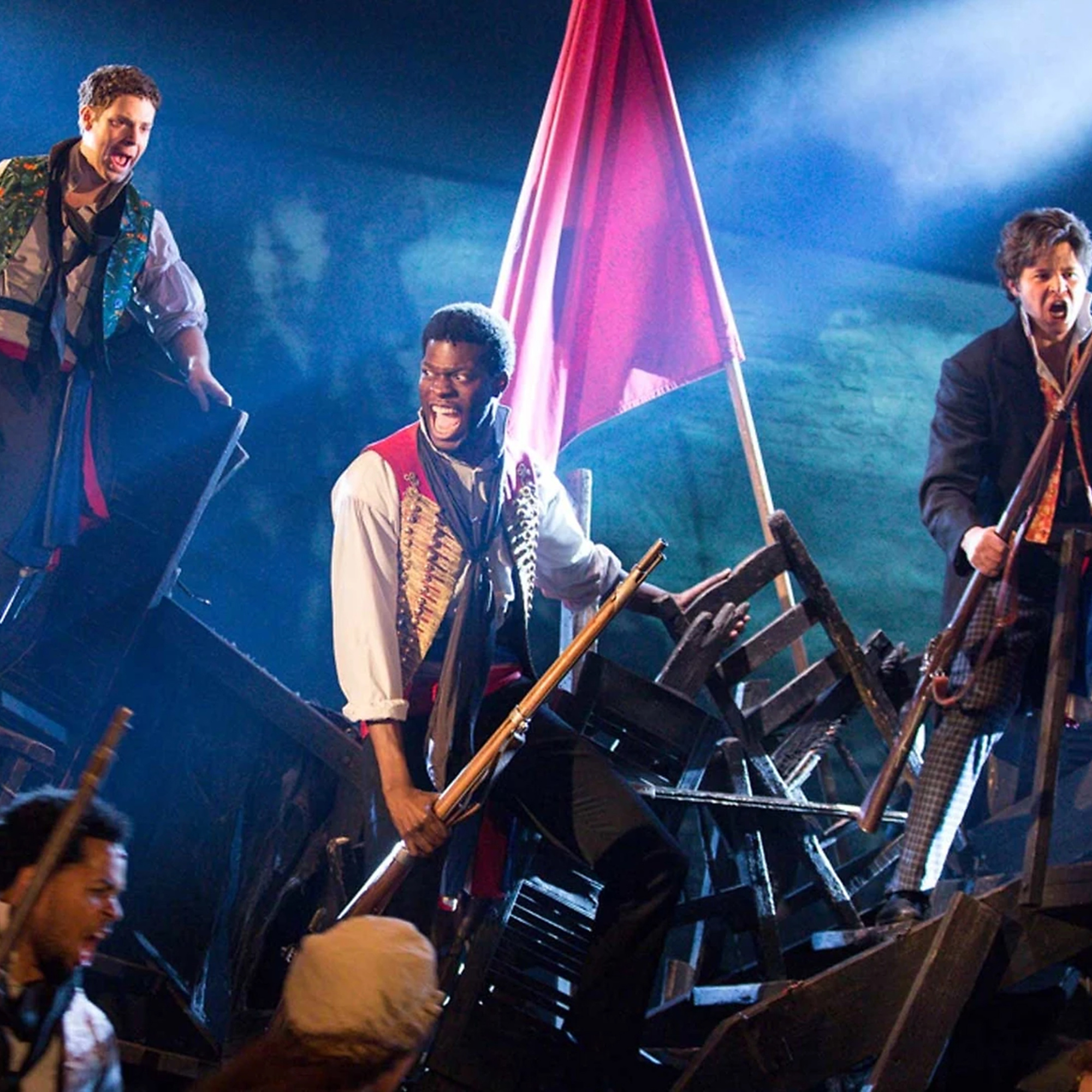
It's got to be Les Miz. I know I've done Les Miz on Broadway, I don't even need to be in the immersive Les Miz. I just think it would be so cool, but it's partially because I want the audience to build the barricade. [Laughs] I want them to physically have to put all of this furniture and stack it and make it look like a barricade. The things you could do with that show in that environment would be absolutely nuts. Could you imagine making people row at the beginning?
You'd have to sign a waiver.
Yeah, you might throw your shoulder out. That could be so crazy. We're doing "Look Down" and they're all prisoners on the ship? Oh my goodness.
Get tickets to Masquerade!

