How The Fantasticks Became the World’s Longest-Running Musical and Finally Reached Broadway
Trace the beloved musical’s journey from a bare-bones downtown production to a Broadway reimagining centered on two young men

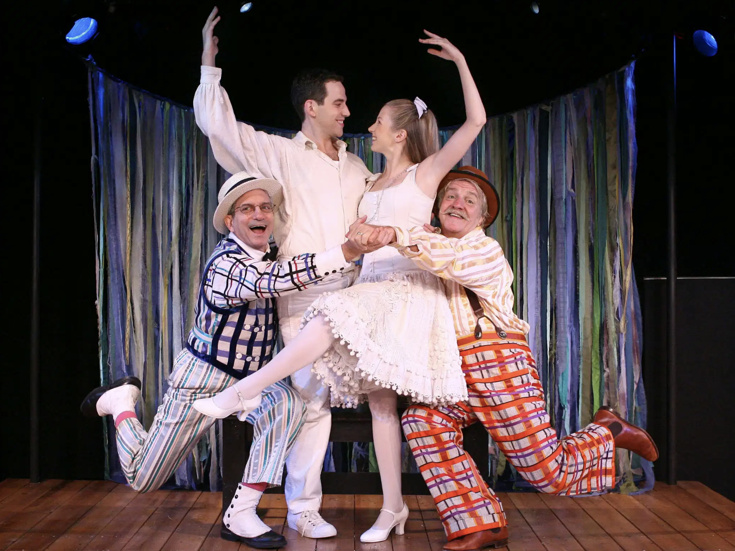
(Photo: Joan Marcus)
What to Know
- The Fantasticks, the world’s longest-running musical, makes its Broadway debut at the Hayes Theater
- Tom Jones and Harvey Schmidt’s intimate musical introduced “Try to Remember” with original star Jerry Orbach in 1960
- Jones revised the romantic fable to center on young lovers Matt and Lewis, played by Maxim Chlumecky and Nathan Levy
Musical theater fans can reel off a list of long-running Broadway hits, from Phantom of the Opera and Cats to A Chorus Line and Chicago. But the longest-running musical of all time, at a whopping 21,552 performances since 1960, is just now making its Broadway debut. The Fantasticks, a timeless romantic fable and mainstay of high schools across America, arrives at the Helen Hayes Theater with a fundamental change: Young lovers Matt and Luisa are now Matt and Lewis, played by Maxim Chlumecky and Nathan Levy. Here’s how a show that opened with zero scenery and two musicians got a 21st century makeover for the Broadway stage.
Follow, Follow, Follow
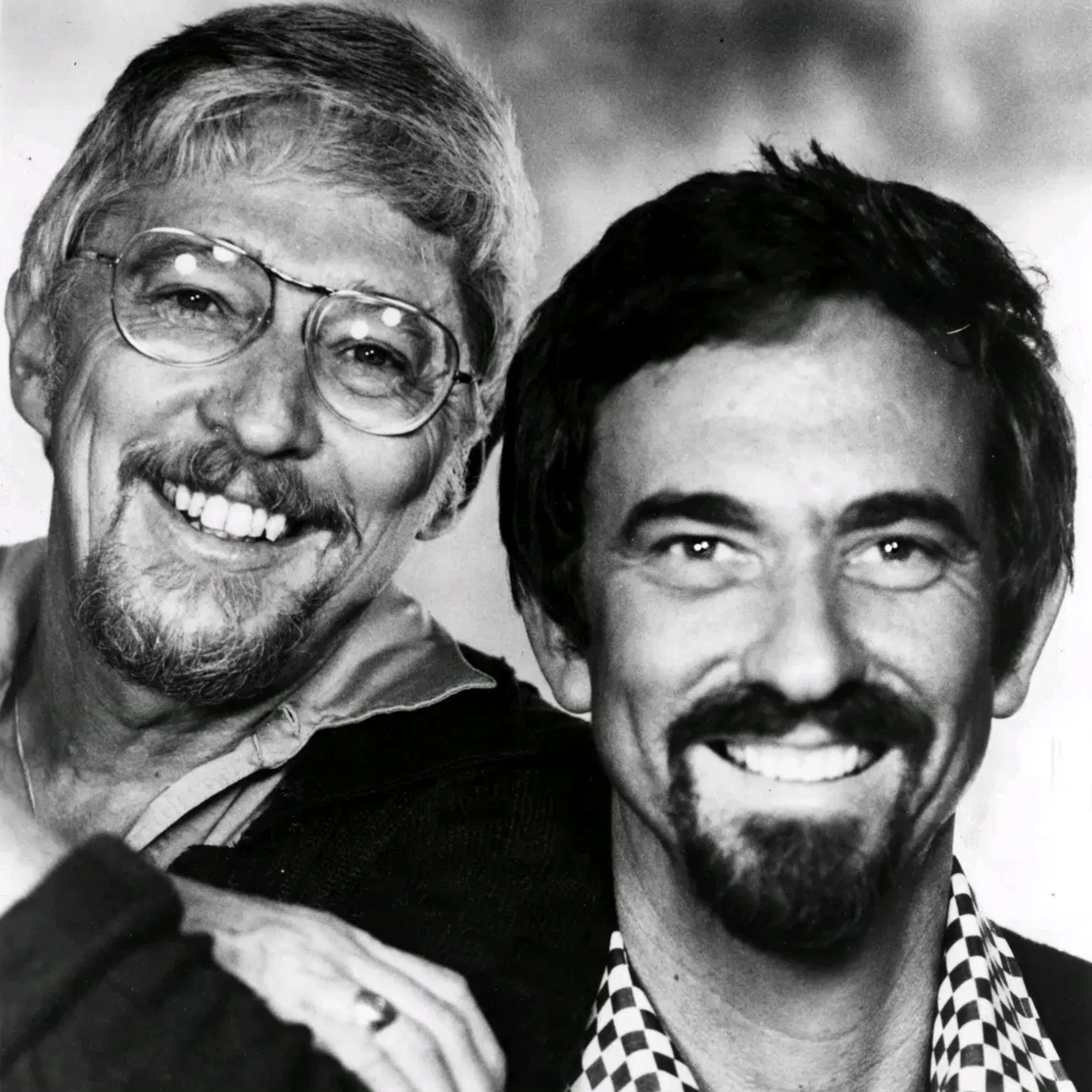
Tom Jones and Harvey Schmidt met in 1950 as students at the University of Texas, teaming up to write a couple of college musicals directed by their future Fantasticks collaborator Word Baker. After service in the Korean War, the friends moved to New York, where Jones worked as a stage manager and Schmidt launched a successful career as a commercial artist. (His handwriting was used for the instantly recognizable Fantasticks logo.) They began playing around with a show loosely based on Les Romanesques, an obscure Rostand play, with a dollop of Romeo and Juliet and a narrator inspired by Our Town.
“I decided to attempt to write the dialogue in various forms of verse and, further, to stop upon occasion for a spoken aria, a lyrical passage of heightened images spoken over music,” Jones explained in his introduction to a 30th anniversary edition of the script. The setting? Rival ranches in a western town called Deadhorse.
By the time a one-act version of The Fantasticks debuted on the campus of Barnard College in August 1959, the cowboy concept had been abandoned. With little time to prepare, Baker opted for a no-frills performance of Schmidt’s lovely melodies and Jones’ poetic book and lyrics. “We decided to break all the rules,” Jones recalled. “We didn’t understand them anyway. For years, Word and I had championed the idea of an ‘open stage,’ a presentational theater which would exalt in theatrical devices rather than trying to hide them. This is what we would attempt.”
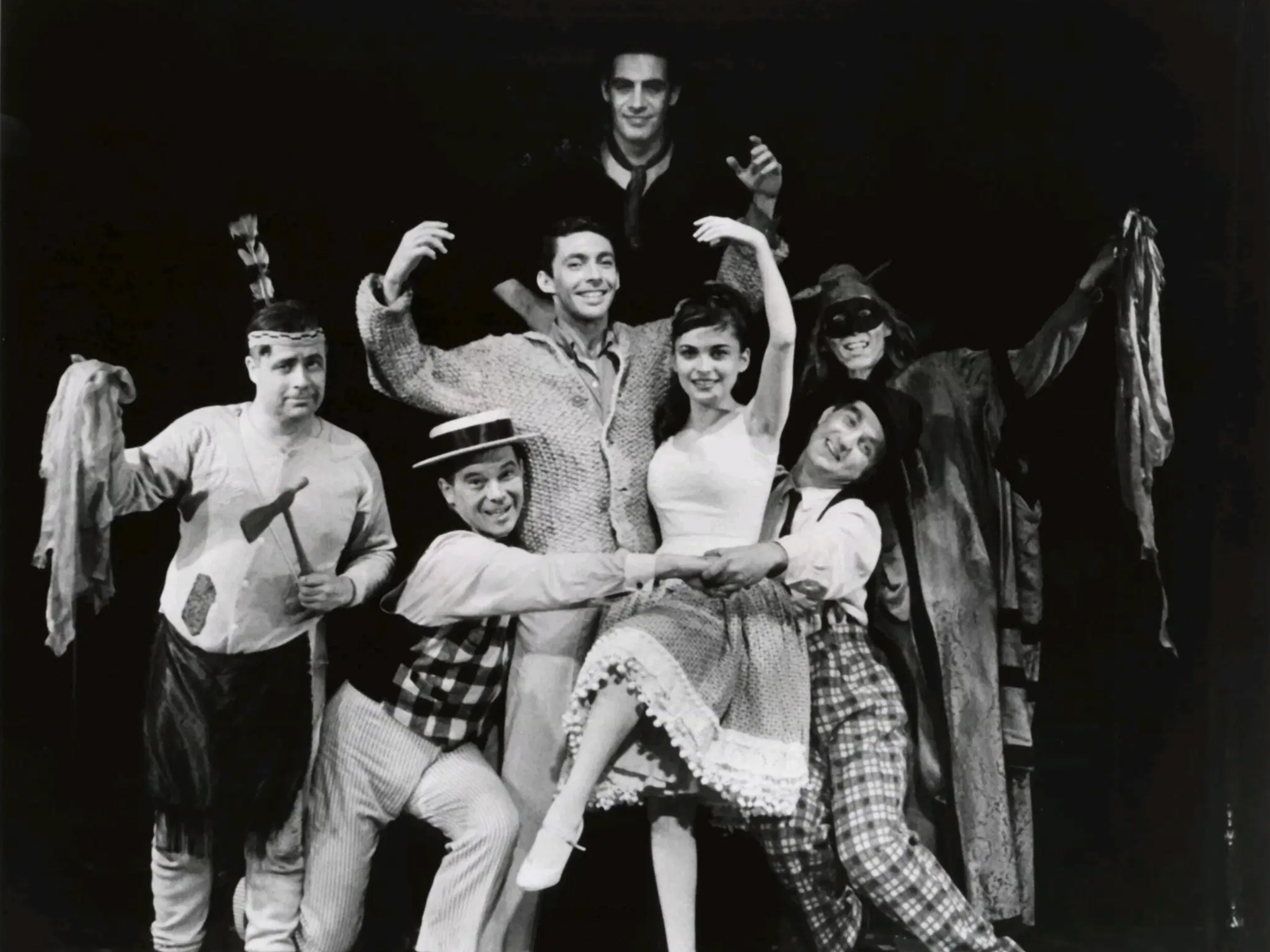
Then, as now, The Fantasticks featured eight characters: the narrator, El Gallo; the young lovers; their fathers (now mothers), Bellomy and Hucklebee; a pair of elderly actors, Henry and Mortimer; and an all-purpose observer, The Mute. At Barnard, leading lady Susan Watson lost her voice and bruised her ribs falling from a ladder, and Ron Leibman, as one of the fathers, declared, “This is not my kind of theater.” But one very important person to the show’s future fell in love with what he saw: Lore Noto, a fledgling producer who put up his life savings of $3,000 to launch a full-scale production at the 153-seat Sullivan Street Playhouse in Greenwich Village.
Much More! Much More!
Heading into opening night on May 3, 1960, Jones, who had joined the cast as Henry under the name “Thomas Bruce,” felt serene. “I thought the piece was brilliant,” he wrote 30 years later, “brilliant and personal and full of experiments never before attempted in a musical.” Theater historian Ethan Mordden echoed this assessment in a 2001 book about musicals of the 1960s: “The score serves as a kind of purification of genre, to bring freshness back to the form. Put simply, The Fantasticks behaves as if it were The First Musical.”
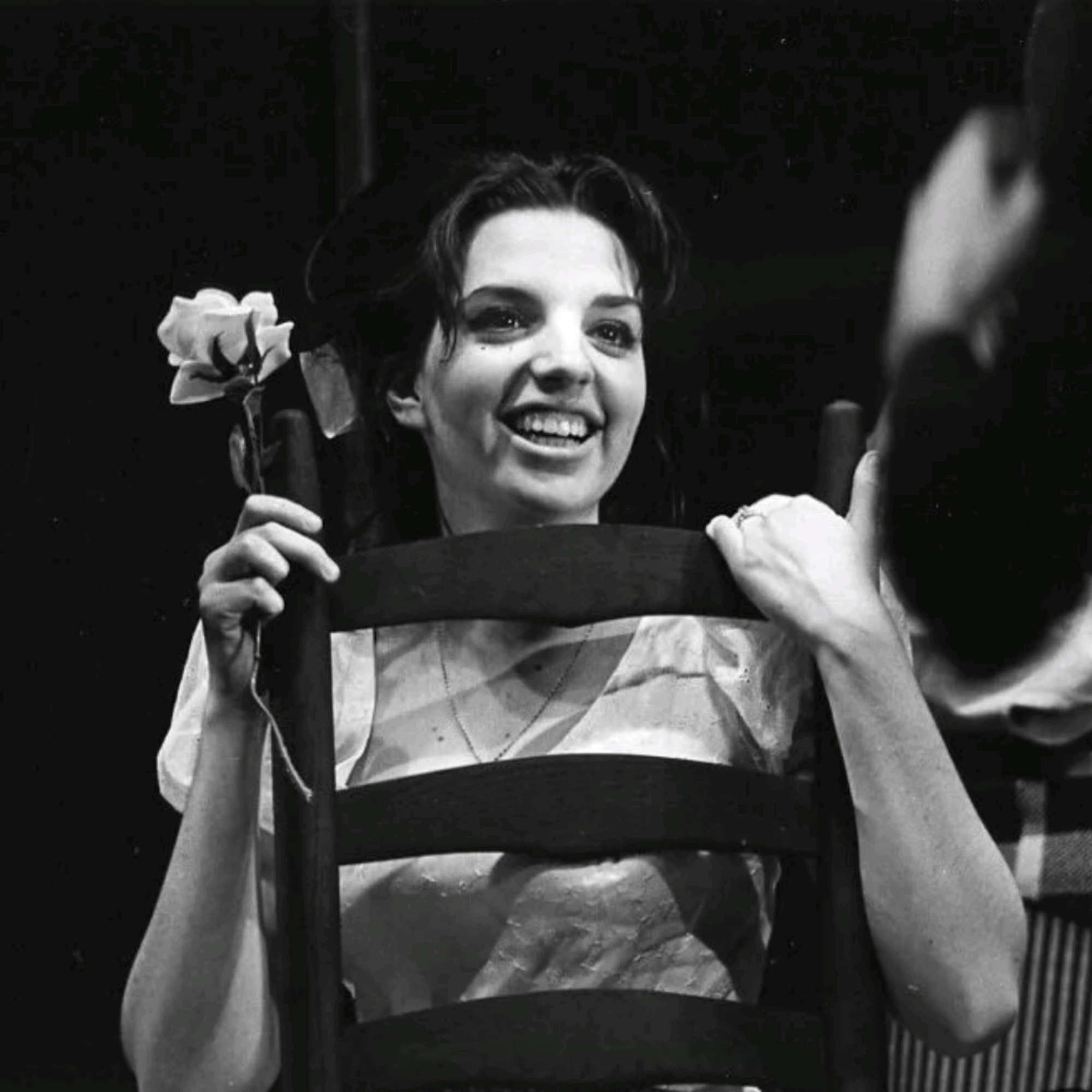
Led by Jerry Orbach as El Gallo, who kicked off the show with the now-classic “Try to Remember,” the cast received better opening night reviews than the production. “Our press people advised Lore to close,” Jones recalled, but Noto never considered it. Subsequent magazine reviews were more positive, and celebrities such as Anne Bancroft and Vivien Leigh embraced The Fantasticks. Noto himself spent 16 years playing Matt’s father Hucklebee until illness led him to retire in 1986. At that point, a closing notice was posted, but fans rallied to keep the show going on Sullivan Street until 2002, and a total of 17,162 performances.
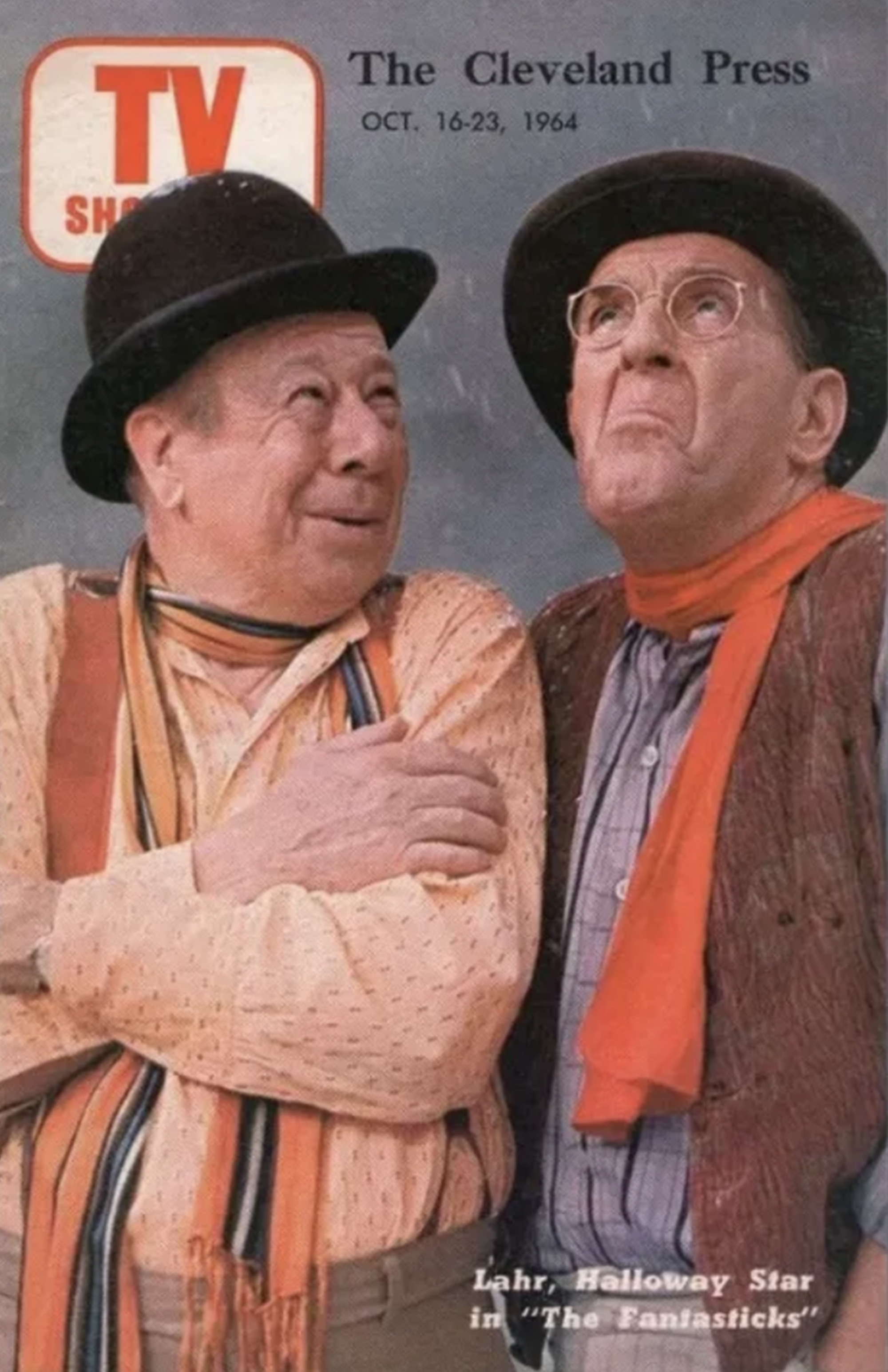
As Jones predicted, his tale of young love resonated with audiences across America and beyond. Liza Minnelli and Elliott Gould starred in a touring production, Richard Chamberlain played El Gallo in Chicago, and Jones reprised his performance as Henry in a tour of Japan. An abridged version was televised in 1964 with Ricardo Montalban as El Gallo, Susan Watson and John Davidson as Luisa and Matt, and Bert Lahr and Stanley Holloway as the fathers. In addition to “Try to Remember,” the ballads “Soon It’s Gonna Rain” and “They Were You” became standards, recorded by Harry Belafonte, Bobby Darin and many more.
Love! You Are Love!
Over the years, Jones’s repeated use of the word “rape” in a number about a fake kidnapping (designed to bring Matt and Luisa together) proved controversial. The lyrics for “It Depends on What You Pay” were never changed on Sullivan Street, but Jones wrote an alternate version, “Abduction,” for the show’s 30th anniversary tour starring Robert Goulet. Post-Fantasticks, he and Schmidt collaborated on three Broadway shows, with varied degrees of success: 110 in the Shade (1963, 330 performances), I Do! I Do! (1966, 560 performances) and Celebration (1969, 109 performances).
In August 2006, The Fantasticks returned to christen the Jerry Orbach Theater, an upstairs space on the corner of 50th Street and Broadway. Jones re-created Baker’s direction and played Henry in a cast that included Burke Moses as El Gallo, Sara Jean Ford as Luisa, Santino Fontana (in his New York stage debut) as Matt, and Martin Vidnovic and Leo Burmeister as the fathers. After confessing that he had memorized the original cast album as a boy, New York Times critic Ben Brantley gave the revival a mixed review, but it ran for 11 years and 4,390 performances.
Happy Ending
For six decades, Jones and Schmidt (who died in 2018) maintained tight control over their most celebrated creation, repeatedly turning down requests for a gay version. But in 2021, Jones changed his mind after director Michael Lluberes of Michigan’s Flint Repertory Theater sent a thoughtful email asserting that such a change would give the show “a whole new contemporary resonance and significance,” according to New York Times writer Jesse Green. This time, Jones not only said yes, he revised the script, tinkering with it until his death in August 2023. (In real life, Jones was straight; Schmidt was gay and, according to Green, kept his romantic life private.)
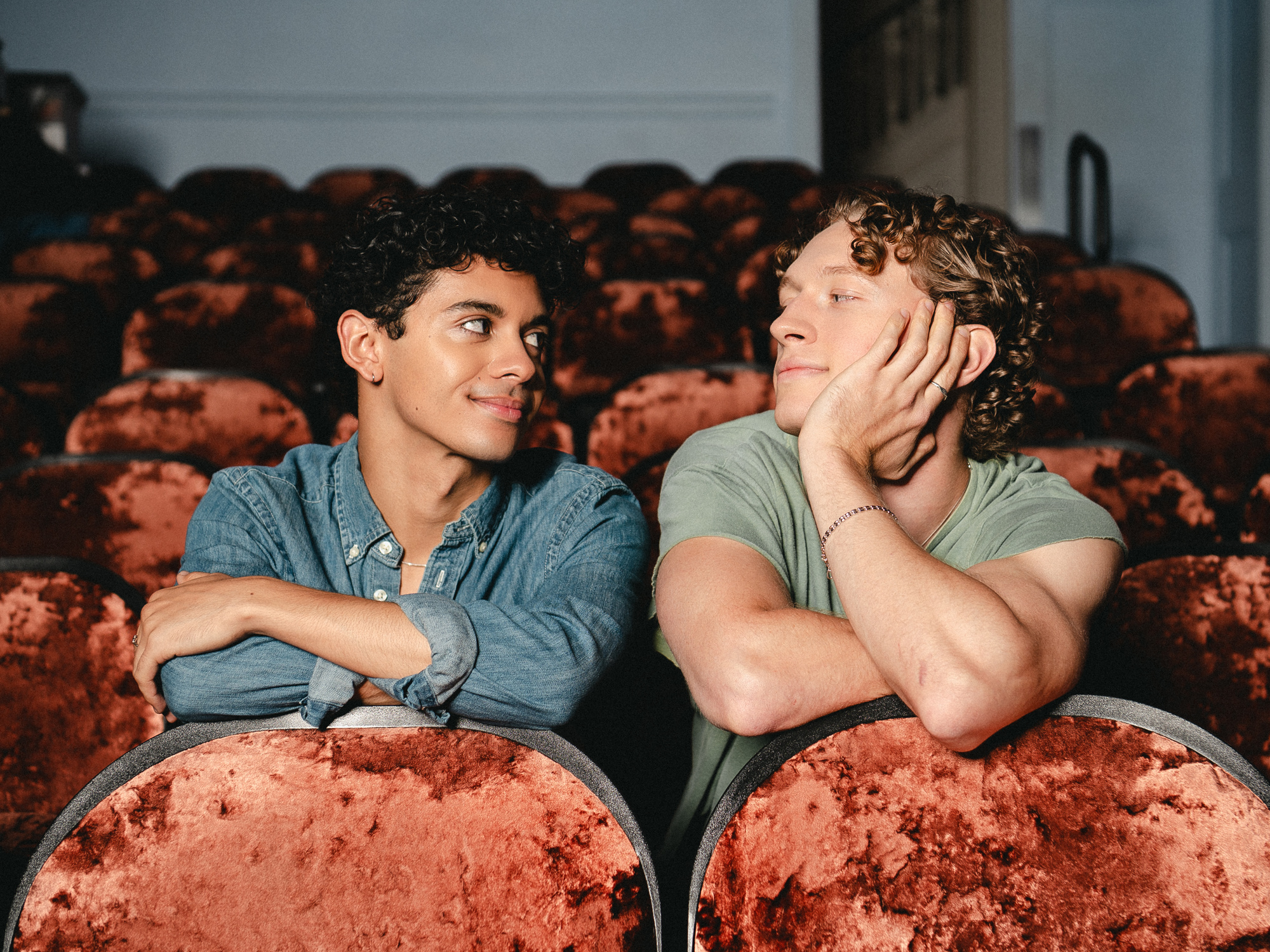
Five small productions of the so-called “Gaytasticks” were mounted, although Jones didn’t see any of them live. Eventually, producer Ryan Bogner partnered with Second Stage to bring the show to Broadway’s most intimate house, the 600-seat Helen Hayes Theater. Up-and-coming actors Zane Phillips as El Gallo, Levy and Chlumecky are joined by a Who’s Who of New York stage stars: Tony winner Ruthie Ann Miles as Lewis’s mom, Bessie Mae Bellomy; Tony nominee Leslie Rodriguez Kritzer as Matt’s mom, Mildred Hucklebee; Tony nominee Kevin Del Aguila as Mortimer and David Patrick Kelly as Henry; plus Ahmad Simmons as The Mute. On the heels of his acclaimed productions of Schmigadoon! and Death Becomes Her, Christopher Gattelli is directing and choreographing a production “on steroids a bit,” as he told the Times.
“It’s definitely a re-imagining of the original production, which is very bare bones and simple and whimsical,” Chlumecky told Broadway.com. “So it’s kind of taking inspiration from the pure, simple theater that we know and love from off-Broadway and making it a bit bigger.” As luck would have it, Chlumecky and Levy met at Pace University’s theater department, and both had seen high school productions of The Fantasticks. “The show is so funny,” Levy told Broadway.com, “and knowing that it’s Chris Gattelli and Ruthie Anne Miles and Leslie Kritzer, it’s just going to be a room full of the greats. I’m so excited to see people laugh and cry if they feel inspired to, and hear this nostalgic, beautiful, classical music with this new, fresh twist.”
Get tickets to The Fantasticks!