
Gina Torres Celebrates Her Cuban Roots in Broadway’s Buena Vista Social Club
The Suits star on bringing Omara Portuondo's story to life, returning to Broadway after more than 30 years and getting the call from Lin-Manuel Miranda


(Photo: Andy Henderson)
What to Know
- Gina Torres returns to Broadway after more than 30 years, starring as Omara Portuondo in Buena Vista Social Club through November 29
- The Suits star discusses her personal connection to the musical and its celebration of Cuban culture
- Torres reveals how a call from Lin-Manuel Miranda led to her Broadway homecoming
Like many starry-eyed native New Yorkers, Gina Torres grew up longing to see her name on a Broadway marquee. But her debut show, Face Value, lasted all of eight preview performances in 1993. Her next one, 1994’s The Best Little Whorehouse Goes Public, closed in less than a month. “Things didn’t pan out the way I hoped they would,” she says. “And life took me in another direction.” Still, even though the actress went on to a versatile TV career with prominent roles on everything from Suits to Firefly to 9-1-1: Lone Star, she never let go of the dream. Or, as she puts it, “I’ve been sowing seeds to get back on Broadway ever since I left!”
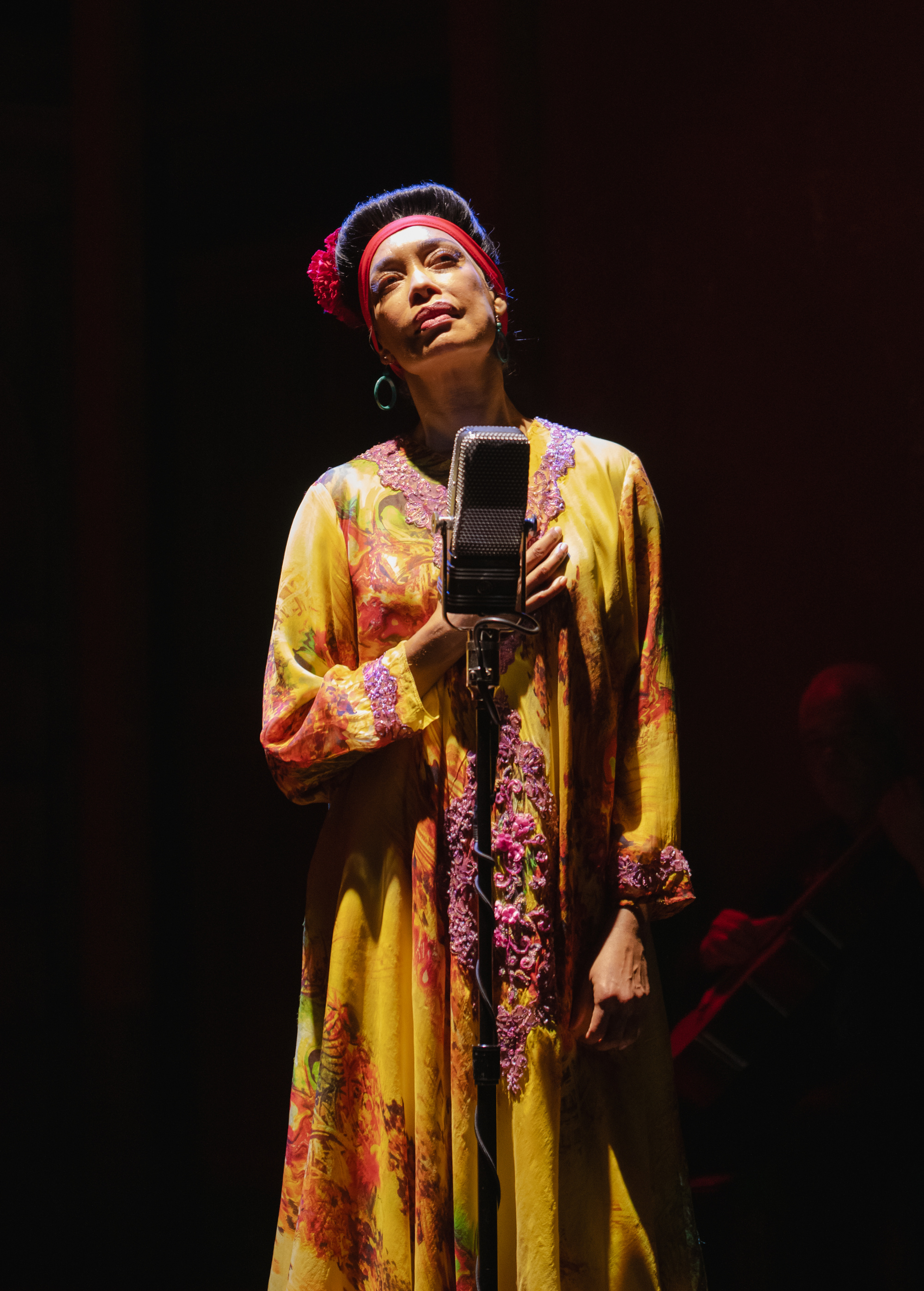
All that planning (and planting) worked. Torres is now bringing Latin music and dance to life eight times a week in the 2025 Tony-winning hit Buena Vista Social Club. Named after and featuring songs from the popular 1997 album (which became a 1999 documentary film), the semi-fictionalized story toggles between the Cuban dance halls in the days leading up to the 1959 revolution and the recording sessions 40 years later. Torres plays Omara Portuondo, a real-life vocalist reluctant to reunite with her former band members because it means confronting her painful past. “Omara is extraordinary,” she says. “If the world had turned a different way, I wonder if she would be a household name.”
Zooming in from her dressing room at the Gerald Schoenfeld Theatre less than an hour before her third performance, an impressively calm and collected Torres—whose run lasts through November 29—spoke to Broadway.com.
What was going through your head leading up to your first line on opening night?
Don’t mess up! Honestly, I had all the feelings. I was thinking about everything that had brought me to this moment in my career. It is rare in any actor's lifetime that their personal story collides with their artistic side in such a beautiful way. I'm just so grateful.
As a first-generation Cuban American, were you long-coveting this part?
I wasn't. I was just going to be very happy being able to witness it as often as I could. I saw the show about a year ago and fell in love with it. I cried big, messy tears and thought how wonderful it was to have this story told—and to have it told in this gentle and honest and almost magical realism kind of way. We hear so little about Cuba. We know so little about Cuba. It’s just this island that exists under a cloud of politics. We forget the people. We forget their stories. We forget their culture and everything that it’s given us. This show is so important because it gets us back to that.
So, how did you end up in the show?
I got a call from [co-producer] Lin-Manuel [Miranda]. He said, “What are you doing in October?” It’s the call you want to get.
That’s really how it happened? Just a casual call from Lin-Manuel Miranda?
That was it! The next thing I knew, things were being signed and plans were being made. And here I am.
It’s been more than 30 years since you last appeared on Broadway. Did you ever think you’d get that call?
You know, I’m a New Yorker through and through. I believed that I would make my life on the stage and doing musicals. But that’s not what happened. I booked these two Broadway shows back-to-back, and I thought, "Well, I would love to continue doing this.” And then 30 years went by. But I think everything worked out just fine.
Have you been secretly singing and dancing all this time?
[Laughs] I’ve never really stopped singing. It’s something that I’ve always done and continue to do. But I had to get back into shape to do this. In particular, the movement is innate and natural, but it’s movement that I’ve done my whole life. So it just feels good.
You’re filling in for Natalie Venetia Belcon while she does In the Heights. Did she offer any advice?
No, we’re on very different schedules. She was performing, and I was trying to learn. We didn’t really have any crossover.
"It is rare in any actor's lifetime that their personal story collides with their artistic side in such a beautiful way." —Gina Torres
What does Omara mean to you?
For anyone fortunate enough to see the show, this is really an opportunity for me to introduce her. She’s a woman who, for decades, has given us so much of herself in the music. Everybody knows who Celia Cruz is. Yet very few people know who Omara Portuondo is, unless you're into the Latino jazz music scene or Cuban music. This puts a spotlight on her.
It’s amazing that she’s 95 years old!
She actually came to see the show not too long after it opened.
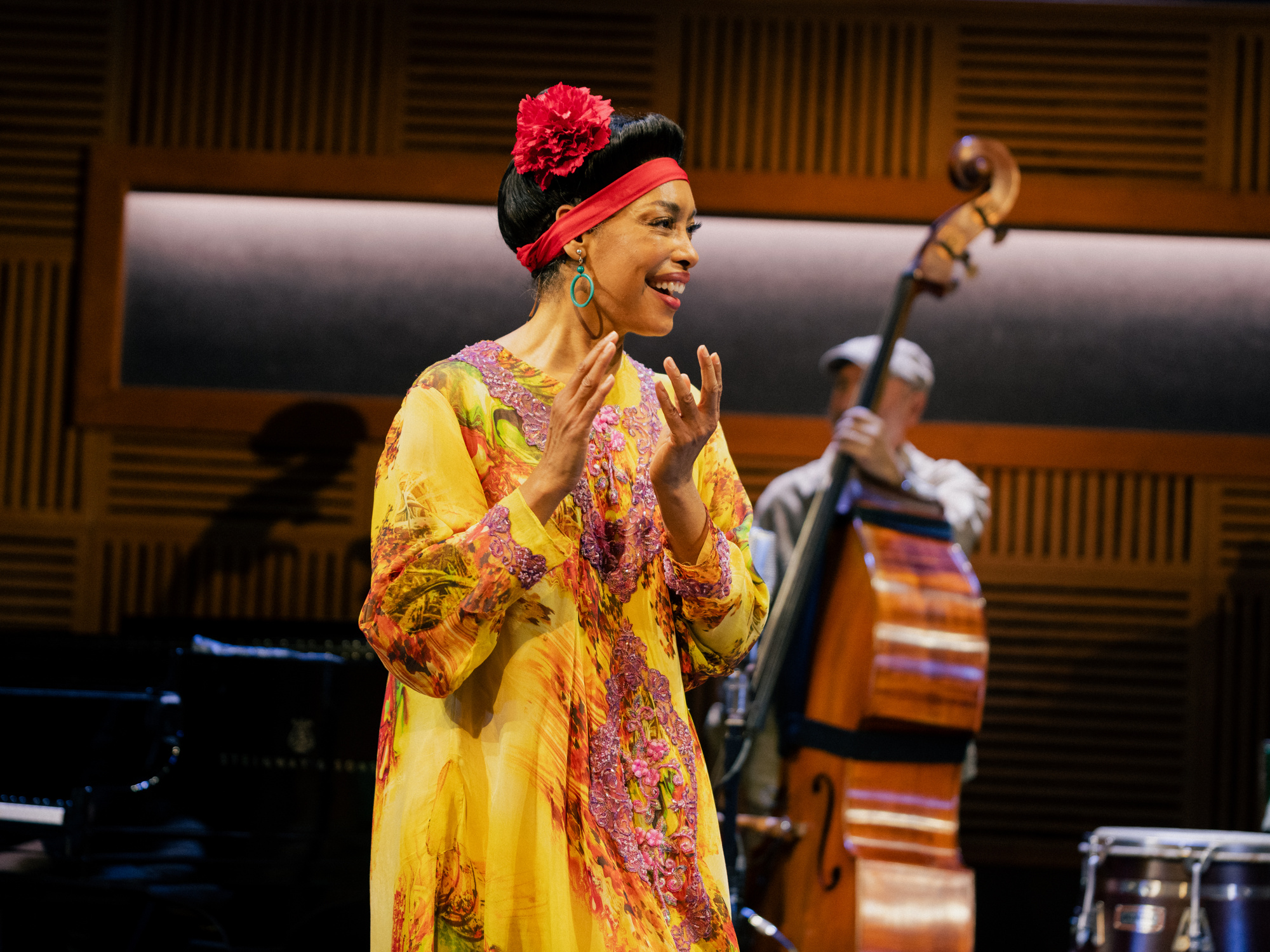
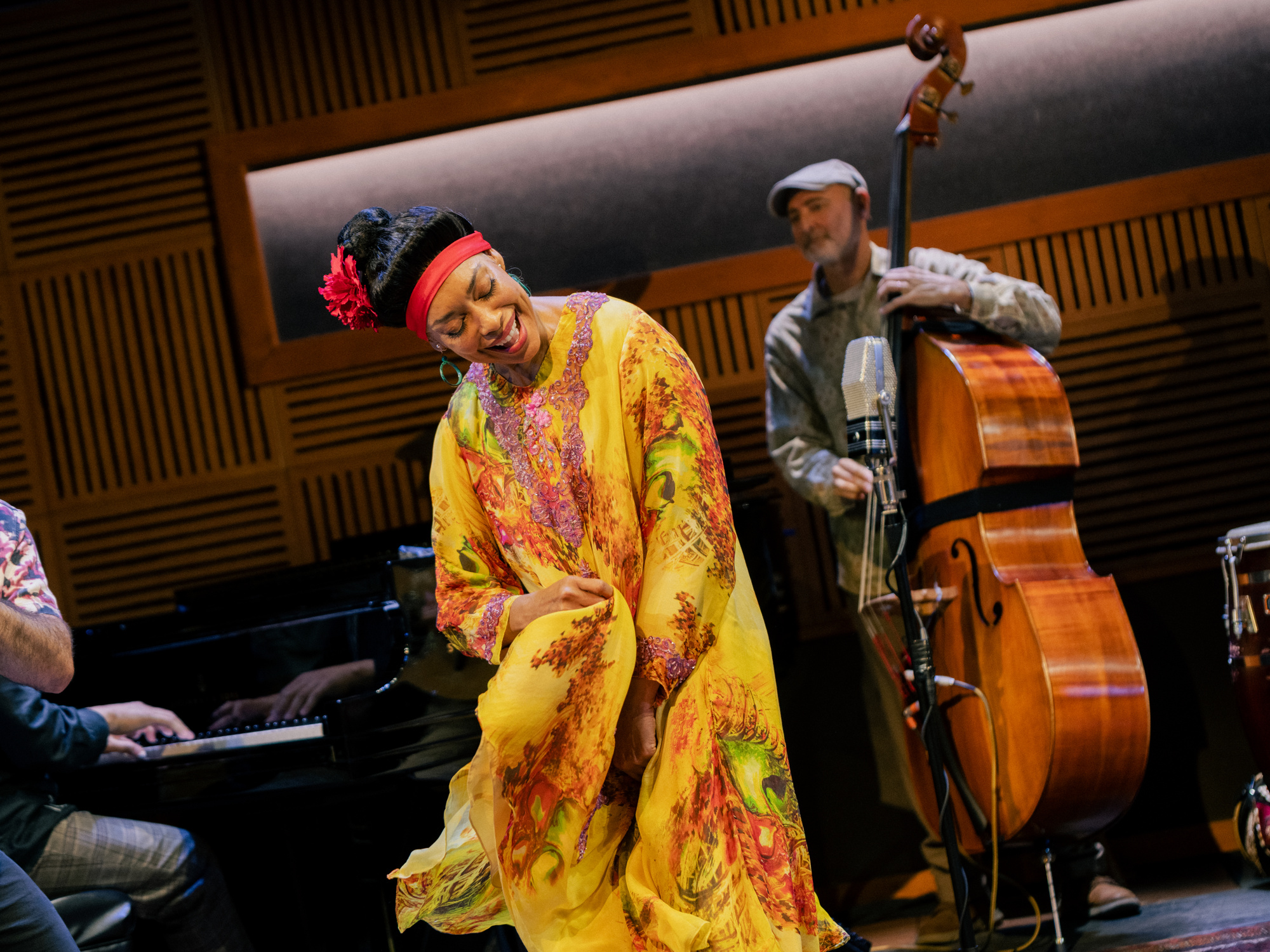
Do you feel like you’re channeling her when you put on that signature flowing yellow gown?
When I put that costume on, I feel like I know what’s coming. It’s a way to play with the band members on the stage and continue to tell her story.
You’re known for playing strong-willed and commanding characters. How do you think your TV fans will react to you being on stage in this context?
I think it's going to be quite the surprise. Television is so intimate, and you get the feeling that you know this person. They’re in your home. They’re in your living room. You develop a relationship with them, and that is the character they associate you with. I look at the comments on my social media posts, and people are like “Jessica Pearson [from Suits] would never do X, Y, Z” or “What is Zoe [from Firefly] doing?!” It’s a leap of faith, and I hope they’re happy with this crossover. I want them to celebrate not just my ability to do other things, but the fact that actors are multifaceted. This is what we love to do. We like to jump into other characters. But in the theater, we don't come home with you.
Which former costars have already told you they’re coming to see you?
I keep getting text messages—“I’m coming, I’ve got my tickets.” Sarah Rafferty [from Suits] was here on my opening night, and that meant a lot to me.
Surely it was nice to see a friendly face in the crowd.
I actually had many, many friendly faces in the crowd, and they’re not all household names. My daughter was there, my boyfriend was there, my team was there, my childhood friend was there. Julia Murney—who's actually an Elphaba—went to high school with me, and she was there. I had a lot of love.
Buena Vista Social Club is now deep into its second year on Broadway. Why does it continue to resonate?
Some people in the audience may have no idea what to expect; others may be familiar with the music, the documentary, the story. But when the music starts, it fills you with joy and happiness—just like what happened to me when I first saw it—and sets the table for this journey. Yes, it’s one of heartbreak and survival. But it is also one of love and triumph and joy. I mean, we all want to go someplace and suspend disbelief and feel transformed. And when you leave the show, you’re happy because you know it’s going to be a better day.
Get tickets to Buena Vista Social Club!

