The Real Story Behind Broadway’s Galileo and Its Rock-Star Astronomer
Raúl Esparza leads a rock musical about Galileo’s clash with the Church and the discoveries that challenged the accepted view of the universe

(Photo: Michaelah Reynolds)
What to Know
- Galileo’s telescope discoveries challenged the geocentric model, leading to a clash with the Catholic Church, a 1633 trial and house arrest
- His story has inspired works ranging from Bertolt Brecht’s Life of Galileo to Philip Glass’ opera Galileo Galilei
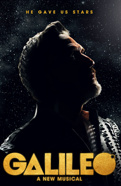
- Now, Broadway’s Galileo brings the astronomer’s story to the stage as a rock musical, with a book by Danny Strong, score by Zoe Sarnak and Michael Weiner, and Raúl Esparza in the title role
(Photo by Sergio Villarini for Broadway.com)
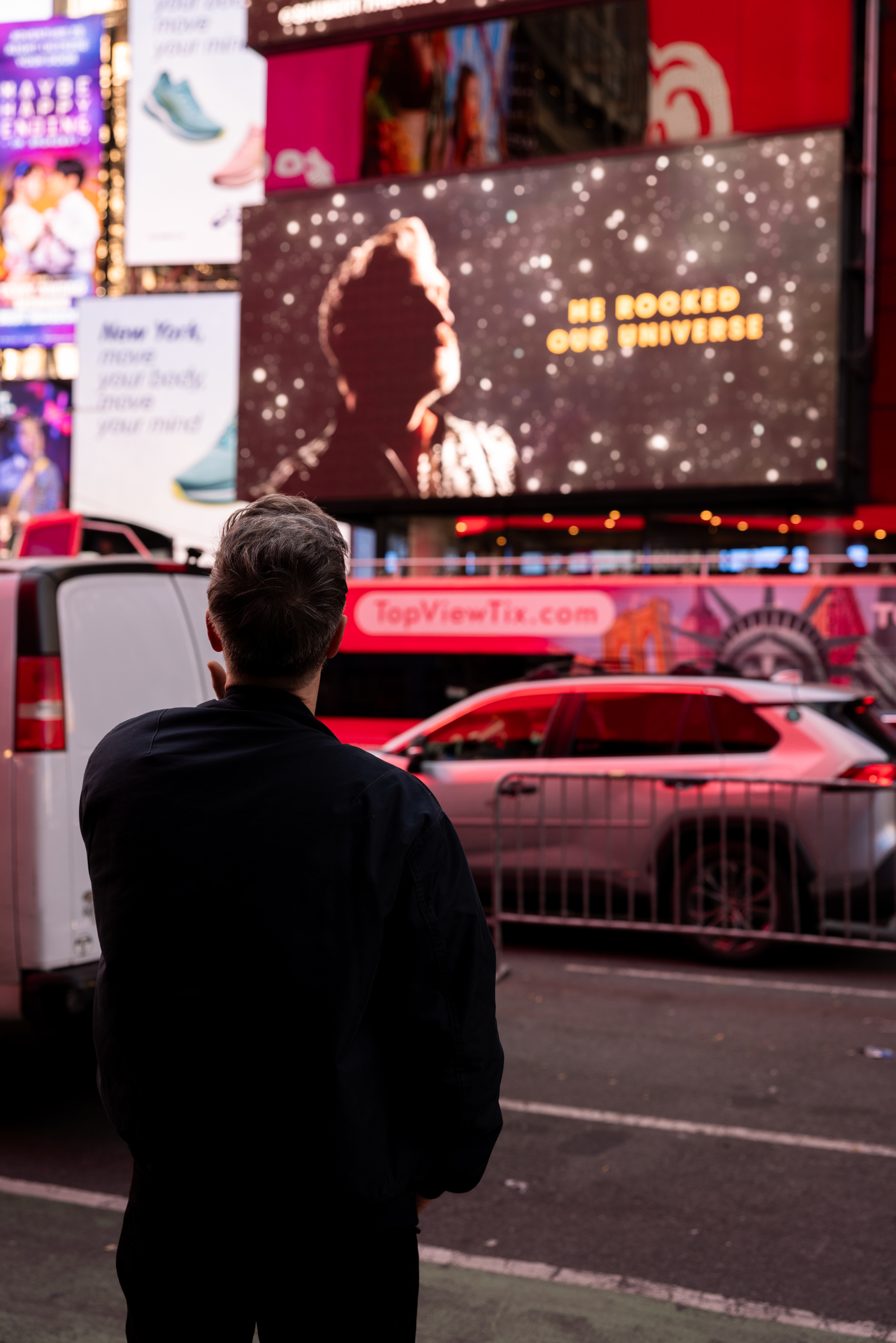
You know the story from your grade school history lesson. An Italian astronomer points a telescope at the sky and learns the truth about Earth: It moves! A defensive Church steps in to put him on trial. Case closed? Far from it, say historians. The real Galileo affair was messy—a decades-long tango of papal politics and one very fraught friendship (with the pope, no less). This fall, Galileo, an original rock musical, brings that complicated saga to the Shubert Theatre, with four-time Tony nominee Raúl Esparza returning to Broadway as the title stargazer. Grab your telescope—it’s time to shed some starlight on the real-life scientist and the show that has New York audiences rocking out.
Heaven’s Changing
Born in 1564, Galileo Galilei lived the first four decades of his life outside the spotlight. That changed in 1609 when the mathematics professor heard about a fancy Dutch gadget (an early version of a telescope) that could make faraway things look close. Galileo built his own—grinding out lenses and making adjustments that would allow him to see more clearly into the heavens than any human ever before. He would find Earth’s moon blanketed with mountains, four orbs circling Jupiter, and hundreds of stars invisible to the naked eye. Detailing his findings in the 1610 bestseller (yes, it really was that popular), The Starry Messenger, he became a scientific rock star.
At first glance, Galileo’s discoveries were impressive, but innocent enough: Mountains on the moon—that totally rocks! New stars—far out, man! But in the months that followed, his work started to chisel away at the geocentric model, the 2,000-year-old accepted idea that the Earth rests completely still at the center of the universe.
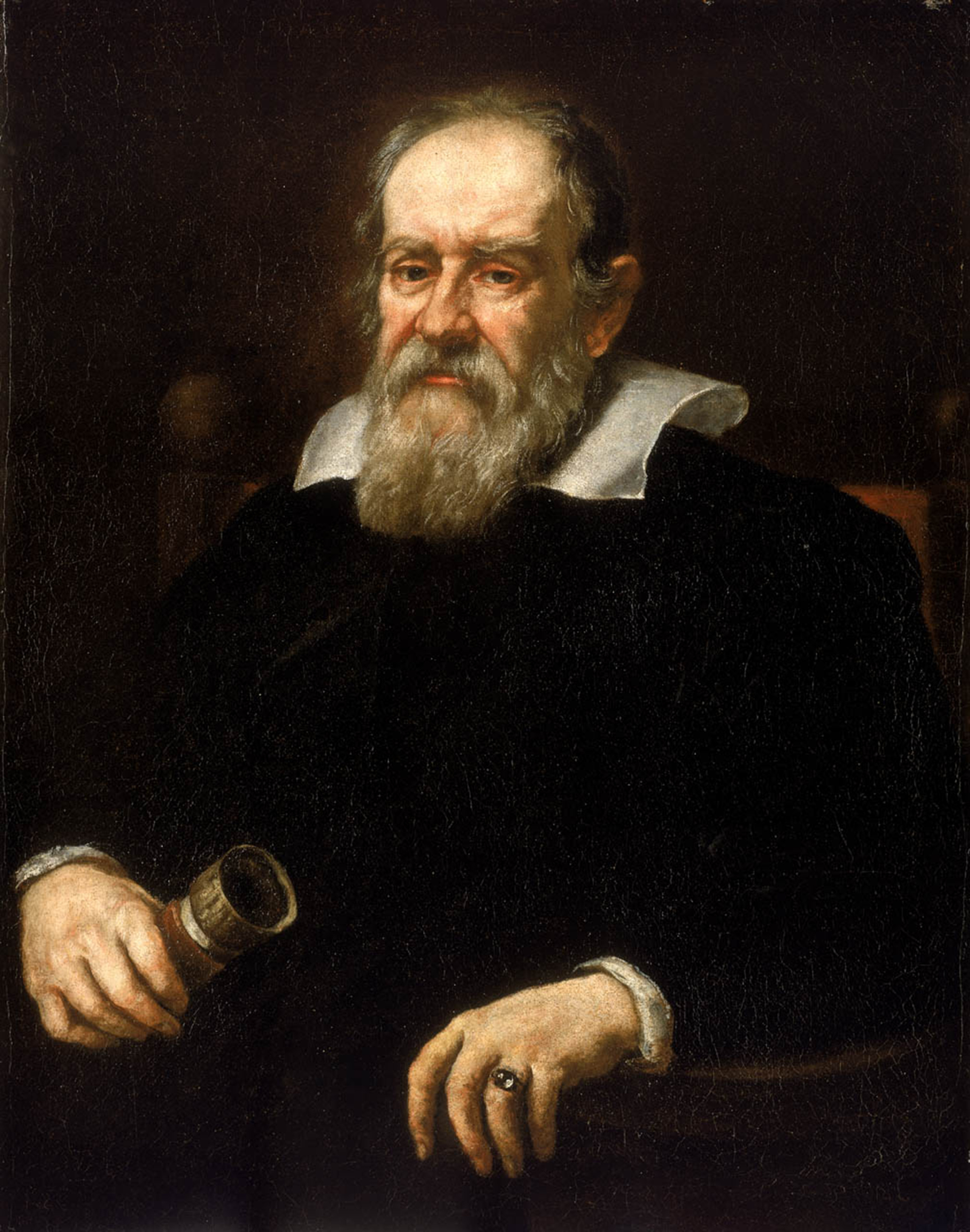
(Photo: c/o National Maritime Museum, Greenwich, London, Caird Collection)
For most folks living in the 17th century, the idea that the Earth might be moving was a tough pill to swallow. Your own senses tell you the ground is stationary and the stars above set in place. Of course, most folks then didn’t have a telescope. Galileo, who very much did, began asking society to sit with some sticky questions.
Exhibit one: If Jupiter’s moons orbited Jupiter, as Galileo had found, that would mean not everything orbits the Earth. Exhibit two: Galileo observed Venus going through phases just like our own moon—which only makes sense if Venus circles the sun. The evidence for a new order of the universe began to pile up. Galileo found himself supporting a relatively new—and controversial—astronomical model: heliocentrism (proposed in 1543 by Nicolaus Copernicus), which places the sun at the center of a revolving solar system.
Unfortunately, for Galileo, there was still significant wiggle room. His theories were far from air-tight (and at least one, a theory on tides, eventually proved incorrect). Scientific contemporaries continued to reject a revolving Earth and came up with other explanations for his discoveries. And while scientists battled it out, the Catholic Church made its move.
The Galileo Affair
The trouble started in 1613 when Galileo, a devout Catholic, wrote to a former student, arguing that the Bible wasn’t meant to be read as a science textbook. Later, in his Letter to the Grand Duchess Christina, he argued that scripture teaches how to go to heaven, not how the heavens go. Outraged by his boldness to interpret scripture, Catholic leaders would begin preaching against the scientist and his ideas. And in 1616, the Church officially declared heliocentrism “foolish and absurd in philosophy.” It was, essentially, a heavy slap on the wrist for Galileo. No serious consequences… yet.
Despite the setback, Galileo’s relationship with some powerful leaders in the Church stayed strong. In 1623, Cardinal Maffeo Barberini, one of his friends and a longtime admirer, was elected Pope Urban VIII. After multiple visits with the pope in 1624, the astronomer walked away believing he could write about the two competing solar system models with the Holy Father’s blessing—so long as he treated his observations as hypothesis and not fact.
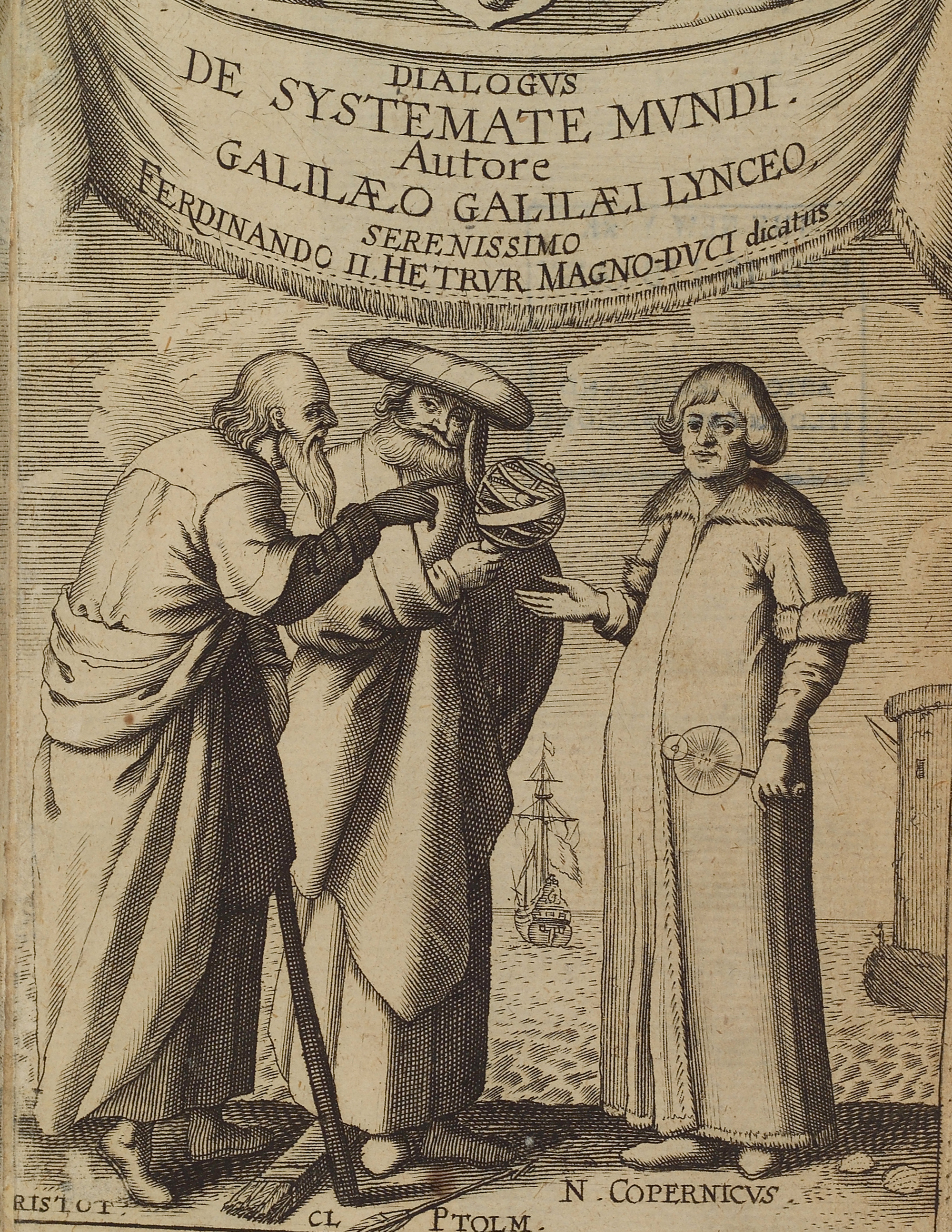
(Photo: c/o NYPL)
He didn’t exactly do as he was told. Historians say Galileo’s combative personality and love of sarcasm may have gotten the best of him in his book, Dialogue Concerning the Two Chief World Systems. It features a fictional conversation among three characters: Salviati (voicing Galileo’s heliocentric views), a layman and Simplicio (who voices many of the pope’s own arguments and favors the geocentric model). The book leaves little doubt about who is right, and directly ridicules Simplicio. The pope was furious.
Summoned to Rome to stand trial in 1633, the astronomer negotiated what amounted to a plea deal, admitting that out of vanity and a desire to show off, he’d made the case for the Earth’s motion too strongly. After formally recanting, he would live the rest of his life under house arrest (not that that stopped his work! He still smuggled out his final scientific masterpiece, Two New Sciences, which laid the foundation for modern physics). In the centuries that followed, the Church would admit its own damaging role in the affair. In 1979, Pope John Paul II acknowledged that Galileo had suffered greatly at the hands of the Church, and, in 1992, the Church formally apologized for his unfair persecution.
Before Galileo Rocked
Galileo’s life and fight with authority has provided plenty of material for creatives across mediums. Francois Ponsard’s French play Galilée premiered in 1867, and director Luigi Maggi brought the stargazer to the silver screen in a silent film in 1909. The most famous take to hit Broadway debuted in 1947, when Bertolt Brecht’s Life of Galileo premiered at Maxine Elliott’s Theatre. Critics have since called it the German playwright’s defining masterpiece. Anthony Quayle led a Broadway revival at Lincoln Center in 1967.
Galileo hit a high note in 2002 when composer Philip Glass and director Mary Zimmerman premiered their opera Galileo Galilei at Chicago’s Goodman Theatre, later bringing it to New York and London. That same year, PBS’s NOVA aired Galileo’s Battle for the Heavens, a documentary based on Dava Sobel’s bestseller Galileo’s Daughter.
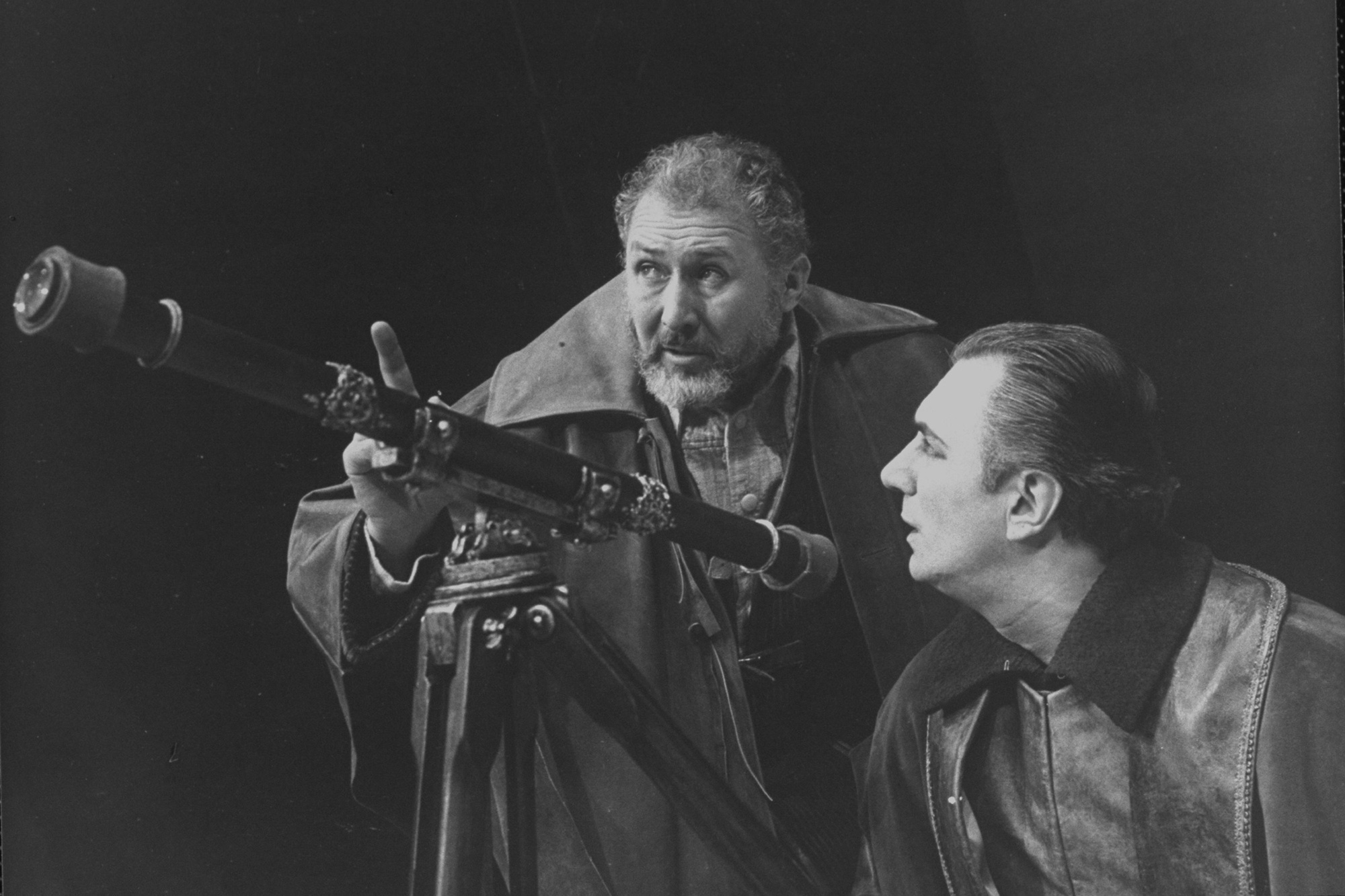
(Photo: Martha Swope/NYPL)
Plugging in Galileo
Until now, Broadway has never welcomed a musical about Galileo. That changes this season. With a book by Emmy and Golden Globe winner Danny Strong (Chess) and a score by Zoe Sarnak and Michael Weiner, Galileo had its world premiere at Berkeley Repertory Theatre in 2024. Early on, the team saw rock as the obvious choice for a man defying the establishment. “We viewed Galileo as a character who was kind of like a rock star of his age—challenging authority, questioning authority, all the things that we associate with that kind of person,” Weiner told Broadway.com.
The creators were also hoping to give the story the complexity it deserves. They portray Cardinal Barberini not as a villain, but as expressing a sincere worldview. The result is an earnest collision of convictions, with friendship and faith caught in the middle.
Aligning the Stars
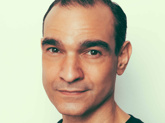
For star Esparza, the show marks a homecoming 14 years in the making. The four-time Tony nominee (and the rare performer to have a nomination in all four of the Tony acting categories, for Taboo, Company, The Homecoming and Speed-the-Plow) was last seen on the main stem in the 2012 musical Leap of Faith. Since then, he’s built a career on screen, most notably as attorney Rafael Barba in more than 100 episodes of Law & Order: Special Victims Unit.
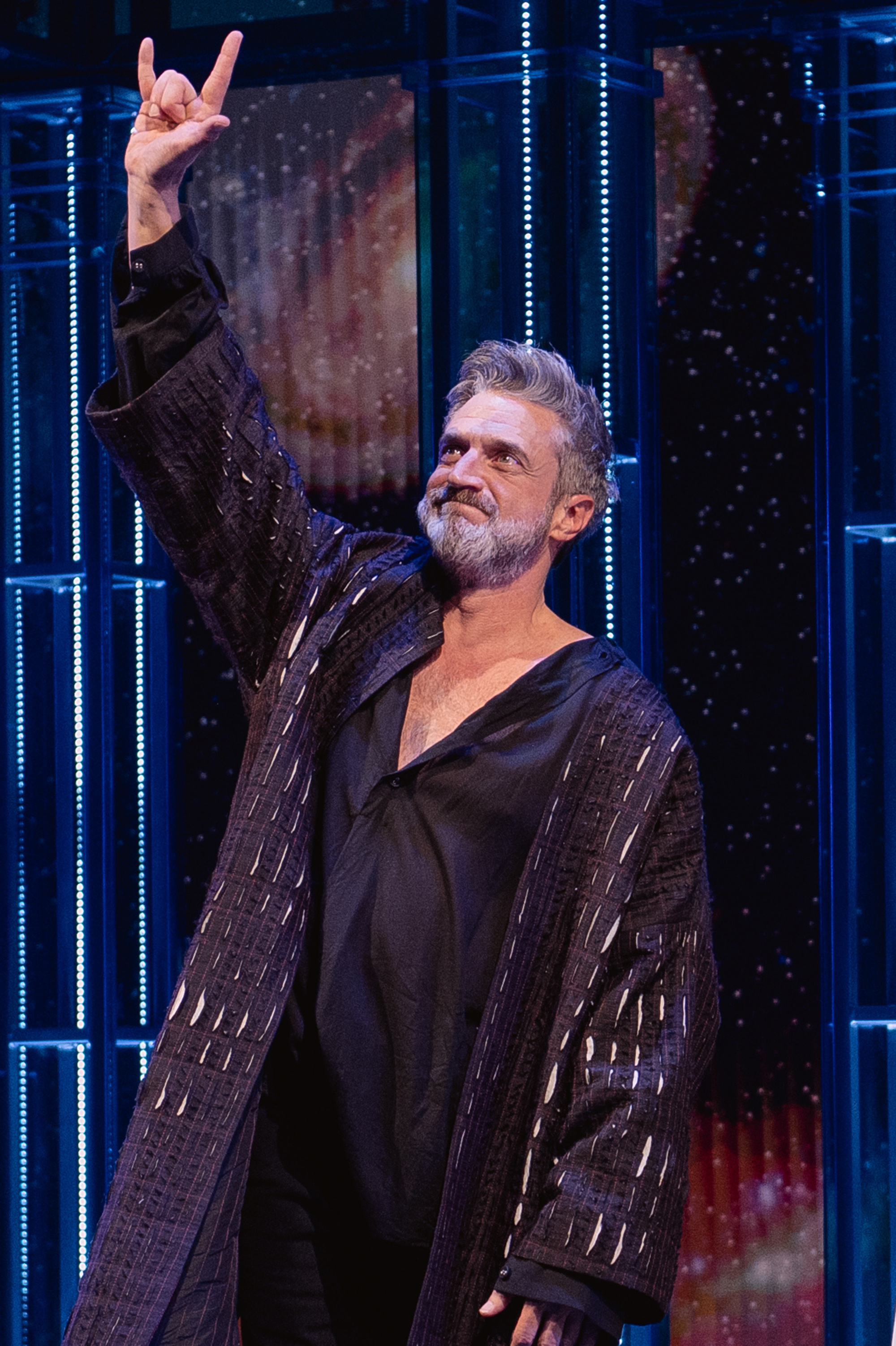
(Photo: Michaelah Reynolds)
But he’s never strayed far from the theater. Esparza starred as Leontes in The Public Theater's Shakespeare in the Park production of The Winter's Tale this past summer, and originated the role of Galileo at Berkeley Rep. “It's exciting to create new work and to be home,” Esparza told Broadway.com of bringing Galileo to New York.
"He's a total arrogant showoff and I love it," Esparza said of playing Galileo. "He was always the one who was the center of attention. He'd always say things to get himself into trouble, he just could not help it. And I've always been that way myself. It's a lot of fun to play the rebel. He makes really bad decisions, Galileo, but thank God for people like that, the people who break the rules and tell us who we are."
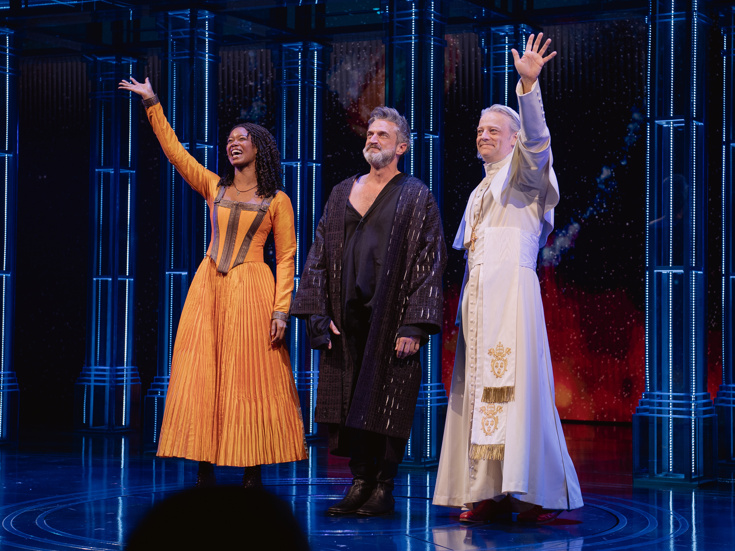
Bringing the rest of the saga’s characters to life, Tony nominee Joy Woods (Gypsy) plays Galileo’s eldest daughter, Virginia. The real Virginia was an apothecary at a convent outside Florence, where she took the name Suor Maria Celeste, and remained her father’s closest confidante until the end. Jeremy Kushnier (Jersey Boys) takes on Maffeo Barberini, Galileo’s friend-turned-pope. Rounding out the principal cast are Bradley Dean (Chess) as Bishop Grasso, Javier Muñoz (Hamilton) as Cardinal Morosini and Jordon Lee Garcia, making his Broadway debut, as Alessandro Tarantola.
Get tickets to Galileo!